The reissue cycle continues…
Celebrating thirty years, Alice in Chains’ self-titled effort (or “Tripod” as it has affectionately become known) is a somewhat unfairly maligned entry in the band’s canon. Yet, returning here, it’s clear that it’s not only a far better album than has traditionally been allowed, but also a remarkable act of defiance from a band on the brink of collapse.
Background
Alice in Chains had already endured an uneven few years when they arrived in the studio in 1995. Having toured relentlessly between 1991 – 1993 in support of Facelift and then Dirt, the band were not only worn out but addictions were spiralling out of control. As a result, while they did make it into the studio to record the stripped-down Jar of Flies EP (which crashed into the charts at number one), a proposed tour with Metallica went by the wayside after Layne, who had entered rehab for a spell, once again succumbed to addiction. With communication faltering and tensions running high, the band effectively went on hiatus for a six-month period (although it was not formally acknowledged at the time), just as they should have been riding high on the success of the EP.
Nor would it be an easy return to the studio. With Layne moonlighting in Mad Season and, alongside drummer Sean Kinney, burnt out by the fame Alice in Chains had accrued, initial sessions for the album involved producer Toby Wright, bassist Mike Inez, and guitarist Jerry Cantrell, the latter working on the premise that it might end up becoming a solo album if Kinney and Staley remained reluctant to return.
Eventually, however, in January 1995, Kinney did return to the fold and, with Staley invited back in May, it seemed Alice in Chains were once again a going concern, if a troubled one.
Certainly, the sessions were hardly straightforward. With Layne now firmly in the grip of heroin, Toby had to adopt a flexible method of working – essentially arranging studio time according to the physical and emotional availability of the band members, often having to build in breaks to allow for a reset when things became too turbulent.
Staley, in particular, was unreliable to the point that Sam Hofsted (Wright’s assistant) had to get a pager so that he could be notified as to when Layne was available to record – on one occasion finding himself summoned at 1:00 in the morning. Such an ad hoc approach to recording, alongside the loose, jammed out evolution of the songs, resulted in a woozy experimental feel which, while criticised by some at the time of release, has only added to the album’s enduring appeal.
Yet there’s more to it than that. Perhaps more than any other, Alice in Chains feels like Layne’s album, his confessional lyrics and increasingly varied approach to vocals forced the band to stretch songs out past the point of conventional wisdom. Tracks like Sludge Factory, for example, and Frogs both draw the listener into a swirling psyche-grunge meltdown, the band maintaining momentum over lengthy, spoken-word outros. As such, even though Layne is only credited with the music for Head Creeps, you can’t escape the notion that he indirectly influenced the process more than on any other record.
Formats
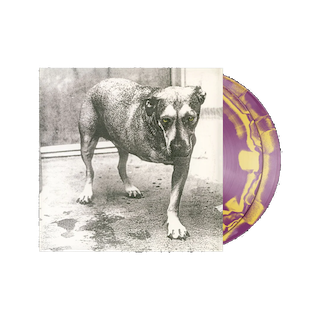
Repressed for its thirtieth anniversary, unlike Dirt and Jar of Flies (both of which received MOV reissues), this is the first outing for Tripod on vinyl since its release, making it a must for collectors.
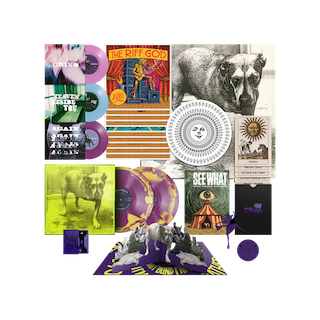
At time of writing, the album is available on a range of coloured variants (with a yellow vinyl being the most commonly available) as well as a super deluxe box set. No individual CD or cassette versions are available and mastering information is absent, raising the question as to whether any work has taken place, or if this is a straight reissue of the original audio. Unlike the Dirt and Jar of Flies reissues, this one does come in a gatefold sleeve with printed inners, showing off the cool artwork that adorns the release. Our version is fluorescent yellow, which harks back to the garishly coloured CD cases of the original issue.
Sadly, the SuperDeluxe issue is less inspiring. Like the other box sets the band have released, it is both expensive and entirely absent any additional material. While the band were hardly prolific during this period, it’s annoying that neither the remixes (found on the Music Bank box set), nor the Nona Tapes have found their way into the set. It does, however, include three 7” singles (albeit with new artwork), a cassette of the album, tarot cards, a slip mat, and a 3d ballerina vinyl topper. Once again, it feels like a missed opportunity and, at £240, it is of interest, really, only to those who value expensive ephemera.
The Album
Despite its unfair reputation as a lesser album from Alice in Chains’ first act, Tripod offers a dense and often compelling musical experience that has stood the test of time incredibly well. Neither as immediate as Facelift, nor as dramatic as Dirt, it’s a darker, doomier affair, with an emphasis on experimentation that often requires multiple listens to fully appreciate. This is especially true on the likes of Frogs, a sprawling work that bridges Dirt and Jar of Flies, heading deep into the darkness, but with a beautiful melody lurking at its core. For some, the true beauty would not be revealed until the 1996 Unplugged concert but, for fans of the album, that acoustic rendition only revealed what we already knew.
The record opens on a harder note. Largely repeating the trick of Them Bones on Dirt, Grind hits hard with a massive riff that threatens to collapse under its own weight, Jerry’s lead work slithering over the rhythm as Layne grinds (sorry) out the vocal from between gritted teeth. Yet, for all its unearthly sense of menace, it’s possessed of a monstrous chorus and it’s hardly surprising the band chose it both as a lead track for the album and as a single. It was the first of two songs from the album to be nominated for a Grammy (losing to Black Hole Sun), underscoring the band’s impressive ability to craft memorable melodies, no matter how dark the subject matter.
It is here, however, is where the Dirt comparisons end. For, where that album landed a knock-out punch with the metallic Dam That River, Alice in Chains follows up with the dense, hypnotic Brush Away. Opting for a very different sound to previous albums, while the vocals may be Alice in Chains in excelsis, the song’s raw production serves to obscure the brutal riff that greets the chorus until it’s too late. The result is a schizophrenic track that seems to revel in its own sense of claustrophobia.
The third track is where all the band’s issues are laid bare. Titled Sludge Factory, it’s a boldly confessional piece that stands as Layne’s last will and testimony, delivered seven years too soon, but unnervingly accurate all the same. A monumental work of dynamic doom, it’s another example of Alice in Chains hiding the melodies in plain sight, with more casual observers not truly appreciating the beauty of what lies beneath until Unplugged. A sprawling, epic track that finds Layne experimenting with a range of vocal sounds, it’s given greater weight by Sean Kinney’s ever-inventive work behind the kit, which only adds to the sense of foreboding that seems to hang over the piece.
Side two finds the band finally leavening the atmosphere with the lovely Heaven Beside You. With its gorgeous melody, it could easily slot in alongside the more acoustic flavoured tracks on Jar of Flies, and it provides some relief after the disturbing fare that opens the album. Such relief is short-lived however, and Head Creeps paints a harrowing picture of Layne’s increasing isolation, beset by an insatiable press and mired in addiction to substances that had, for a time, bought relief from the pressures of fame. The relentlessly self-analytical streak continues over into Again, a lyrically devastating song tempered by an insistent melody that adds a touch of doo-wop amidst the grinding guitars. Again was the second song from the album to achieve a Grammy nomination and, while it eventually lost to Bullet with Butterfly Wings, it’s a testament once again to just how damn catchy the band’s music could be.
Side three finds the band exploring the dark psychedelic fringes of their sound. Opening number Shame In You has a subtle, grunge-blues vibe to it, the band deftly shifting the ground under the listener’s feet before bringing the track to a close with an airy, multi-layered solo that seems to have been beamed in from a different realm altogether. In contrast, once it gets past its drugged up intro, God Am is closer to the Alice In Chains sound established on Dirt, the chorus landing a heavy punch along the way. Then there’s the awkwardly paced So Close, which has a nervous energy given life by the layers of guitars that seem to wrap themselves one another as Layne and Jerry put their harmonies to the test. With its falsetto laden chorus and repeated cries of “why?’ on the outro, it’s a disturbing finale to the side.
The fourth and final side of the album finds the band continue to experiment. It opens with one of the most bizarre songs in the Alice in Chains canon (Sap’s utterly bonkers Love Song notwithstanding). Titled Nothin’ Song, it finds Layne literally singing about nothing, while the band slip between the serpentine guitars of the verse and a chorus that really will stick “like peanut butter on the brain” (see, you’re humming it already). It’s foolishly catchy and it provides a considerable contrast to the eerie Frogs. An unexpected highlight of the Unplugged album (much like Sludge Factory few could have anticipated either that the band would tackle it, or that it would turn out to be quite so beautiful), Frogs is the sound of a tortured artist wrestling with addiction, mortality, and loss, and it is utterly heartbreaking.
The album concludes with one of the loveliest melodies the band ever penned. With Layne unable to tour and Jerry unwilling to continue as a studio-only project, Over Now finds the band fully aware that their career had reached a crossroads and, a handful of performances and recordings notwithstanding, so it transpired. Based around a heart-breaking melody, the track dispenses with the dark metaphors of tracks like Head Creeps and provides the band with an unhappy, if beautiful epitaph. Five months later, the band would perform it at their Unplugged show and a month after that, following four shows with Kiss and an overdose, the band would essentially go on hiatus. They would record only two more songs (Get Born Again and Died) prior to Staley’s tragic death in 2002.
Final Thoughts
There is so much to dissect, to admire, and to love about Alice in Chains it’s hard to know where to start. Breathtakingly honest, darkly experimental, and yet packed full of melody, it is endlessly re-playable and deeply thought provoking. While nowhere near as immediate as either Dirt or Facelift, the labyrinthine pieces that make up the album showcase the band’s increasing skills and confidence as musicians, paving the way (albeit at some distance) for the likes of A Looking in View (Black Gives Way to Blue) or The One You Know (Rainier Fog). Most crucially, while the album is undoubtedly a dense, psychedelic trip, the heartfelt melodies that lie beneath are there for all to find – with Unplugged featuring no fewer than four tracks from the record.
As an album, then, Alice in Chains is a masterpiece, ripe for re-evaluation and beautifully presented here on vinyl. As a standalone, it is well priced (especially for fans who have long faced the wrong end of hundreds of pounds for original copies). Sadly, the box set has less to recommend it. Like the previous super deluxe editions, it’s all trinkets and no real content, which is a real shame. At the very least (and assuming there really is nothing else in the vaults), so expensive a set could have included The Nona Tapes (a legendary EPK developed with typical tongue in cheek by the band to promote the album and later released on VHS), or even the Unplugged set.
For fans and newcomers alike, Alice in Chains is an essential part of the band’s first chapter. While the super deluxe edition is impossible to recommend, the stunning vinyl edition is nicely presented, sounds great, and provides the perfect opportunity to revisit an old friend.
Album: 9.5/10
Vinyl edition: 8.5/10