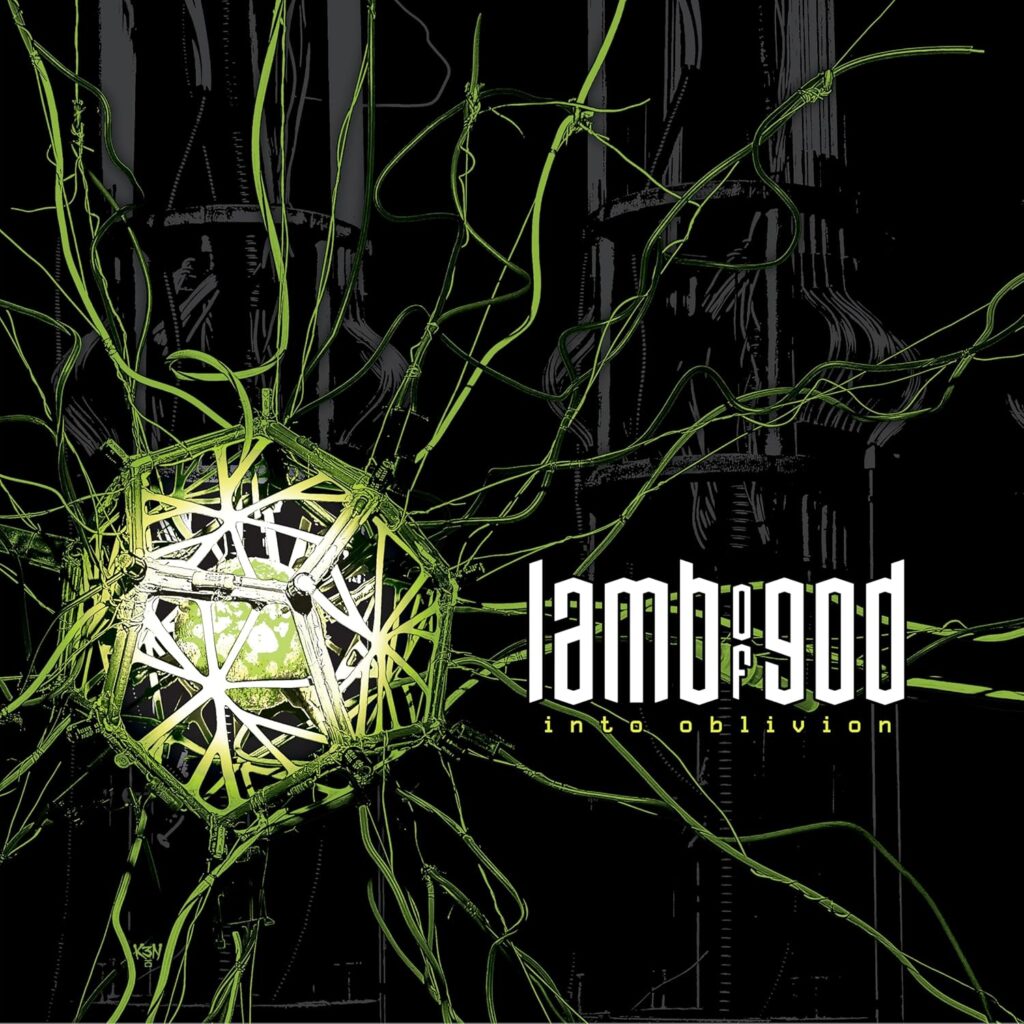
It’s been four long years since Lamb of God last graced us with their presence – with 2022’s hard-hitting Omens. Now back with their twelfth album, and with the ubiquitous Josh Wilbur at the helm, Lamb of God focus on the parlous state of the world with the aptly titled Into Oblivion, a short, sharp album, which finds the band racing through ten tracks in just under forty minutes.
As you might imagine, Into Oblivion doesn’t fuck about. Hit play and the title track immediately hits back with a monstrously chunky riff augmented, somewhat unexpectedly, by scything strings. Throw in the most deranged vocal performance Randy has turned in since Ashes Of The Wake, and it makes for a seriously brutal opening. The track wraps up with the sound of a blade sweeping down, providing a neat segue into the frantic Parasocial Christ, which cleaves closer to thrash than Lamb of God’s more typically groove oriented sound. A tightly plotted, three-and-a-half minute blast, it comes, sees, and conquers, leaving the band to simply flatten the listener with its successor, Sepsis. Led by John Campbell’s unholy bass churn, it offers a more nuanced vocal performance from Randy, who takes on the mantle of a dark preacher, road worn and coated in dust.
If the opening trio of songs leaving the listener somewhat shellshocked, the clean lines and stair stepping riff of The Killing Floor come as some surprise. Still heavy as hell, perhaps it’s the relentless percussive blasts and machine-tooled riffing that drive the track into a more streamlined realm, away from the punk-infused savagery that kicks off the album.
The band take things in a different direction once again with El Vacio, an atmospheric track that benefits from clean vocals and eerie gothic undertones, all providing a neat contrast to the sturm und drang found elsewhere. It builds to a suitably apocalyptic conclusion, but it’s certainly good to hear Lamb of God exploring the more dynamic aspects of their back catalogue.
Emerging from the muted drums of its introduction, St Catherine’s Wheel snaps into focus with elements of hardcore incorporated into the band’s savage delivery. In contrast, Blunt Force Blues is a straight up groove rocker with a full-on neck-snapper of a riff driving it forward. The band then move to keep things varied with Bully, a track based around a cool, writhing riff and, while the percussion soon arrives to bludgeon it into submission, it still feels like an interesting digression, without lessening the visceral power for which Lamb of God are so well known.
Based around a groove so dirty you need a shower just from hearing it, A Thousand Years is a mid-paced beast that somewhat surprisingly nods to early Slipknot as it juxtaposes dark clean passages with moments of splenetic fury. A strong song it is, nevertheless, something of a departure for Lamb of God and liable to divide the fanbase between those who enjoy hearing “their” band spreading its wings and those who prefer them to remain forever static.
This diverse and noisy little bastard of an album then wraps up with Devise / Destroy. Emerging from a gently picked guitar line, when it does kick into gear, it is as a thunderous, post-hardcore blast that provides the album with a suitably unfettered conclusion.
Lamb of God have long been edging towards more diverse sonic pastures than those outlined on their early albums and they are all the better for it. On Into Oblivion, the band juggle a range of styles, always staying true to their roots, whilst stretching their boundaries, offering up elements of nu metal, alternative metal, and thrash to augment the ferocious groove that has long defined their sound. Ultimately, this only adds to the articulate fury of Randy’s lyrics, with the album emerging as a compassionate scream, unwilling to accept that the current state of affairs is the best for which we can hope. With the world going to hell, Lamb of God have returned once more to provide both the soundtrack and the means of escape. 8.5/10