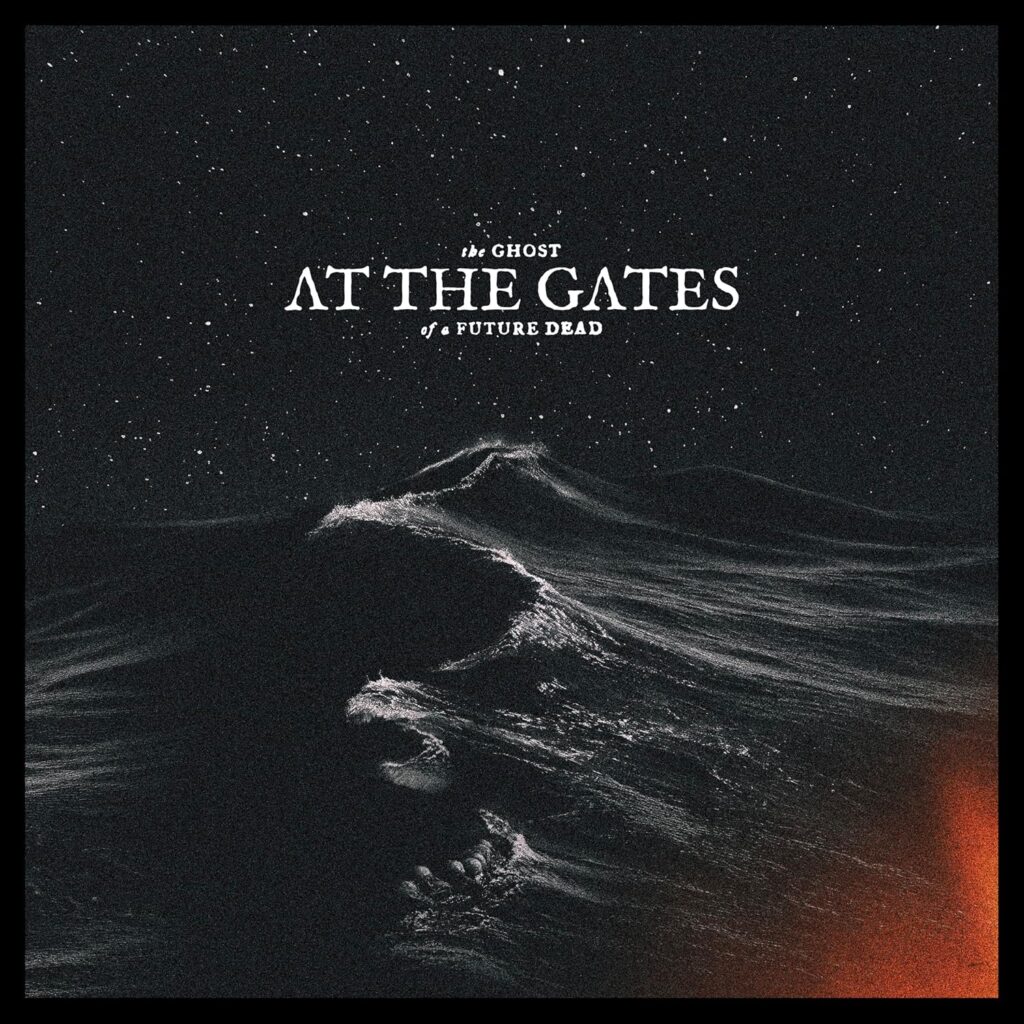
An album rooted in tragedy, The Ghost Of A Future Dead contains the final recordings of vocalist Tomas Lindberg, who passed away at the age of 52 following a diagnosis of adenoid cystic carcinoma. Largely recorded in 2024, it was at Lindberg’s request that the band completed work on the record and this they have done, leaving the record to stand as a fine, emotionally charged testament to their work together.
While it is no easy task to set aside the emotional resonance of the album’s circumstances, The Ghost Of A Future Deadserves as a remarkable conclusion to a potent second act for At The Gates. Few anticipated that the band, who split in the wake of their seminal Slaughter Of The Soul, would not only return but also build upon their legacy. Yet, when the band released 2014’s At War With Reality, they received near ubiquitous praise, even earning a grammy, where Slaughter Of The Soul had only been nominated.
From there, At The Gates hardly looked back. 2018’s To Drink From The Night Itself and 2021’s The Nightmare Of Beingmaintained the momentum, with the band almost immediately starting in on a follow up. However, with Tomas Lindberg’s illness and brutal treatment regime, the work was curtailed and it would be some time before the remaining members of At The Gates, working with demos recorded in 2022, were able to complete the record.
Honestly, listening to the album now, you’d be hard pressed to find any hint of the troubles that lie just beneath the surface. Producer Jens Bogren has done a fantastic job of weaving the elements together and Tomas’ raw delivery perfectly matches the potency of the band’s performance. Taken out of context, it is simply a phenomenal album. With the added weight of circumstance, it’s a minor miracle.
The focus of The Ghost Of A Future Dead is on concise, punchy, and brutal metal, with few tracks extending far beyond the three-minute mark. As a result, right from the moment The Fever Mask detonates beneath your feet, it’s clear that this is going to be no easy ride. With Anders Bjorler (returning for the first time since At War With Reality) and Martin Larsson trading monstrous riffs and Adrian Erlandsson doing his best to hammer his kit through the studio floor, it’s a suitably apocalyptic opening and it sets a high bar for what follows. Following a brief moment of melody, the short, sharp The Dissonant Void pairs scything riffs with fleeting moments of unearthly beauty. Rather more surprising are the gothic keyboards that pave the way for the blistering Det Oerhorda. For a brief moment, it’s as if Cradle of Filth have hijacked proceedings, although the stunningly heavy riff that follows soon brings you back to reality… and one of the album’s heaviest songs.
Heavily processed drums only serve to make the arrival of A Ritual Of Waste all the more violent, with Adrian once again indulging in an assault upon his kit that must surely have left his sticks as little more than twin piles of sawdust. Once again, you catch yourself awestruck at the sheer power of Tomas’ performance, which is both vital and vitriolic, and the band have stepped up accordingly. It’s followed by the dynamic In Dark Distortion, which finds the band slipping between atmospheric verse and bludgeoning chorus. It’s a solid track, but it can hardly keep pace with the dense riffage that peppers Of Interstellar Death, a brilliantly condensed melo-death assault that showcases just how much At The Gates can pack into four tiny minutes.
Opening the album’s second act, the eerie keyboards return to announce a slower, darker piece. Titled Tomb Of Heaven it offers some soaring leads amidst the sturm und drang, keeping things varied. It’s followed by the mid-tempo Parasitical Hive, which finds the band exploring an even wider set of dynamics, the latter half proving surprisingly hypnotic. Rather more straightforward is The Unfathomable, which pairs chugging guitars with another throat-ripping performance from Tomas. For sheer weight, it’s hard to beat, the band turning in an understated performance that is all the more effective for its simple, skull crushing efficiency.
With the album nearly at an end, the stair-stepping riff that introduces The Phantom Gospel does little to presage the ferocious nightmare waiting just within. In contrast, the instrumental Förgängligheten may just be one of the most beautiful things to which the band have put their name. A touching instrumental tribute to the band’s fallen vocalist, it’s a moment of pure emotion before the heavy, atmospheric Black Hole Emission brings the album to an impressive close.
No one can ever know what they’ll do when tragedy strikes, and it is hard to imagine just how the remaining members of At The Gates must have felt as they completed the album in the wake of Tomas’ death. And yet, with his blessing on the project, you imagine they must have felt catharis, maybe even a sense of joy amidst their sorrow, for his performance on The Ghost Of A Future Dead is frequently stunning and, in completing the album, they have allowed his vocals to soar one last time.
Ultimately, The Ghost Of A Future Dead is both an incredibly strong entry in the band’s catalogue and a fitting testament to the musical bond shared by the band members. Put it in the player and listen loud – there can be no more fitting tribute to a much-missed artist. 9/10