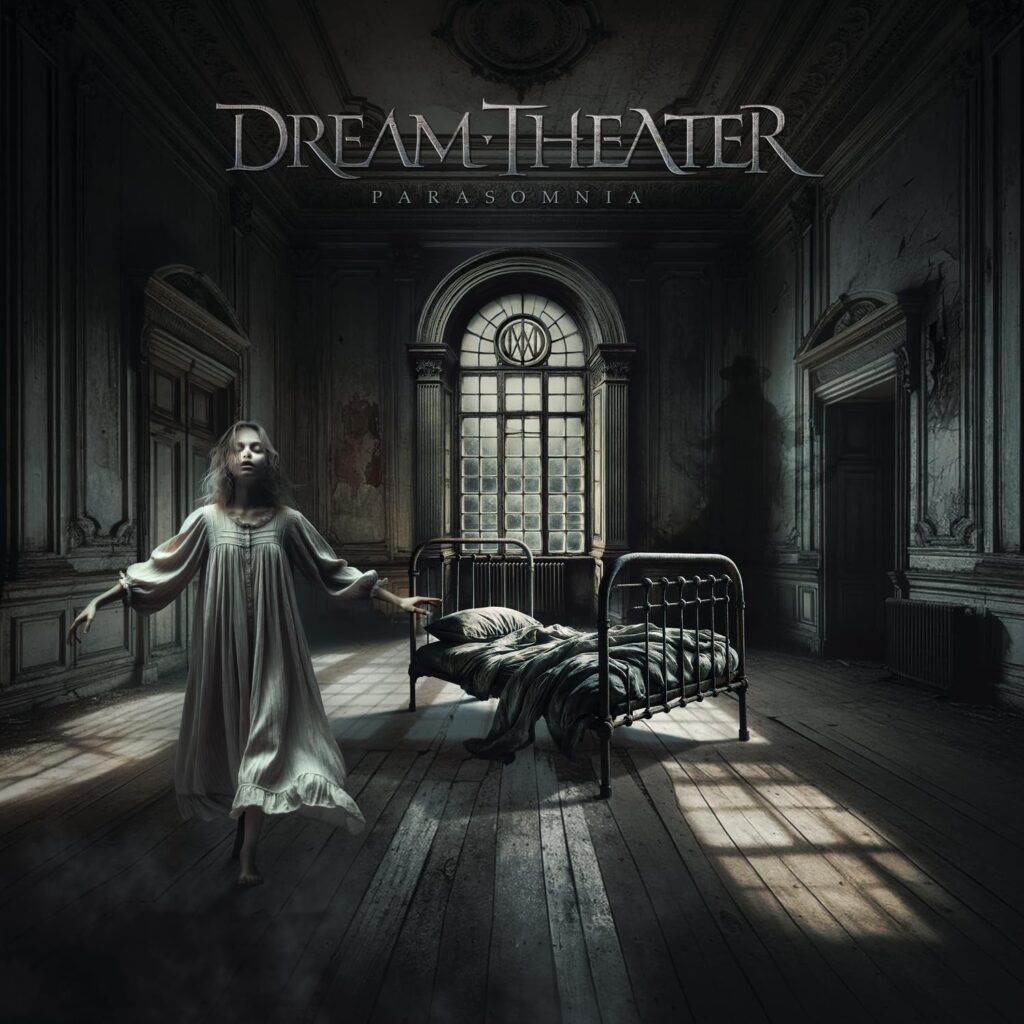
Over the course of fifteen albums, Dream Theater established themselves as one of the leading exponents of progressive metal – certainly in a commercial sense. However, in recent years, it felt like the band had fallen into something of a rut, with a by-numbers approach creeping into their works. Most problematically, it felt like the band were resorting to technicality as a substitute for emotion and, while there’s no doubting their technical skill, such an approach does not always translate into the most effective music. As a result, songs would drag way past a sustainable runtime, with extended passages largely providing an excuse for dizzying displays of musicianship, with the overall impact of the song reduced in consequence.
Now back with a new album, their sixteenth, and the first to feature Mike Portnoy since his ignominious departure in the wake of Black Clouds And Silver Linings, it feels like there is an opportunity for a reset. And this largely proves to be the case.
It’s a rocky path, however. The album opens with an introductory instrumental, the five-minute The Arms of Morpheus. It starts well, with powerhouse drumming, and a grinding riff of surprising potency. However, the build-up is misleading, and it soon drops into the sort of overture-by-numbers approach that has been the band’s stock in trade at least since Octavarium. Honestly, it’s so generic a piece that you could more or less drop it onto any Dream Theater album from the last two decades and people would hardly notice.
It’s not exactly an auspicious start.
Things improve a touch with Night Terror, which initially feels like a throw-back to Systematic Chaos’ heavier moments. Yet, despite the track’s ferocious aspect, the band cannot resist the temptation to drag things out past the nine-minute mark, mainly to allow guitarist John Petrucci and keyboardist Jordan Rudess to trade solos. This may serve their technical proficiency, but it doesn’t serve the song, and it leaves the second half feeling unforgivably ponderous.
It’s at this point, however, that Parasomnia suddenly shifts gear. Shaking the listener out of their torpor, the opening riff to A Broken Man must surely be one of the most brutal the band have ever deployed. While similar in length to Night Terror, the song is better arranged, with the instrumental sections balanced against the vocal passages, and the track flows much better as a result. It reminds you how damn good Dream Theater can be when their focus is on the music and not the playing. With the technicality (while still present), largely invisible, it’s one of their strongest songs in some time and it’s a pleasure to hear the band rocking out so convincingly.
Next up, the pace shifts a touch as John Petrucci lays down the creepy foundation to Dead Asleep, deploying a minor key riff lightly sweetened with gothic strings. It soon gives way to a punishing groove and, underpinned by Mike Portnoy’s devastating performance, it’s a powerful piece that builds upon the strong precedent set by A Broken Man. Once again, it feels more like an ensemble piece, and there’s a sense that Dream Theater were really having fun in the studio when they laid this down.
With a much more song-oriented approach now firmly established, the band let loose on Midnight Messiah, which comes across as the bastard son of Iron Maiden, Judas Priest, and Deep Purple. While progressive flourishes remain, it’s the sort of full-blooded rock song that many assumed Dream Theater didn’t write anymore, and the whole band lean into the glorious bombast of it all with an attitude that suggests they’ve missed it as much as we have.
Following a short interlude titled Are We Dreaming?, Bend The Clock provides the obligatory ballad, building nicely from an opening passage that recalls The Spirit Carries On to a harder edged approach that nods to the likes of Queensryche in construction and delivery. Aside from James La Brie’s powerhouse performance, what’s most notable about the track is the sense of restraint, and it’s all the better for it.
The album’s final track is a genuine behemoth. Clocking in at just under twenty-minutes, The Shadow Man Incident is a masterpiece. From its thunderous opening, it finds the band neatly combining technical skill with a genuine sense of excitement, and the track races by in what feels like a fraction of its absolute length. With John Petrucci and Mike Portnoy feeding off one another, it’s clear that the old magic is back and, while the band’s musical abilities remain beyond dispute, here they are secondary to the theatricality of the piece, with every element given over in service of taking the listener on a journey.
Dream Theater have had their ups and downs but, with Parasomnia, there’s a sense of excitement to the band’s song writing that has been lacking in recent years. The opening pair of tracks excepted, there’s a sense of restraint to the band’s arrangements that makes the songs all the more engaging and where, for example, a track like Bend The Clock would have had everything but the kitchen sink thrown at it, here it’s delivered relatively straight, anchored by James La Brie’s emotionally charged performance. The Shadow Man Incident, meanwhile, is a lengthy masterpiece that offers genuine thrills over the course of its lengthy run time.
Overall, despite its underwhelming opening, Parasomnia is one of the most complete Dream Theater releases in years, and it feels like the band really came together to focus on the album over their own individual contributions. As a result, it’s a much tighter, more engaging work than we’ve heard, probably, since Systematic Chaos, and it promises good things for the band’s future. 8/10