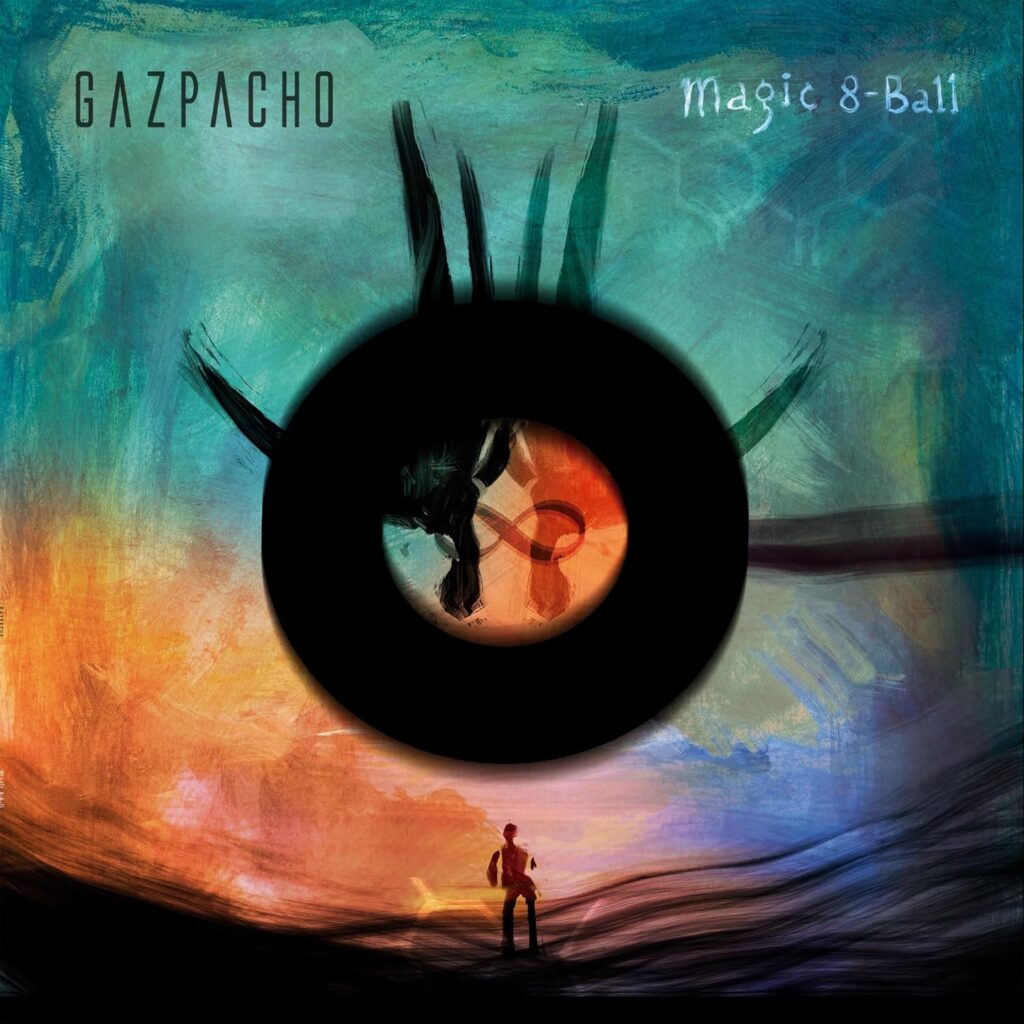
Hailing from Norway, Gazpacho are a quietly understated progressive rock band who released eleven well-received albums between 2003 and 2020. Unfortunately, and like so many bands, Gazpacho faced a significant challenge when COVID struck, the various lockdowns derailing plans to tour with Pure Reason Revolution in support of Fireworker, and it has taken five long years for the band to return to the fray. Now back with new album Magic 8-Ball, Gazpacho are poised to once again draw fans into their expansive, enigmatic sonic world.
The album opens with the subtle strains of Starling, a slow burning, melancholic piece that sits somewhere between Jeff Buckley and the airy atmospherics of latter-day Anathema. It provides a dreamy gateway into the album, building from its initial premise to take in elements of Headswim and Muse as gargantuan riffs boil over, racing toward the unsuspecting listener with vital force. It’s a dazzling, multifaceted display that tells of the heartbreak and loss that comes with self-deception, paving the way for an album that explores lost dreams, lingering hope, and the sense of losing oneself to the hum and buzz of the modern world.
Showcasing the depths of Thomas Juth’s mix, We Are Strangers finds Gazpacho following up with a densely woven piece that combines immersive stabs of electronica with the band’s rockier impulses. Equal parts Ulver and Radiohead, it’s beautifully arranged, twisting and turning, with Gazpacho always one step ahead of the listener, and the track as a whole is quite impossible to pin down without multiple listens.
Having established the wide scope of the album, Gazpacho introduce us to the Sky King, a beautiful piece of music unreliably narrated by a protagonist who spends his time building castles in the sky. In contrast, the rippling beauty of Ceres nods to the early Peter Gabriel with its multi-tiered introduction, although the guitars, when they land, do so with far greater force. With elements of Radiohead and Headswim once again evident, it’s a track that once again finds Gazpacho fusing disparate influences into a beguiling whole, emerging with something that is uniquely theirs in the process.
Whimsical title notwithstanding, Gingerbread Man is wrapped in heartbreak, the dense, cinematic soundscapes evoking the uncaring streets depicted in the lyrics, washed with rain and devoid of feeling. It’s a beautiful, broken piece of music, and once again it showcases Gazpacho’s unswerving ability to craft music that is incredibly immersive, the listener wandering alongside the insomniac narrator as they seek escape.
In contrast, Magic 8-Ball adopts a more theatrical approach, the Waltzing rhythm giving the song a very different feel, and this sense of unreality continues into the Baroque stylings of Immerwahr. In the case of both tracks, there’s the sense of the band pushing the boundaries, exploring different sonic textures to establish a lighter, more hopeful feel that suggests a glimmer of light at the end of the tunnel.
The album concludes with The Unrisen, a track that edges further into neo-classical territory with its music box opening and grand, gothic organ finale. It wraps up the album, leaving the listener lost in a world of might have been thanks to its beautiful, enigmatic arrangement.
Gazpacho have a made a most welcome return, crafting an album of rare emotional power and intelligence. A stately, entrancing body of work that wraps its arms around the listener and holds them close, Magic 8-Ball is a very special album from a very special band. 9.5/10