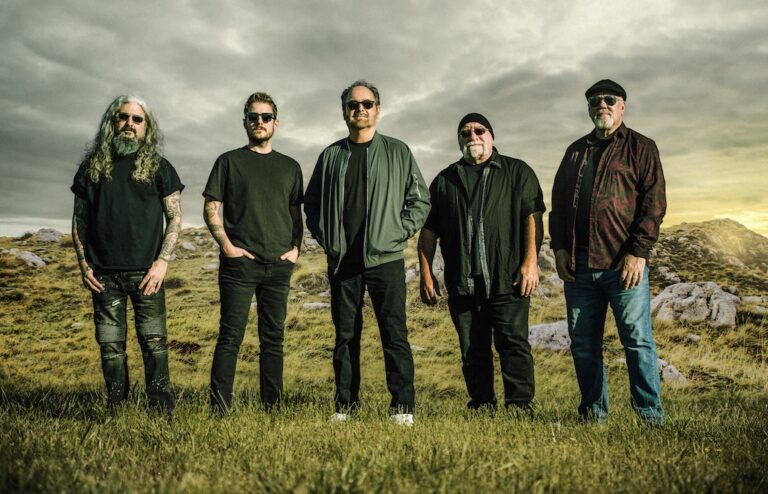
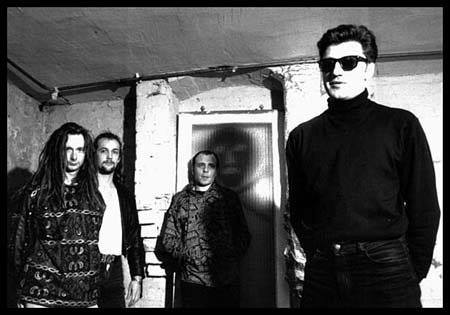
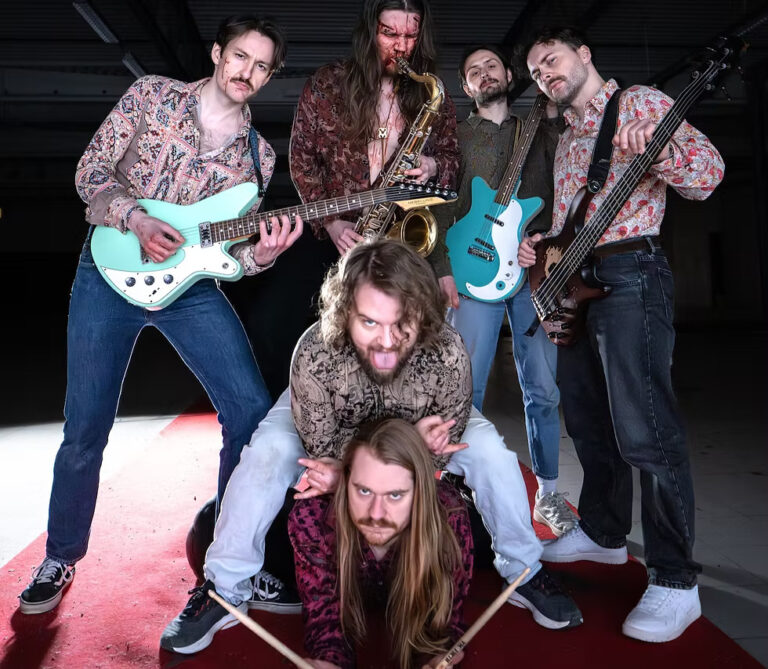
When you hear a band who have a strong sense of identity from the off it makes for a much more intriguing prospect than many of the neatly labelled and packaged bands that appear with alarming regularity. Jurojin are a band who can lay genuine claim to being different with a disparate group of musicians (including a Tabla-player and jazz bassist) coming together to make some intriguing and exciting new music that is, quite possibly, without peer. Listening to the EP the development, even over the few tracks on offer, is astonishing ( for reasons you can read for yourself below) and so SonicAbuse is proud to feature an interview with the band before they shoot off into the stratosphere of fame. With an interesting story to tell (let’s face it, it’s not every day such a group gather together around a mutual love of such unique music) and a genuine passion evident, it is a pleasure to introduce Nic Rizzi, the guitar player of Jurojin, who takes us through the formation of the band and the influences that drive them. Read on and discover one of the best new bands of the year…
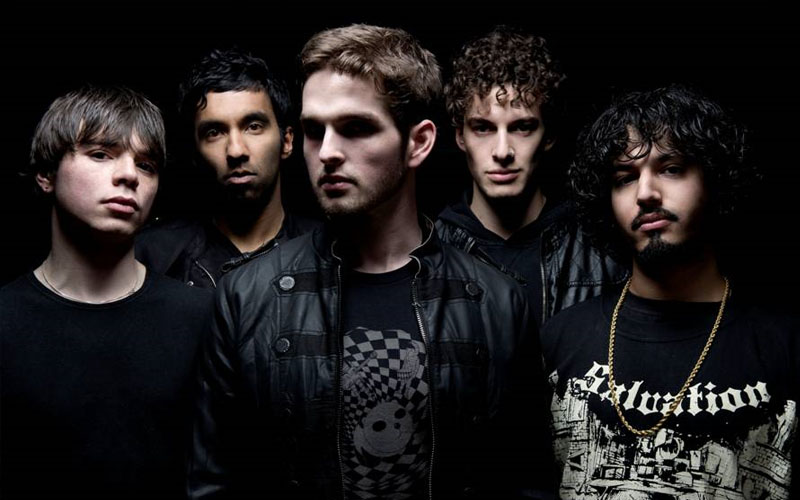
SA: You have a remarkable line-up which automatically sets you apart from the
average metal act. How did you all come together?
Nic: It was quite a long and gradual process. James and myself (Nic guitar) started the band after meeting each other via an online ad I posted (seeking singer). From there, we set out on a 2 year mission to find the remaining members! I met Sim through a mutual friend who knew of my deep interest in Indian classical music and he told me, “I¹ve got a guy for you to meet.” We met Yves in a similar fashion my good friend Bernie told me of a “very interesting” bassist he had played with a couple of times and put us in touch. With Sim we clicked right away, and since meeting him we have taken our time to find out how best to incorporate him into the band as much and as smoothly as possible. With Yves, however, it took us a year to convince him to join! We knew he was the one and through some serious persistence we got him. Once we had him onboard for the Sevendust tour we did a year ago, and after he actually spent the time to learn and master the set we were playing back then, he turned around and gladly joined the band. Finding a drummer was the longest process though. Only three months ago, after a 2 year search, were we able to find a guy who fits in this band like a glove. Francesco is a very talented drummer and musician and a brother to us. Due to not having a drummer at the time of recording, we enlisted the help of Bernie Gardner and Jay Postones to share drumming duties on the album. This band is one big love affair and I¹m confident this line-up can stand the test of time. I personally couldn¹t imagine anyone else playing any of the instruments in the band.
SA: What music influences Jurojin?
Nic: It’s all over the place! James and I are the only members of the band who listen to any metal or heavy music (well prior to Francesco joining). Yves (bass) and Sim (Tabla) had never played metal or anything even close prior to joining the band. I suppose we all bring a touch of our individual influences in the music, whether or not we realise it. That would include, amongst dozens of others, Steeleye Span, Soundgarden, Pentangle, Incubus (James), old Sepultura and Fear Factory, Tool, Bad Plus, Shakti, Mahavishnu Orchestra, Opeth, Dave Matthews (Nic), Jimmy Haslip, Jaco Pastorious, Pino Palladino, James Jamerson, Anthony Jackson and Charlie Parker (Yves), Ustad Shaukat Hussain Khan, Ustad Tari Khan, Mehdi Hassan, Ustad Salamat Ali Khan
(Sim), and Dream Theater, Porcupine Tree, etc (Francesco).
SA: The new album is a very interesting mix of contemporary metal and unusual instrumental elements do you all agree on the direction a song should takeor do you find that there is an element of compromise?
Nic: It all depends on the initial idea… someone might bring a whole song to the table and if we all like it then we work to each add our own elements or we work to change certain bits/ parts/ transitions/ or entire riffs to fit the vibe of the band more. This album, as we will describe four questions below in more details, was written over a long period of time so does not entirely show how the band has developed and what our writing has now become. The newer material will reflect a much more collective and organic writing process, where we have become very comfortable in each other¹s creative spaces and compromise is rarely an issue.

SA: What do you feel Jurojin has to offer musically?
Nic: We feel that we offer an interesting approach to heavy(ish) music. Our fans come from all over the place taste-wise, from metallers to rockers to folkers to jazzheads which we take as a sign that we’re doing something right. We fully recognize, however, that we all have so much work to put in, both individually and collectively, if we are to make the slightest of difference in the music world. This is merely a beginning for us, and so far I think that we offer an original take on musical yet accessible music.
SA: You’ve been described as “alternative prog metalers” would you say that is
a fair description?
Nic: We are a hard band to categorize. Personally I am not sure we should be labelled prog, since it has become such an abused and broad term. Nowadays, anything that is musically technical and perhaps doesn’t follow the general song writing formula is automatically labelled “Prog” but if you look back at the history of Prog from the 60’s until today, the genre has changed so much so how does one now define prog? I don’t think we are technical enough to be labelled prog. Perhaps we should be called World Metal? But then again, I
don’t think we are quite heavy enough to comfortably be labelled metal so there you go, we¹ll leave it up to you, label us what you wish! We normally just say we are “experimental heavy music.”
SA: What influences the lyrics?
Nic: As the sole lyricist in the band, I’ll leave it to James to answer “Various things. I’m influenced by lots of different writers – Andrew Motion, Charles Bukowski, Charlie Brooker to name a few. The music I grew up
listening to – Steeleye Span, Pentangle and various Turkish folk songs. Things that I hear from the music while we write, past experiences and I think the need to tell a story are all extremely important to my lyric writing.”
SA: The mini album almost shows the band developing over the tracks from the fairly straight-forward opening songs to the unique songs that close it: does that reflect the development you feel you have made as artists?
Nic: Absolutely. One thing that we have been trying (at times unsuccessfully) to get across is that “The Living Measure of Time” is merely an introduction to our band. The story behind the album is quite unusual, in that we started recording it when James and I were the sole members! The recording process started in January 2008 and ended in September 2009. We had struggled to get enough funds for recording, therefore we pretty much would save for a few months, record one track, save for a few months, write another couple of tracks, record one more track, save, write, record, save, write, record, etc… During this process, we gradually added more members, gradually changed our sound, experimented and slowly progressed in finding our own voice
(which we are always working on, we have not yet succeeded). The first song we wrote and recorded (w/ only James and I, I played bass and my friend Bernie played drums) was “The Liar.” The order of writing and recording that followed was “The Scars,” “The Dreaming,” “The Winter,” “The Equinox,” with the final song we wrote for this album being “Proem.” There is a clear progression there, between the straight ahead metal/ rock vibes of The Scars and The Liar and the tabla-laden, emotive journeys that are “The Equinox,” and “Proem.” The later tracks were a more collective writing process, and it is something that will reflect so much more on our full length debut, which we are aiming to put out toward the end of 2011. The collection of new songs we already have show a more mature, confident, and comfortable side of Jurojin. That being said, we are very proud of what we achieved on this debut mini-album, the journey to get to where we are now has been long and frustrating at times, and we feel it is a strong first chapter to our musical evolution.

SA: Were you nervous about how your music would be received?
Nic: Of course. We have only released the album in select territories so far and are staggering the release into the rest of Europe and the world (Autumn 2010), so there will be plenty of more feedback to come. We are an unusual band and with that comes praise and criticism in equal measure. Some people get it and some people don’t. No musician, however, should ever assume that their music is good enough to win over all media and critics. We welcome all feedback and take positivity from all reviews, whether they be good or bad. That being said, so far the feedback has been truly amazing. It has gone above and beyond our expectations. But to directly answer your question this is everyone in the band’s first ever official release, none of us have been in bands that have released a product in the past. None of us have had our own material reviewed in press, radio, online, etc… So it is a scary yet very exciting time!
SA: What can we expect from Jurojin in the future?
Nic: Hopefully good things! Haha Musically, you can expect a progression from where we left off on this album, a refinement of our sound, and some long sought-after consistency amongst all musical elements that make up Jurojin. No matter what material we put out, we will always strive to retain a very musical aspect to our songs, whether they be straight ahead rock songs or crazy rhythm etudes in 7’s and 15’s. Overall, you can expect more of each member’s individual voice to shine through our future material. Finally, you can expect us to tour extensively and bring our music to as many places as we feasibly can!
Phil and SonicAbuse would like to thank Jurojin for taking the time to answer our questions so fully.