With L.I.F.T., Neal Morse and his band have turned in a remarkably concise and identifiable tale of loss and redemption. While the narrative elements are hardly new to Neal, whose adoption of Born-Again Christianity in 2002 has underpinned his subsequent career, the concept is expressed in such a way as to appeal to a secular audience at least as much as the faith community, with the central tenet – the need for a sense of belonging – more pertinent than ever in an era of digital isolation.
An artist I’ve long wanted to meet, Neal is courteous and considerate with his answers. A man of deep faith, he is happy to explore the role of religion within his work, and it is clear that he is someone who believes deeply in the power of what he does. His enthusiasm is infectious and throughout the interview he laughs often, explores the various themes in depth, and always exudes that same spark that is so evident in his work.
The new album is a really interesting concept, but before we dig into that, I just wanted to start with a small amount of background. As I understand it, there was some uncertainty whether the band would be able to make a new album because Mike (Portnoy) had rejoined Dream Theater. So, was there a certain amount of pressure, in a time sense, because there was a small gap in his calendar and you had to come together quite quickly to make this happen, is that right?
Yeah. A lot of our records, I think, with Mike, have been like that. I think the very first Transatlantic record… I think he only carved out five days or some crazy thing. It was really short. So, I’m used to that with him because he’s always been very busy.
This seemed like it was shorter. I think it was probably because, on some of the other records that we’ve done, I brought in more material. Knowing that you have to write the whole thing… Bill brought in about an hour of instrumentals, Randy had some riffs, and I had some piano improvs, but we didn’t have any songs coming in to this one.
So, knowing you have ten days… but really one of those days (if not two) are travel days. So, now you’ve got seven days to write it and two days for Mike to do his drums. I mean, that’s a pretty tall order, especially as it’s so important that you do something that you feel 100% about. The last thing you want to do is turn out something where you’re like, [adopts slightly goofy band voice] “well, we ran out of time, so this is the best we could do.”
And, you know, we’ve never done that. What we’ve done in the past – there have been times in the past where we got together for the original writing session, where we tracked a bunch of stuff, and we would listen later… I would listen later (a lot of times it was me), and I’d be like, “I don’t think this chorus is good enough…” and then we’d have to change things – get together again to sort it out.
So, for example, I think on the Great Adventure, we might have had three different writing sessions, if memory serves.
So, you now, the pressure wasn’t on entirely. I mean, it’s not the end of the world. If we don’t come up with a record that we love, we can wait. I don’t know how long we’d have to wait [laughs] with Mike being back in Dream Theater… that was the feeling, like, who knew how long it would have taken if we hadn’t gotten it done at that point – I definitely did feel a certain amount of pressure about that aspect of it.
For me, having a concept underpinning the writing, it’s really exciting, it’s really inspirational, and it’s a great way to drive the formation of an album as opposed to a collection of songs. But, at what point did the concept for this one come into play? Because, if I understood the press release correctly, it wasn’t from the outset that you were doing it like that.
I didn’t… I mean, I had this sort of outline. I think I created it, maybe two or three days before I flew down there. But it was very basic, in a Word document – you know? Just ideas like “belonging”, “songs about feeling connected”, and then, you know, “break in belonging”, “getting hurt”, “further down, getting really hurt, then withdrawing”, “crying out to God and God bringing you back together”, and “belonging again”.
So, it’s that sort of story arc. Like a lot of my albums – a lot of our albums and my albums, shall we say – many of them follow a pattern a little bit like that. So, it’s not all that unfamiliar.
What is different about this one, is how succinct it is.
So, I had the concept and I think I might have shared it on the first day, btu I didn’t want to… I wanted to see what the band wanted to do; I wanted to see what they were feeling. I didn’t know that that was what we should do, really.
You know, a lot of times, I ‘ll sort of have a feeling about something and then we’ll try it. But I didn’t want to force anybody into anything. I wanted to see what was going to happen in the room and where everybody else was at. So, I don’t think I really dove into this concept and shared it with everybody, really, until day two. And then they were like [impersonates] “Oh well… yeah, OK!”
[Pauses] Just reading it, it doesn’t sound like anything that special. It’s not, like, doing a concept album based on a book. It’s very simple.
So, we just started, you know, going with that. And, for me in the hotel room in the mornings, it was very helpful, because I would know what we did the day before and then look at the outline to see what we needed to do next.
So, you know, Fully Alive, there’s the belonging part… And some of it is very direct, like I Still Belong – he’s saying “I still belong” but it’s really about the beginnings of not belonging. Which I think is kind of cool, actually. I’ve always liked songs that are about… well, what they’re really about, is the opposite of what they say they’re about. You know, like, [sings] “I ain’t missing you at all!” You know, where the whole thing is about how much he misses her, right? [Laughs].
I always got a kick out of that kind of stuff. I think it was maybe on day two or three where I stepped out. They were working on some instrumentals -all the instrumental passages were written in the room together – so, they were working on some of that and I think I stepped out with an acoustic guitar of Eric’s – I didn’t bring hardly any gear – so, I stepped out with his acoustic guitar and sort of plunked out a sketch of Still belong. And, really, I’m just so thrilled that the band was so immediately behind it, because in the creative process, especially if. You’ve just come up with something and it isn’t finished, it’s just a sketch, the people you are around can either bless it or kill it really fast, you know? And I’m really thankful that the guys blessed it and brought their gifts to it and, I remember on I Still Belong, plunking out this sketch and then Mike saying “Oh, I think the band needs to come in huge here…” [sings] “I belong to the wind” on the second time around.
What a moment that is. And there was such a simpatico in the band. So many of the parts – most of it flowed – I mean, we couldn’t have written it in seven days if it hadn’t flowed like it did. It was pretty amazing.
There’s some very strong messaging on the album and the one that stood out for me in the first instance was Hurt People because it really touches on that idea of the cycle of abuse and the way that hurt begets hurt. The music that goes with that is incredibly powerful but, as with a lot of things that you do, it’s got a real edge to it, but it also sounds like you had a real blast tracking it.
Well, what’s great about it, for us, writing concept albums and why we continue to gravitate in that direction is that you can go through all these different paces authentically. We all live through them, you know, we’ve lived these things and I love that you can express it all, you can have the really angry times, the hurt times, the glorious times on the mountain top, all of that – you can have it on a concept album. And I think it really lends itself so well – the genre lends itself so well and that’s why we keep coming back to it.
Yeah, Hurt People was really cool. That was really Eric, Randy, and Mike jamming on this heavy thing. And, you know, it just came out of my mouth while they were playing – Eric was playing those chords and I was like, “I don’t know, what about something like [sings] hurt people” [resumes speaking voice]. You know, I just sort of squeaked it out in this falsetto. But then, when Eric came in. I didn’t hear Eric’s vocal until just about right before it was mixed and I was just… his vocal on that and his guitar solo, they’re just amazing. But then again, there was like this willingness to just kinda – we’re all just rolling with what everybody’s feeling, like “oh yeah, that’s cool, let me try singing over that!”
“Yeah, OK, great!”
You know, it was just really good vibes.
It’s a very compassionate album because there’s slippage – it’s not as linear as some redemption arcs, because the protagonist doesn’t simply redeem themselves. It doesn’t seem to end completely resolved because life has the potential to throw up troubles again, right? I guess that makes it more nuanced…
Yeah, well good! At the very last second, I changed the end, the very, very end – to the lyric that it is. It’s kind of like “hey, if you don’t feel like you belong, there’s still time. Where there’s breath, there’s hope – don’t give up!” I like those kind of messages, you want to give people hope. If they’re not experiencing the kind of mountain top experience of being loved all along, you know… I was experiencing that when I was writing it, but I don’t know where the audience is going to be, you know. Maybe they won’t feel that. I don’t know, I hope that they do. But, you know, it’s interesting when you’re playing concerts and you’re doing these things – there’s a whole kettle of fish there. All these people who are all in different places. You know, some people may have just gotten a diagnosis of cancer, or their wife has just had that. And there are people who have just closed the biggest business deal of their lives. And there are young kids wondering what their life is for, and there are people who are reflecting. So, there’s this whole… just every facet of humanity. And I just pray a lot that God, who knows every heart, will speak to every heart somehow through the miracle of music and the spirit heals. That’s my prayer. You know, I pray over the albums as they go out, you know, it’s like “Lord, touch every heart, bless everybody that bought a ticket. You know, let the blessing start now!” So, yeah, that’s my prayer for lift, it’s that people are indeed lifted up by it.
One of the things that really interests me – I know that faith is incredibly important to you, and I know that you’ve done a lot of different albums with different approaches. Some have been very directly faith oriented, and some have appeared a little more tangential. But this one, to me, feels very inclusive because the story could be about faith, but you could take it to a wider sense of social inclusion and belonging – and I wondered, when you’re writing something like this, do you have a feeling about how to make the message inclusive for people in your audience, who don’t have faith, but still need to hear the central tent of what you’re saying. Does that make sense?
Sure! I mean that is the big question! You know, what to leave in and what to leave out. How much to spell out what you’re talking about and whether it’s good to not spell it out. I ask God that in real time when I’m writing all the time. It was interesting the other day, when I was writing, I was like asking the Lord what he wanted to say. I was working on a song, and it was like “what do you want to say here?”
There are a lot of different ways to say these things, and it was cool. I felt like the spirit of the Lord spoke to my heart inside and said, “what do you want to say? You’re free to say it however you want!” And that was just really a cool experience. And so, I feel like the Lord gives us a lot of freedom and I want people – we, we the band, I can speak for them on this – we want people to come into this place of blessing and however that works, this concept of belonging is just so central to the human experience.
And lately, with my travels and the Morsefest and what we’ve been doing at these things, I’m realising more and more how isolated people are. More than ever. And how hungry they really are. And many times, we don’t even realise it but we’re hungry for community. People are wanting to connect with other people on a deep level and so much of the time we try to do that but it’s so surface oriented. So, I’m really encouraged. I feel like when we do the Morsefest and we do L.I.F.T., I think it’s really going to connect in a special way. And there’s already this whole thing that’s happening among the people who are coming. When they come in, it’s already a community but it’s just getting deeper and more… people are coming into it and it’s not me. I’m not even then half the time because I’ve got to get up and practice for the inner-circle concert or whatever. But, at the hotels and in the hallways, there’s all this really cool stuff that’s happening and God is just working at including people and having them feel loved. It’s so important. It’s such a basic need.
It is interesting concept. For me, coming from a more agnostic background, I can recognise very easily the loss to local communities of churches as central places to gather. There was a lot of stuff in writers such as Marx, Durkheim, and Weber as to how money and capitalism had supplanted religion and how that could fundamentally alienate people from one another. So, however the community functions, it’s really important and musical communities with or without faith are such an amazing thing, whether spiritually or philosophically. So, I guess the question is always how to make it as open and inclusive as possible, while retaining your core ethos.
Yeah, right, bringing people in is like… we just did the One album in London a couple of weeks ago and, when we got to the part about Jesus, the place just really kind of exploded. It was really, really powerful.
Yeah, it is a dance. You want to lovingly bring people in without… but you also want to tell them how they can continue in this way. After Morsefest is over, there is something you can tap into that’s going to continue. That’s one of the reasons why we do these follow up Zoom calls with lots of people and try to keep the conversation of faith alive and help people to continue to connect.
Going back to the album – as you might expect from a progressive piece, it’s a journey and there are a lot of crescendos and there’s a lot of joy that you’re creating. So, from a more technical perspective, did you have the sequence driven by the lyrics, or did you have to juggle things around once everything was recorded?
On this one, it was very… we went in order. I was following that outline in the mornings and we were… I mean we still, as a band, had to figure out how to transition and navigate and what should go where. So, we’d end one song and then we’d look at each other like, “well, what should happen?” So, you know, someone would say “what about Eric’s guitar thing just sort of fading in, or Neal’s keyboard going over it?” [Sings a few notes]
And then we just track it right then and there.
And then, it’s like, “cool, where should it go now?” And somebody’ll say, “well, what about one of the snippets that Bill sent before the sessions, I really like this thing, can we fit it in here?” And then we all, in the room, try to figure out the key and how to voice it and we’ll try it. Sometimes we’ll go down that road for a little while and it doesn’t really work and then we’ll come back to that point. There’s a lot of editing that goes on because, even though we’re working in order, we’re also changing our minds a lot [laughs].
And then thinking that some little snippet that we thought of… the thing that opens the album, that piano thing and then me singing over it, that is a little motif of Bill’s that I had forgotten about. Then, it came up later in the album, somebody had the idea to put it in and I was like “oh, we should mention that…” What you try to do on a concept album, if there’s a major theme or a major motif or something, it’s great if you can, if it works, it’s great if you can mention it near the beginning, somewhere in the middle and somewhere near the end. It doesn’t have to be, but it’s nice for continuity. And, um, Mike’s very big on continuity and things making kind of symmetrical sense, shall we say. You know, so there’s a lot of stuff that goes on like that where someone will come in really excited, like, “hey, I’ve figured out, if we take this part of Eric’s thing and do it here with Bill’s thing.” it’s just really cool. When all that stuff happens and figuring out… it’s really fun. The most fun part for me is to figure out how to layer themes over themes, or themes inside of songs, mentioning something before it comes in, in some kind of backward… some little flute part, way in the background of some little part. It’s really fun and, of course, that’s our classical background. That’s really the classical element of writing. And that’s something that we all just fall all over ourselves. Because sometimes a bunch of themes that we didn’t realise we could fit together. And we’ll start trying to fit them together and when it clicks and they all fit together or something, it’s like, “oh my god!’ [Laughs]
It’s so much fun, it’s so exciting.
I love the fact that this came together in this way – the feeling you get when you listen is that you’re having so much fun, and that’s the same sense when I see you live – but yeah, you do feel this sense of spontaneity through the recording, I think, especially when you listen to the album as a whole.
Yeah – which is the way to listen to thew album. I don’t think this pieces out well. It’s really much better as a whole. In my opinion.
And that’s the challenge in the era of streaming – but I’d imagine your audience are closer to you in this regard. It’s harder, I guess, to find the time these days, but it’s always worthwhile.
On a long drive! A long train ride, you know, yeah. That’s when I listen, actually.
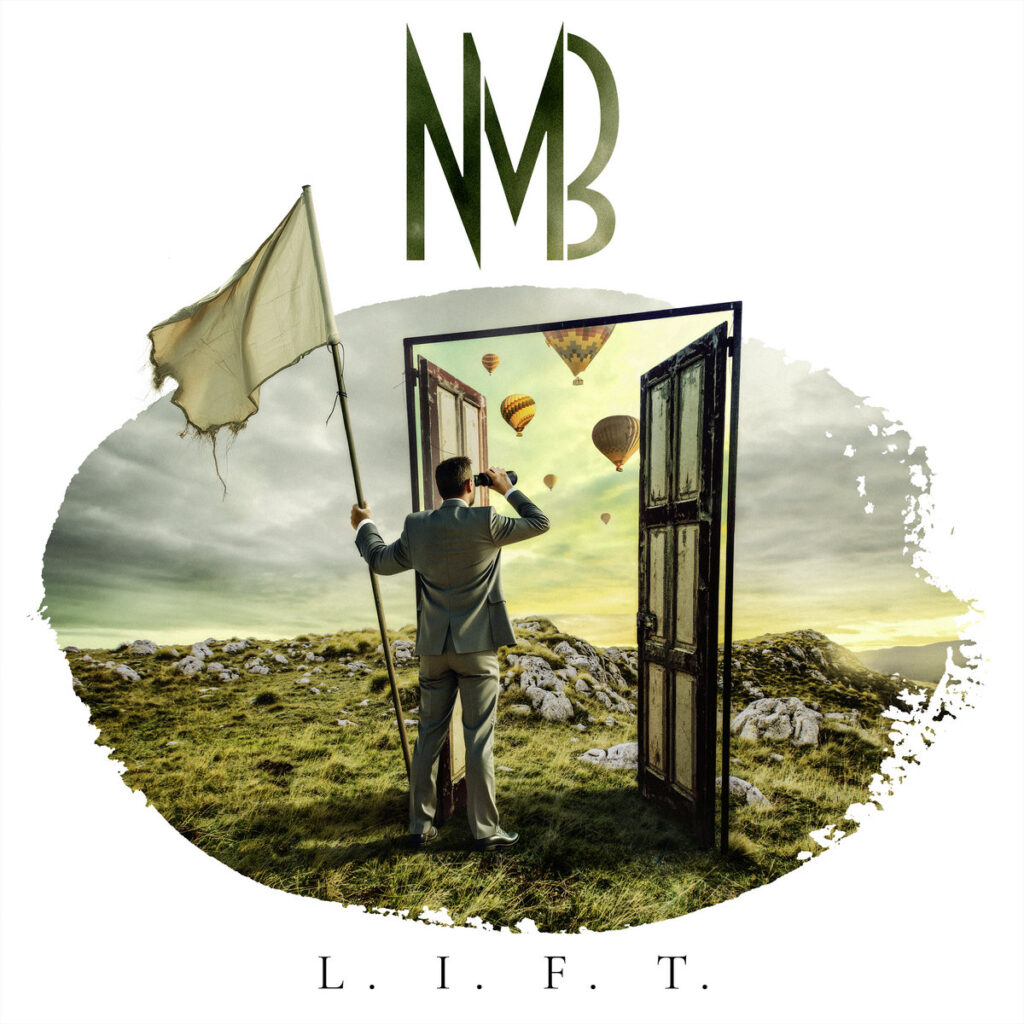
The final question – once you’ve got the album done, how do you go through the process of getting the artwork because this album, like so many of your pieces, looks fantastic. Do you have a brief, or do you give the artist free reign to listen and interpret?
Yeah, we always send the demos. Not demos – the roughs, the rough mixes. This was Thomas Abraheart since, gosh, I’ve been working with him since Day for Night, Spock’s Beard, which was the 90s still!
Don’t try to calculate how long ago, it’s always a mistake!
Yeah, that’s crazy!
Um, yeah, so he listened and we had a hard time, honestly, on this record with two things: the title, and the artwork. They were difficult because, I don’t know why, I was just… I think a few of us, besides me, really wanted to have a one-word title. I love one-word title albums. Brave, Revolver… I like one-word titles if you can find one. It’s not as easy as you might think because everything’s used [laughs].
So, we went round and round with a lot of different things and, of course, the artwork’s so involved with the title. It was a struggle, let’s just say that. And then, one morning, I had the idea for L.I.F.T. with the periods in between. You know, just to make it a little different, a little more mysterious, and maybe people would have fun making up their own meaning for it.
I think, by that time, it was well into September, and we had to deliver this thing by the beginning of October, so we had to get on it. I think the band was kind of “OK, whatever!”
Honestly, I think I was probably the most difficult about it. And I honestly wanted more of a minimal cover. I almost wanted to do like a White Album kind of thing. Just like NMB in one corner and L.I.F.T. almost like a post stamp in the other corner. And nobody was going for it [laughs]. The label was just like [adopts weary tone of voice] “no, nooooo!” [Back to normal] And the band wasn’t into it either. So, Thomas… we finally came up with this compromise of NMB and his image and L.I.F.T. at the bottom, so that was kind of how that went. It was a challenge. I think, you know, we didn’t get the cover until the very last day or something.
Wow!
Yeah, really! Of all the things to struggle with, the music was not that much of a struggle, actually. The mix wasn’t that much of a struggle. But the artwork and the title were. Every album is different, man, you know?
Amazing! Thank you so much for such an interesting discussion.