Few labels do catalogue reissues better than Peaceville. From the sprawling, book-bound boxsets the label released for the likes of Paradise Lost, My Dying Bride, and Autopsy, to double-disc sets of specific albums by the likes of Darkthrone and Candlemass, Peaceville’s reissues are put together with that rare mix of care and attention to detail that tempts in old hands and newcomers alike.
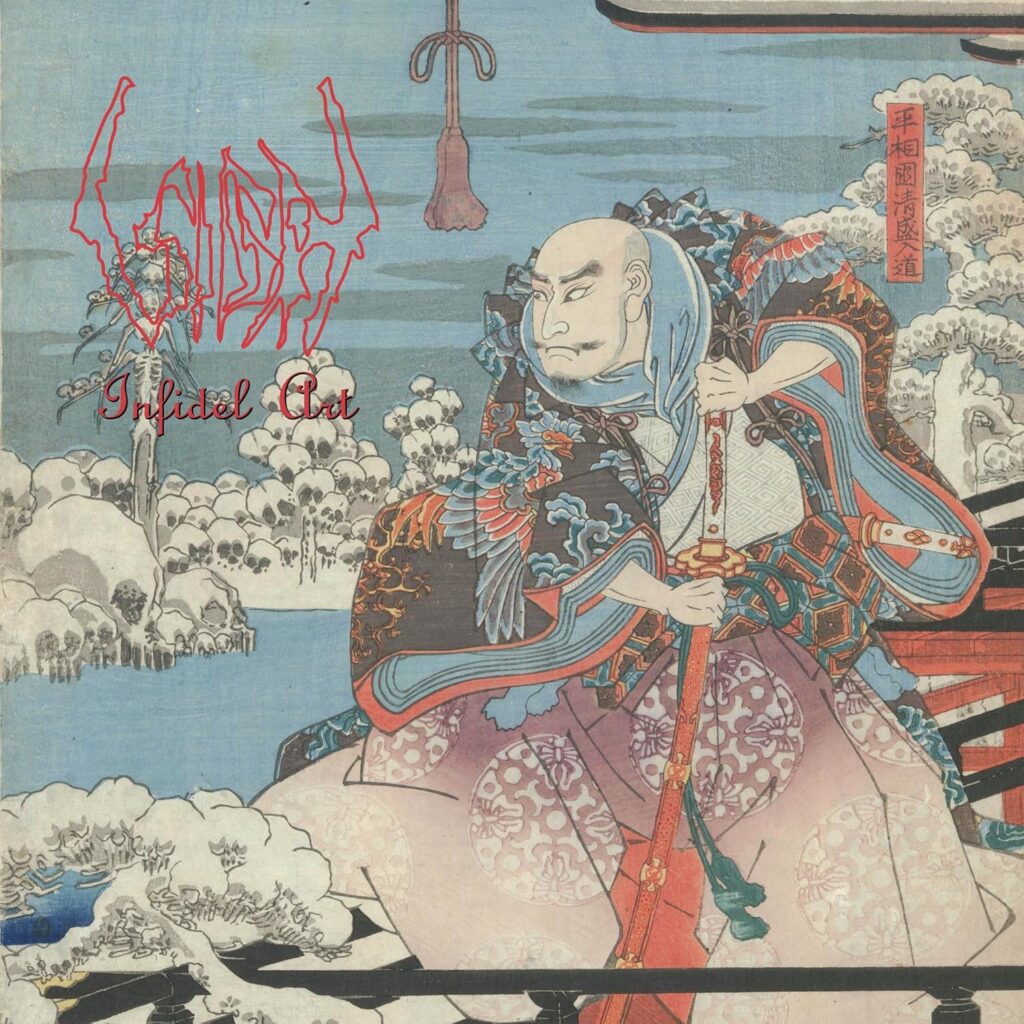
Up for consideration today is the thirtieth anniversary reissue of Sigh’s sophomore effort, Infidel Art and, once again, Peaceville have turned up trumps. Spread over two discs, the first disc sensibly maintains the original album, here remastered by Patrick Engel, but with no bonus tracks to disrupt its flow. With just six tracks clocking in at around the fifty-minute mark, it is an atmospheric, enigmatic work that still has the power to disarm listeners.
For fans of the band, however, the second disc is where the treasures lie. With nine tracks on offer, the disc offers a rare first mix of the album, providing an insight into the working process of the band. Additionally, there are alternate versions of two tracks (The Zombie Terror and Suicidogenic) and a rare EP track from the same period.
Rounding out the package is an expanded booklet containing a brand-new interview with Mirai Kawashima conducted by legendary author Dayal Patterson. A lengthy interview that takes in a number of topics, it helps to place the album in its context.
Disc 1
For this edition of Infidel Art, Patrick Engel (Caliban, Fangorn, Heaven Shall Burn), went back to the original DAT tapes to prepare a brand-new master. The results are stunning, with the album sounding sharp and powerful, but with some of the treble reigned in to create a more balanced sound overall. This is particularly noticeable on tracks like The Last Elegy, where the synths seem better seated in the mix, and the guitars burn with greater intensity.
The album opens with the sweeping Izuna, a lengthy workout that neatly bridges the worlds of traditional heavy metal and classical music. With the extreme elements of the track largely found within Mira’s Chronos-esque bark and the frantic percussion, the melodies and structures are incredibly ambitious, placing the band alongside the likes of Emperor and Celtic Frost in the great pantheon of black metal. A sprawling piece, it takes its time establishing itself, with the second half given over to progressive flights of fancy, underpinned by piano and synth. These same elements travel over into the next piece; a grandiose track titled The Zombie Terror. Heavy from the outset, it slowly morphs into a progressive synth piece which, with its flutes and pianos, aligns as easily with Pink Floyd’s Atom Heart Mother, as anything within the heavy metal firmament. Yet, what is remarkable is not the band’s experimentation itself, but the fact that they manage to weave so many disparate threads together in so organic a fashion.
The true depth of the album is laid bare on the astonishing Desolation, which draws upon so many different elements as to be wholly unique, even some thirty years later. From an opening that nods to the scabrous doom of early Paradise Lost through to a denouement that has more in common with Baroque than Bathory, the only thing that could possibly improve upon the stunning arrangement would be the addition of an actual orchestra. It’s followed by The Last Elegy, which reverses the approach, opening as a musical fantasia before the band lurch into action; offering up a dark, mid-tempo riff offset with the sort of Eastern elements that Therion would slip into Vovin a few years later. At over ten minutes in length, it’s a bold piece of music that has more than stood the test of time and, with Patrick Engel’s remaster allowing more space for the mix to breathe, it’s almost like hearing this masterpiece for the very first time.
The album’s shortest track, Suicidogenic opens on a neo-classical note, complete with huge gothic organ passage, before devolving into a frantic proto-thrash assault worthy of Venom. Coming at the heart of so dense an album, it’s like a dash of cold water to the face, paving the way for the final act.
With the band having indulged their more brutally minimalistic tendencies, they return to symphonic pastures for the suitably epic finale, Beyond Centuries. It opens with a subtle, picked intro before taking in everything from Paradise Lost and Celtic Frost to Mozart and Bach, the latter specifically in the dense organ passages that proliferate in the second half. It’s a remarkable work and all the more impressive that the band had already
Disc 2
The first mix included on disc two is a nice touch but offers few surprises. While rawer than the final version, this early mix highlights both the strength of the band’s musicianship and the clarity of their vision, with the bulk of the elements placed in a similar configuration to that which would eventually be released. Where moments do stand out, it’s usually in terms of synth elements that have been subtly altered – for example the closing passage of The Zombie Terror, or in the introductory passage to Desolation, where they appear to have been significantly embellished after the initial mix was completed – and in the professional touches added to the vocals, which are gloriously raw in this iteration.
Overall, it’s very much an extra for the fans, with the primary finding being that the band’s initial instincts were right on the money. However, for those who enjoy a game of spot the difference, it can be interesting to cue up the different versions and see what stands out for you.
The disc also offers a handful of alternate versions of tracks. The Zombie Terror (Far East Gate In Ferno Version) is marginally shorter and somewhat more brutal, with grinding guitars and a buzzsaw tone that nods to early Mayhem. Then there’s the Kawir split EP version of Suicidogenic, which shaves over a minute off the run time, placing the focus squarely on primitive thrash. Eschewing the expansive introduction of the album version for a brief pipe intro, it gets straight to the bloody point and, while it’s a cool version, you can’t help but miss the ambition present on its album counterpart. That said, it dovetails neatly with the band’s dark and dirty cover of Venom’s Schizo, which is also drawn from the split EP with Kawir. A ramshackle track, it finds the band having fun in the studio and it wraps up this excellent second disc nicely.
The Infidel Art
Peaceville reissues are more or less the perfect way into an album for the newcomer and the ideal opportunity to revisit a much-loved classic for the fan. Put together with care and attractively priced, they are not so exhaustive as to put off the casual listener, nor so lazily compiled as to prove redundant. With liner notes providing valuable context, a wealth of bonus tracks that help to frame the album’s development, and a pristine remaster that has the core material sounding better than ever, this is the definitive edition of a black metal classic.
And classic is indeed the word. Infidel Art is a remarkable endeavour from a band whose ambition and musicianship saw them exploring the fringes of black metal with an enthusiasm and skill that ensures the album still feels fresh and exciting three decades down the line.
9/10 [original album]
9/10 [Reissue]