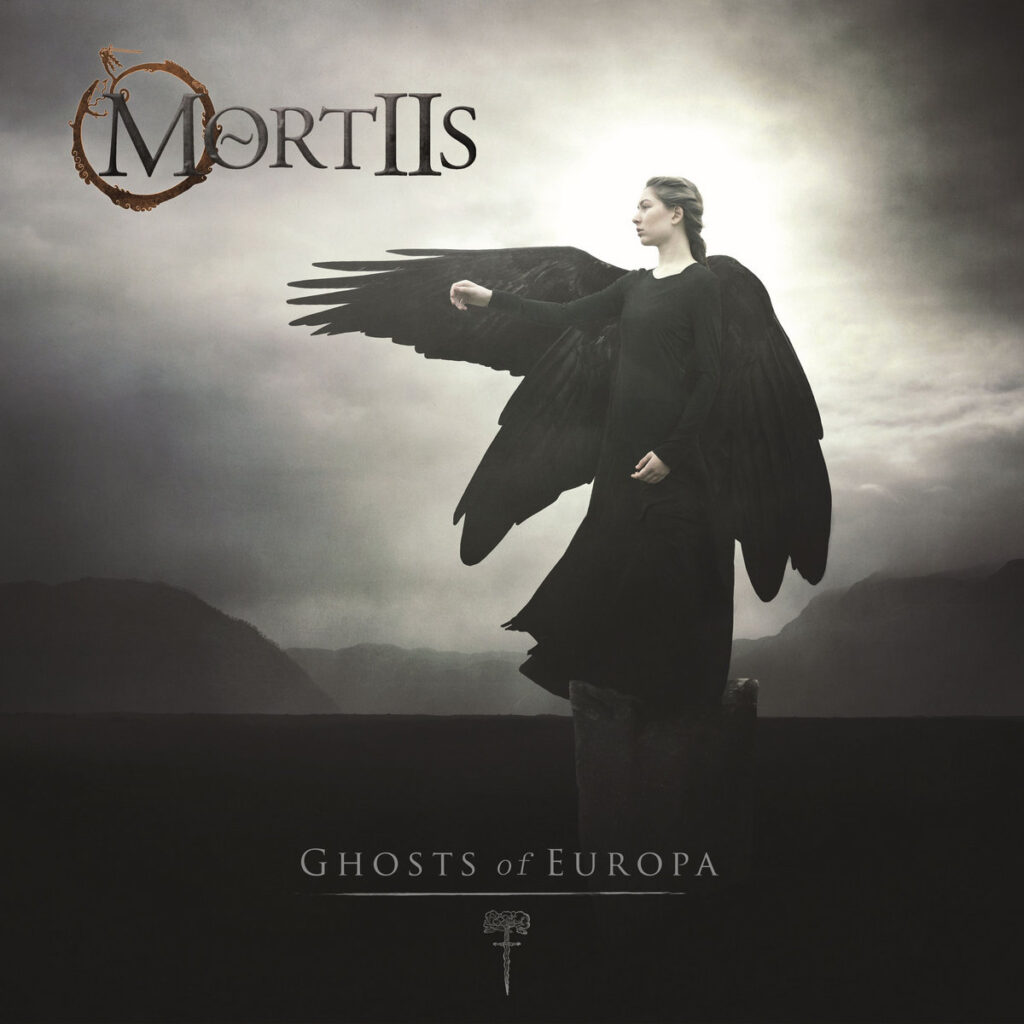
It has been six years since Mortiis’ last album, 2020’s Spirit of Rebellion. Unlike that album, which harked back to Era 1 of the band by reworking 1994’s Ånden som Gjorde Opprør, Ghosts Of Europa mixes ambient, neo-classical, industrial, and electronic rock into a beguiling whole that effectively traverses all of the Eras through which Mortiis has passed over the years. As such, it emerges as one of the band’s most complete records, with the music greatly benefitting from Håvard Ellefsen’s experience and ever-growing confidence in the studio.
The album opens with the stunningly atmospheric Ghosts of Europa, a gleaming synth-pop track that mixes elements of Ulver, Depeche Mode, and Hans Zimmer into something that pulses with barely restrained emotion. A beautifully rendered and arranged piece of work, you soon find yourself lost within its haunting passages, barely noticing the 7 minutes of its runtime as they drift dreamily past. The track segues directly into Return to The Old Fields, which adds shades of Brad Fidel and Peter Gabriel to the influences already present, resulting in an industrial-tinged take on Zimmer’s work with Lisa Gerrard. Cinematic, grandiose, and evocative, this is music from another realm, the dynamic shifts and varied vocal styles employed only serving to immerse the listener further within Mortiis’ unique world.
The slow-burning The Faith That Fades Away has an Ulver-via-Kubrick vibe to it that takes its time to get to a melody, emerging from an analogue synth haze that is as enigmatic as it is engaging. In contrast, Violent Silence is a direct piece of music that pairs John Carpenter synth stabs with heavily manipulated vocals, the resultant piece sounding like some long-last offcut from the Escape from New York soundtrack.
The sense of wild, untamed landscapes returns on Transcending Morpheus, an eerie, airy epic that eschews taut rhythms for indelible atmospheres carved out by the carefully entwined vocals. Pitched somewhere between Dead Can Dance, Enya, Hans Zimmer, and Aphex Twin, it’s a unique piece of music that sits at the heart of this endlessly evolving album.
As the album progresses, so it continues to mutate, landing on the insanely catchy Tundra, Heart of Hell, which draws liberally from Depeche Mode and New Order, to the extent that it lifts the drums almost directly from Blue Monday, although it builds to something far heavier as it wends its way towards Tribes of Dystopia (Edit). A gleaming track built around a pulsing arpeggio, Tribes once again digs into John Carpenter’s slightly unsettled world, while the vocals – hypnotic and layered – nod to Clannad’s new age folk, only for things to take a harder, industrial turn when Mortiis himself enters the fray.
So immersive is the album that it comes as something of a surprise when it lands on the final track, Farewell Romero, so suddenly. An enigmatic track with an element of Antichrist-era Marilyn Manson within its DNA, it opens with the haunting question, “how long can you remain human, when they treat you like an animal?” One of those pieces of music that seems to seek catharsis in the darkest recesses of a world grown increasingly cold and cynical, it’s a harrowing finale that will find many pondering its deeper meaning in silence long after the record has spun to a halt.
Over the course of just under an hour, Mortiis invites the listener to join him on a journey that takes in spectacular vistas and moments of sublime intimacy. Beautifully produced, it offers haunting melodies, immersive soundscapes, and the occasional blast of adrenaline, such as Tribes of Dystopia, just to keep things moving briskly along. Engaging and original, it’s one of those records that seems to reveal new elements each time you listen, and it stands as a deeply impressive entry into Mortiis’ unique catalogue. 9/10