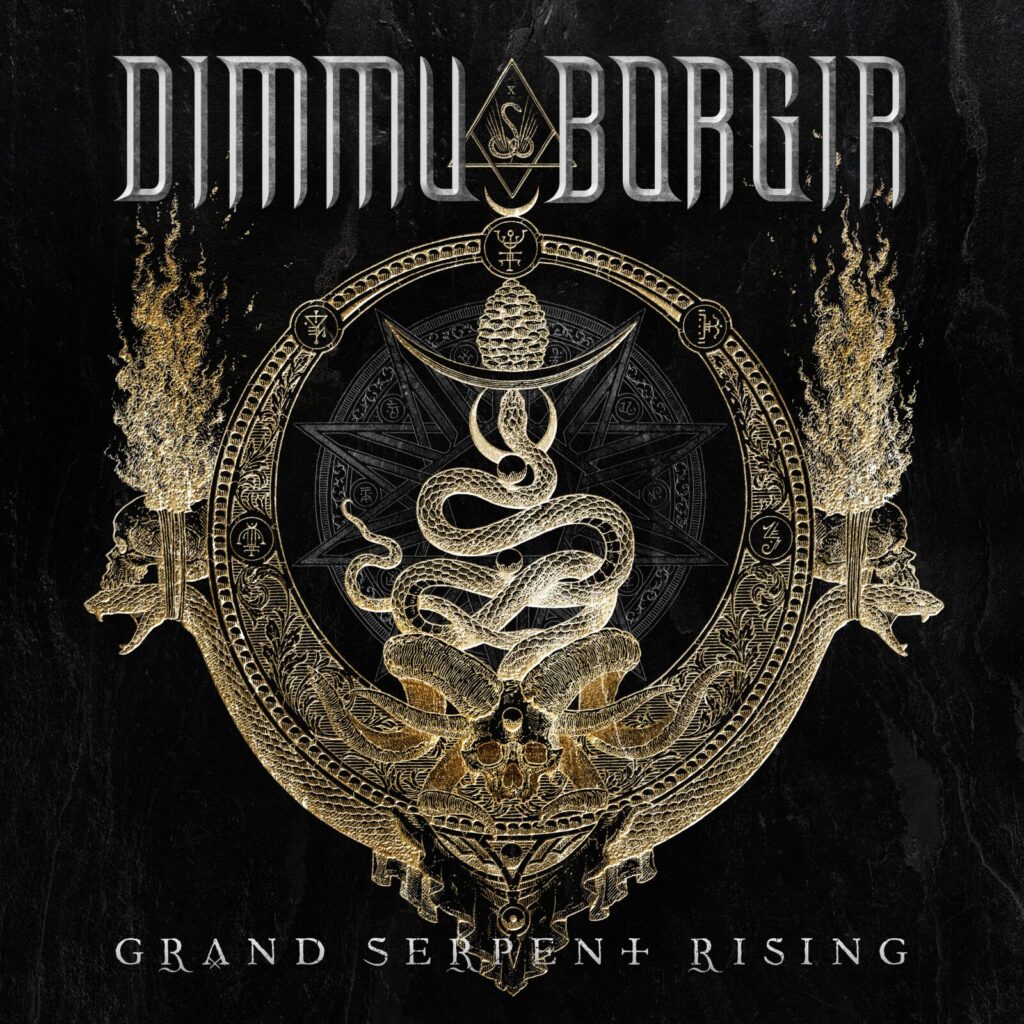
From their formation in 1993 to Abrahadabra in 2010, Dimmu Borgir developed their sound at pace, releasing albums on a fairly regular schedule. However, beset by line-up changes and determined not to write music on the road, the band slowed down considerably, with an eight-year gap between the release of Abrahadabra and Eonian (2018). Since that album, Dimmu Borgir has been reduced to just two members – Silenoz and Shagrath (Galder having departed the ranks in 2024) – with Daray (drums), Gerlioz (keyboards), Victor Brandt (bass), and the newly appointed Damage (lead guitars) serving in a session / touring capacity.
While the band may have shrunk, Silenoz has argued this is a positive development. Without diminishing the valuable contribution of the session musicians, he noted that having the core ideas originate between himself and Shagrath brought a clarity to the sessions that was further enhanced by the presence of longtime collaborator Fredrik Nordström. The result is a thirteen-track album that finds Dimmu Borgir stepping up to deliver a masterclass in melodic, extreme metal.
Grand Serpent Rising opens with the ominous Tridentium. A suitably grandiose introduction to the album, it harks back to the orchestrations of Fear And Wonder, the sound of howling wind and pouring rain heightening the gothic atmosphere still further. When, as they must, the band enter, it is with a blackened flourish that exudes menace. A dense, cinematic piece, it is easy to lose oneself within its dark swirl, which only makes the comprehensive battering of Ascent all the more brutal. A track that switches from opening barrage to mid-tempo groove, it showcases a harder-edged Dimmu Borgir than we’ve heard on record, at least since Death Cult Armageddon. In contrast, the sinister clean guitars and rippling synths of As Seen in the Unseen, find the band dabbling in the same uneasy esoterica as the excellent Aeonian. It goes to show that, even when the heavy riffs do appear, the band don’t feel compelled to show their hand all at once, taking their time to ratchet up the tempo before finally unloading with visceral force.
Another strong offering, The Qryptfarer revives the band’s Puritanical-era trick of combining monstrous riffs with a carnival atmosphere that plays out like an extreme take on those old, grimy Hammer movies that had vampires travelling hand in hand with carnival folk. It’s a massive track, imaginative and powerful, showcasing just what the Dimmu Borgir of 2026 can do.
Given that Dimmu Borgir albums tend to flow as a complete piece, I had avoided listening to lead single Ulvgjeld & Blodsodel. Hearing it now, in the context of the wider album, it’s easy to see why it was chosen to head the campaign. It’s another multifaceted piece that combines film score elements with searing heavy metal, and the result is a dark pairing of Carl Orff and Venom, with pulsating riffs, a gravel-throated performance from Shagrath, and even vast choirs, mixed in there somewhere toward the back of the soundstage. No less remarkable is Repository of Divine Transmutation, which opens upon a sublime piece of picked guitar that is almost baroque in itsornate beauty. It is an interlude, of course, and it leads into a vibrant, mid-tempo piece that nods to the criminally underrated In Sorte Dioboli along the way.
Having explored a more dramatic side to their oeuvre, Dimmu Borgir deliver a pure heavy metal anthem. Titled Slik Minnes en Alkymist, it finds Shagrath intoning the lyrics in Norwegian as the band nod to the likes of Judas Priest and Twisted Sister, with just a touch of Therion thrown in for good measure. It’s a reminder that Dimmu have never been afraid to rock when the mood takes them (lest we not forget, this is the band that out-twisted Twisted Sister with their epic cover of Burn In Hell), although the darkness soon returns for the creeping horror of Phantom of the Nemesis.
Having ramped up the pace on Phantom, Dimmu waste no time on the lean, mean The Exonerated, which perfectly pairs orchestral passages with fearsome lead runs. It’s followed by the grandiose Recognizant, which is pure old-school Dimmu, heavy as hell and built around a series of riffs that lance at the listener from out of the darkness.
The final third of the album finds the band returning to the epic landscapes found at the album’s core, with the majestic riffs of At the Precipice of Convergence awash on a sea of strings. Once again, you can feel that this is a band driven by a compelling artistic vision, with no room for compromise, and it’s impossible not to be swept up in the Grand Guignol excessiveness of it all.
A music box melody provides a moment’s respite from the violence, if not the looming sense of unease, before a dark choir summons the band to the fore once more for the queasy black metal of Shadows of a Thousand Perceptions. It only remains for the instrumental Gjoll to see the album out on a more atmospheric note, the eerie sounds of nature crying out over a backdrop more reminiscent of Mortiis’ soundscapes than of the blazing metal found elsewhere.
It may have been some time coming, but Grand Serpent Rising has been more than worth the wait. For those who found the band shading just a touch too far into theatricality on recent releases, the album pointedly resets things, with Dimmu Borgir unleashing their heaviest set of songs in some time. With a suitably dense production and great performances all round, let’s hope it doesn’t take another eight years for the band to return to the studio. For now, however, Grand Serpent Rising is one hell of an impressive return to form and it emerges as a very good album indeed. 9/10