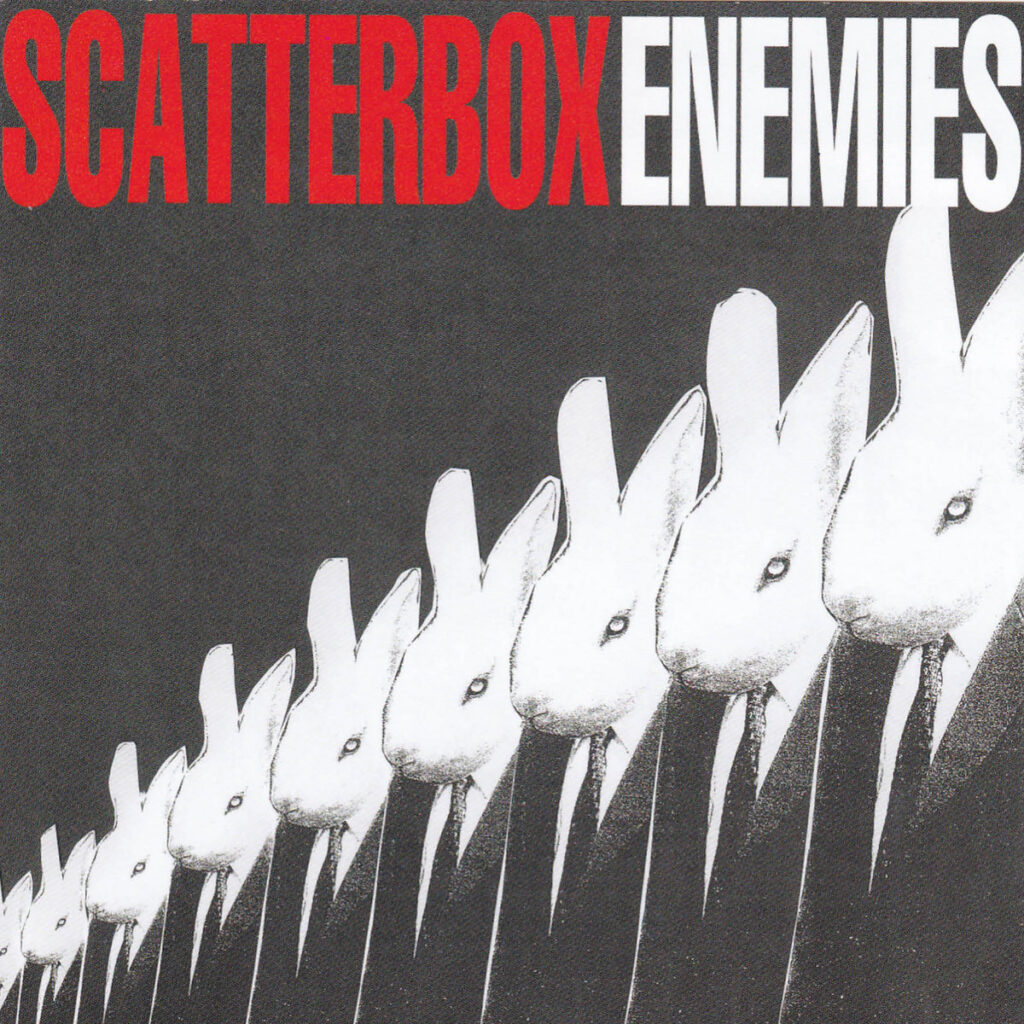
Idaho-based hardcore noiseniks Scatterbox have been around since 2000 but, for me, this is my first encounter. And, to be fair, as soon as I heard about the band’s reworked Enemies, I kinda figured we’d be friends. Following in the footsteps of Whipping Boy’s stunning Dysillusion, Enemies finds Blackhouse Records once again masterminding the reworking of a misunderstood release from the band’s archives.
Recorded in Seattle with Tom Pfaeffle (Queensrÿche, and The Blood Brothers), the sessions were struck by tragedy when Pfaeffle was killed. While the band struggled on, eventually completing the sessions and releasing the album in 2008, they were never happy with how it sounded. The album took a further hit when label changes and a lack of promotional support meant that it quietly faded into obscurity, a curio that the band probably assumed was dead forever.
However, having finally regained possession of the masters, Scatterbox had the opportunity to make things right and, in conjunction with Kaleb Wrenchey (Rings of Saturn, Fetish), they set about reworking the mix from the ground up to present an entirely fresh version of an album that never got the break it deserved.
Right from the start, it’s clear that this is a very different album. Gone from Barf Lie is the hesitant count in from the original, the track now starting with a rolling percussive assault from Scott Rozell that has been considerably tightened. With the guitars now set to stun and much more effectively balanced, you can hear the layers unfolding rather than competing within the same sonic space, and it makes for a much more enjoyable experience. It’s quite the entrance too, with the band taking a full minute to build up the tension before singer Tom White explodes onto the scene, delivering a performance that sits somewhere between Ian MacKaye and Chuck Ragan.
With the first track essentially catching the listener on the back foot, it’s on the crisp Captain Feeble that you are able to simply appreciate the work the band have done here. Rather than modernise the album, they’ve opted to produce the record as it always should have been, using modern technology to gently clean the individual elements and slot them into place rather than to augment or artificially buff things to an anodyne shine. It’s a brilliantly nuanced effort and the result is a record that could just as easily have been recorded in 1998 as 2008, or indeed 2026. As such, once you’ve taken a moment to admire the distinction between the two releases, you can simply kick back and enjoy the great tunes that make up the album.
And it is an album made up of cracking tracks. Check out the fizzing guitars and churning bass of End Note as a case in point, Tom spitting lyrical venom as the band create a fair approximation of a riot behind him. Then there’s Skull, an early album highlight based around a stabbing riff and possessed of a chorus that lands with such simple force you’ll be singing the damn thing into next week. However, it’s not all punk bangers. The slower paced Radio Midnight shows the band can dig into a darker, alt-rock vein when they feel so inclined, even if Scott’s increasingly off kilter percussion does presage a mid-song volte-face to something far more brutal.
Short and sharp, Twelve Ounces Of Joy simply blazes past in a smear of hyper-speed guitars (courtesy of Mark Cogburn and Sean Nichol), while Two Stroke Devils bridges the gap between ramshackle punk rock and the megaphone grandstanding of Green Day circa American Idiot (and, with Bush in the White House, both bands had the same target, even if they had different ways of reaching it).
With the album blazing past, the band unleash a gloriously cynical swipe at hipster douchebags with Scenester Do’sbefore the absurdly catchy Elemental gets the blood pumping even if the track is mired in so much distortion you can only broadly make out the riffs that power it. It’s followed by the frenetic Distraction, which finds the band daring you to keep up with the octopus-armed Scott, while Robotic provides a decent showcase for Ryan White’s nimble bass work as samples crash through the mix.
The album wraps up with a pair of utterly deranged pieces. First, there’s Vice, a three-minute punk blast that makes you marvel at how the band are able to keep up such a bruising pace. Then there’s the dirty riffs and unhinged vocalisations of Null, an 80-second wipeout that brings the record to an utterly delirious conclusion.
Not being too familiar with Scatterbox, when I started the review, I was comparing tracks with the original release, just to see for myself what had changed. Within a few songs, however, I was too invested in the music to really care too much. What can I say? The band, along with Kaleb Wrenchey, have done an outstanding job and anyone who loved the original will surely love this. More to the point, in bringing this album back from the dead, Scatterbox have given a whole new audience the opportunity to appreciate just how damn good they are. This is a frantic, joyous blast of hardcore punk, delivered with passion and skill. I started this review mildly curious, I ended it wanting to go and buy the band’s entire back catalogue… that seems like one hell of a success to me. 9/10
Fancy checking out the original issue? Here it is: