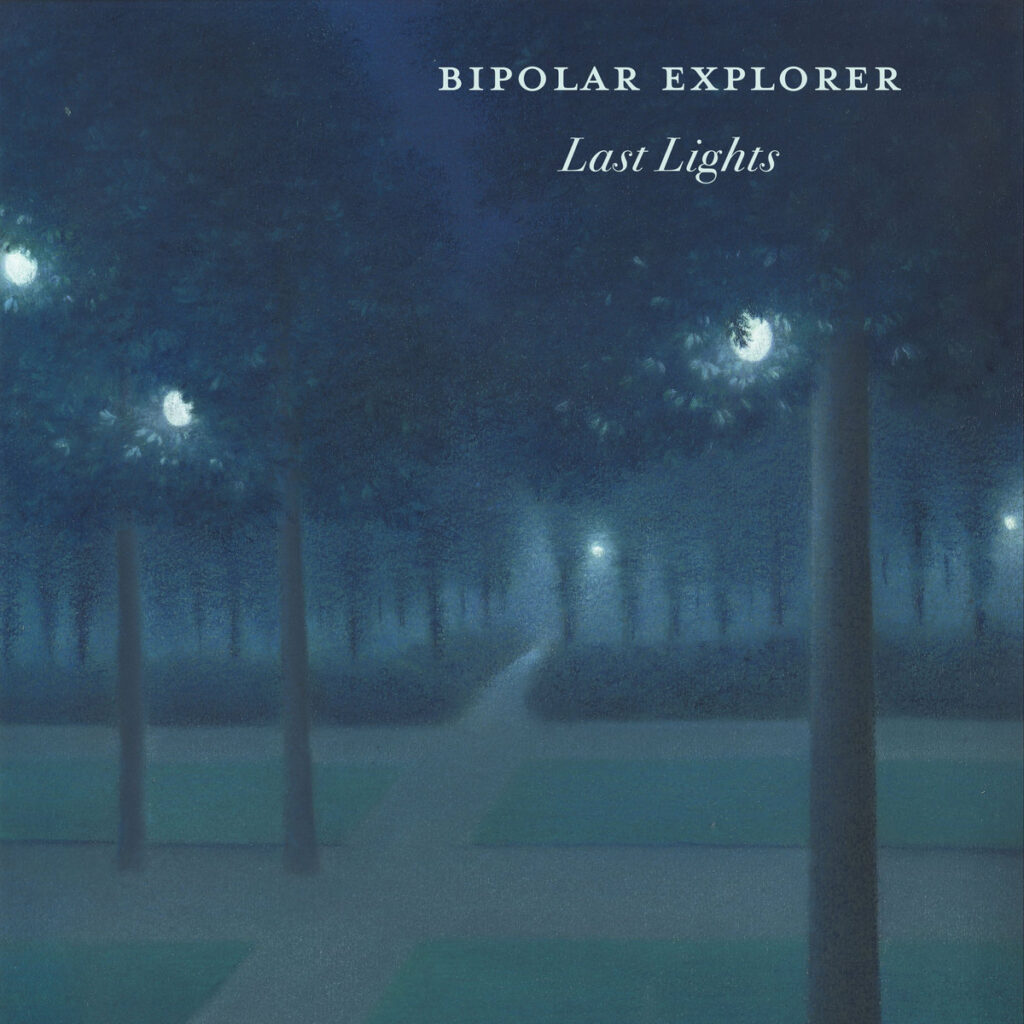
It’s been a while since I came across a band like Bipolar Explorer, although it does nicely hark back to teenage years spent leafing through the N.M.E. in search of bands like Spiritualized, Low, and Mogwai, the airy music weaving a web around the listener and confining them within a world built of gleaming silk. Here, I have an experimental release that is an epic two hours and twenty minutes in length.
Settle in, this may be a long ride.
A three-piece band comprising Summer Serafin (vocals, spoken word),
Michael Serafin-Wells (vocals, guitars, e-bow, bowed guitar, baritone guitar, bass, Moog Grandmother synth, Yamaha MX-49 synth, organ, sine pad, melodica, chimes, tape loops, percussion, spoken word), and Sylvia Solanas (spoken word, synths, backing vocals), Bipolar Explorer recorded this epic outpouring live at The Shrine in New York City (NY) and their house in France. The band took on production duties themselves and the results, while undoubtedly an unfiltered representation of the band’s intent, are impressive if a little overlong.
The opening track, Straitform, is a case in point. Bridging the gap between the traditionally electronic-oriented soundscapes of ambient and the slightly jangly indie-psych of Spiritualized at their most dazed and confused, it’s a seven-and-a-half-minute exploration of rock’s haziest fringes. Not exactly formless, it is closer in intent to the weird perceptual shifts evoked by the title when, as dusk falls, objects start to lose their resolution, the gently droning feedback and wordless vocalisations only dimly discernible in the twilight. As such, it is music best heard with the curtains drawn, the listener simply allowing the ambience to wash over them, with the only mild disappointment being a fade-out rather than a segue into the haunted frequencies of The Light Calls To Us. A short piece, it pairs poetry with the ringing tones of wine glasses in a manner that nods to Pink Floyd’s ill-fated Household Objects project.
The album’s third track, St Nestor’s Day, finds the band bringing the music slightly more into focus for a folk-drone piece that wouldn’t sound out of place on an Angels of Light album. With clean guitar lines, reverb-drenched vocals and what sounds like either controlled feedback or E-bow, it’s a rather beautiful piece of music that contrasts nicely with the ambient drone of Four Saints, Part 1, a slow-motion unravelling that ebbs and flows through the listener’s consciousness, subtly beckoning you into the album’s dreamy core.
If the album’s opening four tracks prepare you for anything, it is for the unexpected and, as Secret Angels Beneath the West Side Highway Overpass ably demonstrates, the band are not done with the surprises. Underpinned by subtle industrial noise and overlaid with found sounds, it has a sense of tension that recalls Hans Zimmer’s near-ambient score for The Dark Knight Rises.
Remember how that film used space and unsettling noise in favour of typical cinematic bombast? Here, Bipolar Explorer use a similar sense of space to create a genuinely unsettling composition that scrapes away at the nerve endings. Thank goodness, then, for the sanguine drone of Behind The Sun, which finds unlikely inspiration in the synth-driven soundtrack Mark Snow curated for The X-Files, quasi-orchestral sounds included.
With the preceding tracks rooted in pure ambience, it’s almost a surprise when The Ides Of March brings the guitars back for a lovely moment of slow-core reminiscent of Low, especially in the way the vocals are layered over one another. It is, however, merely a brief musical oasis on the way to the found sounds of Passage, which sets the sounds of the subway to a light drone that runs over into the aptly titled Slow Motion.
This is followed by the truly epic Across The Northern Winter Sky, which brings together ambience, post-rock, and drone for a ten-minute instrumental piece that is simply beautiful. One of those pieces that just seems to drift through the speakers, it marks a turning point in the album, with Halcyon Days returning to the dreamy poetry of The Light Calls To Us.
Poetry gives way to slow-core on the dreamy Turnabout, which sounds like The Byrds recorded in a giant, metal-walled echo chamber, taking the dreamy psych of the 60s and rendering it lost in a sonic hall of mirrors. This is, however, only a digression and we’re soon back to ambient for That I Wept To Dream Again, which finds voices echoing somewhere amidst the layers of vocals and synth. In contrast, A Better Place strips away the vocal elements for a piece that floats in the same ocean hitherto inhabited by Sigur Rós at their most glacial.
The album shifts focus again as the band dip their toes back into unsettling waters on the short Of Things To Come, which presages the ominous Four Saints, Part 2. Heavy on the drone, with dark poetry at its heart, it leaves the listener feeling twitchy and uncomfortable, only for Anyhow to once again reverse the flow. It’s not a bad song but it’s a pattern we are now starting to recognise, making you wonder if the band wouldn’t have been better to have pared back the number of songs on the album, with a view to maintaining the aura of the unexpected that hangs over the first half of the record.
The album’s final third, while containing a number of impressive songs, cements this feeling, even if the band opt for shorter songs. The Christmas steps of Two Miles Away and the eerie ambience of Foreign Film showcase a different set of dynamics, but they’re followed by the less successful Falling, which feels rather more like a demo than a fully formed song. It does, however, lead to the sci-fi synths of Orchestral Moves – another Mark Snow moment, thanks to the plastic orchestra patches with which it opens, although it’s soon overshadowed by the heat-haze beauty of It’s Getting Dark.
A lengthy rumination, East of Elsinore is a seven-minute piece that explores the cold landscapes of Hamlet, with icy guitar figures set against gentle percussion. It’s followed by the shorter Nightships, which once again benefits from poetry delivered in an understated, almost hypnotic fashion. It leaves Guided to wrap the album up with one last burst of dreamy psych, the reverb-riven pop song feeling almost celebratory in execution. A lovely final track, it really captures the sun-kissed wonder that typically feels so peculiar to pop bands of the ‘60s.
It seems, to be honest, a little optimistic to cap off a twenty-five-song sequence with a ten-minute bonus track and given that the Dreams of the Bell Tower Watchman is largely a found-sound piece that captures the sound of a tour group exploring the titular Bell Tower, it does feel a little redundant, especially after the warmth of Guided. It’s not without its merits, and it does fit alongside some of the more abstract material on the album, but it seems a shame to place it as a sort of coda, the band having so definitively brought the album to a close on the previous track.
Last Lights is an ambitious double album that, while beautifully rendered, would have been better for tighter editing and, potentially, had it been released as two separate volumes. Part of the problem lies in the fact that, once you recognise the structure the band employ, the effect diminishes with each return, and it’s hard to imagine the average listener wanting to lose themselves across all twenty-six tracks in a single sitting – something that the best double albums actively encourage.
That said, for the listener willing to invest their time, there is much to enjoy across the course of the album, and it is a pleasure to lose yourself within the warm embrace of the band’s music. While it needs tighter editing, Last Lights is nevertheless a beguiling trip into a world rarely explored, and it is well worth checking out. 8/10