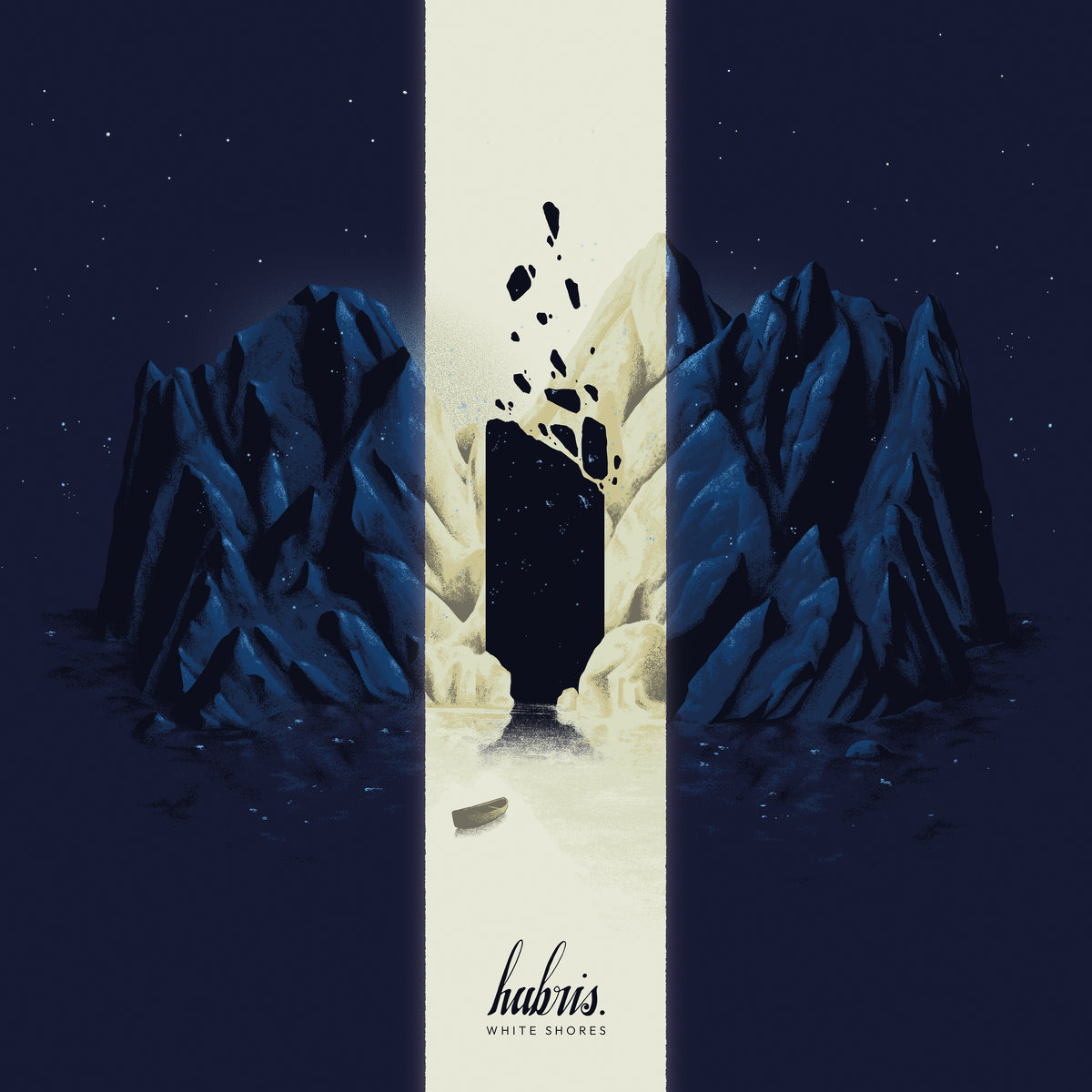
White Shores is the fifth album from Swiss post-rock band Hubris. Up to now, the band’s efforts have neatly tied into Greek mythology but here, in the wake of his grandfather’s passing, primary songwriter Jonathan Hohl has tapped into a quote from Lord of the Rings to drive a remarkable album that takes loss as its starting point but arrives at a place of hope
The album opens with the naked, shimmering beauty of Death, which is built around a simple guitar motif. It takes over a minute before it progresses, drums and heavily reverbed ambience quietly entering the fray and pushing us toward the ethereal track that follows. Spread over eight minutes, it is a leisurely piece indeed that seems, somewhat paradoxically given its title, hopeful rather than despairing, although there is a gentle melancholy in the woozy leads that emerge from the track’s core. While, as might be expected from a post rock band, there is much that is familiar – elements of Mogwai and Red Sparowes being chief among the influences – there’s also a dynamic pulse that keeps things moving, as well as a number of less obvious references, including Joe Satriani’s evocative playing on the lead breaks. It makes for a mesmerising start to the album.
Death segues directly into Is, which finds a reverse-phased guitar floating on a sea of cut glass and illuminated by the first rays of the morning sun. It’s a subtle, constantly shifting piece with something of a Pink Floyd vibe circa The Endless River, only to expand into a wholly different space, complete with swirling elements straight out of Chemical Brothers’ more psychedelic fare. It’s followed by Just, which opens on a cyclical rhythm playing out under delicate shards of guitar. At 9:33, it’s the album’s longest track and it expands considerably as the band slowly weave in each new element. While the track does build quite the head of steam, it primarily relies on hypnotic parts that swell and overlap, the ever-growing volume drawing the listener on a shared journey into the unknown rather than forcing them off along their own path. A wondrous, light-filled epic, in many ways it provides the album with its emotional core and, as a gentle piano motif emerges, you are left feeling somehow refreshed by what you’ve just experienced.
Rather more direct is Another, a shorter piece that draws on elements of Radiohead’s post-OK Computer work as well as electronica (most notably Leftfield’s full-band excursions), and post-rock to form a shimmering, fast moving piece that seems to brighten wherever you are with its many points of light.
The final two tracks of the album, Path I and II work very much as a single piece. Path I opens on a more sanguine note, with elements of Tool’s rhythmic attack emerging as the band layer guitar upon guitar until it all breaks down, showering the listener with blazing, metallic riffs. It ends on a note of woozy ambience that paves the way for Path II’s subtle trip hop notes and dub inflections. While it may take longer to get to the pay off, it’s all the more rewarding when the band finally do let the track off its leash, the hulking great riffs and elegant leads once more finding hope in loss, leaving you unexpectedly lighter of spirit.
A deeply evocative album, White Shores is a hope-filled meditation on loss and life that finds hope and meaning where so many might find despair. Without a single lyric, Hubris guide you on a journey that, for forty short minutes, finds you floating free of the everyday and, while it’s a world of your own imagination, it’s made all the brighter by the band’s ability to pen tunes that seem to glimmer with the hope and belief that there is something more out there. 9/10