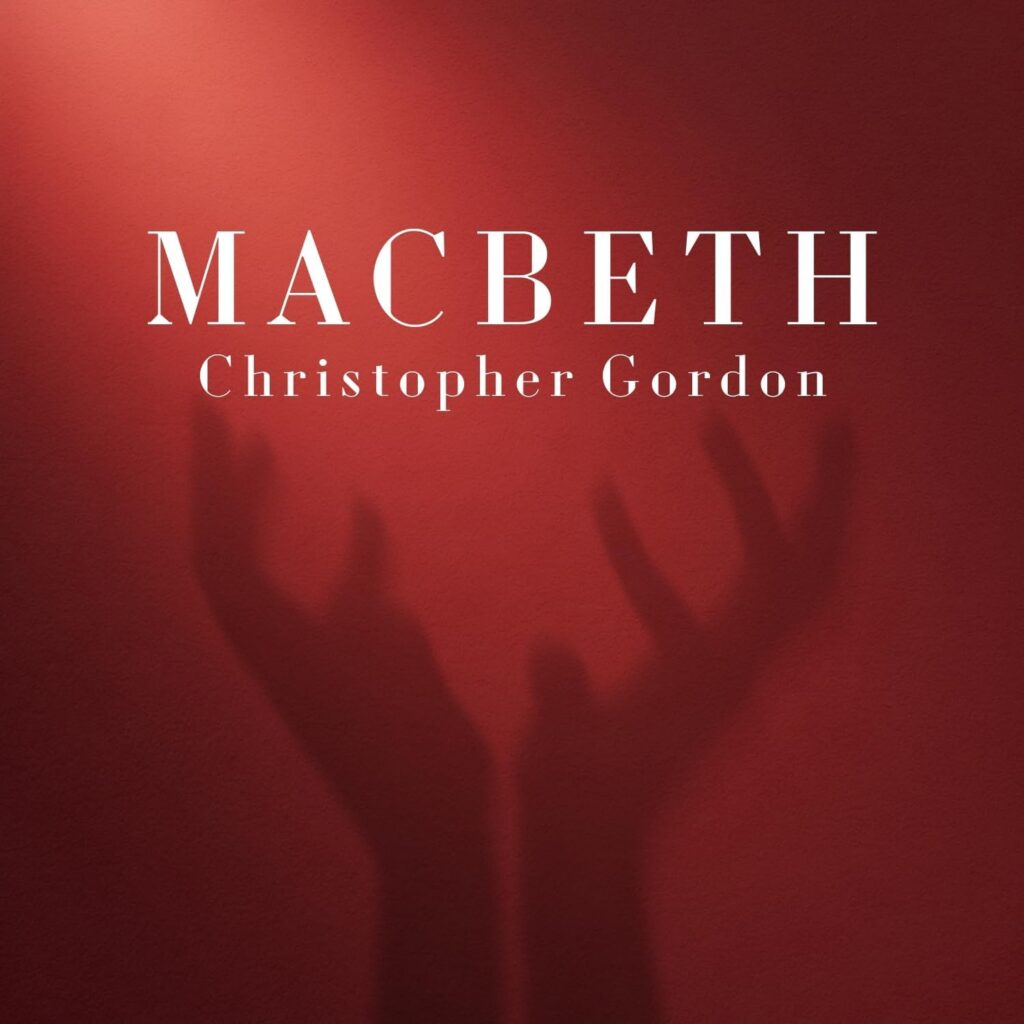
Evocative, beautiful, and darkly mysterious, Shakespeare’s Macbeth is a demanding work that weaves magic, mystery, greed, ambition, and tragedy into a compelling narrative that continues to resonate. As with so many of Shakespeare’s tragic works, part of what makes it so compelling is that Macbeth, at the outset, is a character who could be worthy of respect. He is not an archetypal villain, scheming for the sake of it. He is seduced, first by a trio of witches who plant the seeds of his downfall and then by his wife, who goads him into a frenzy. While he gains the power he coveted, it is at terrible personal cost, with violence breeding violence until, at last, it recoils upon those who unleashed it.
Endlessly relatable, a permanent fixture on the stage, and the subject of multiple films, Macbeth is an indelible workthat has now become the subject of a full-length ballet. Composed by Christopher Gordon, this striking work features a remarkable cast of musicians, including Gavin Harrison, Jonas Reingold, Randy McStine, Greg Howe, Mohini Dey, Marcel Coenen, and Michael Mills, all of whom join Sydney’s Magic Fire Orchestra, the Cantillation Choir, a string octet, and a number of soloists. The result is a truly unique work that brings together prog, classical, jazz, and metal to create an original soundtrack for an immortal work.
It opens, as does the play, with the great battle that sets Macbeth on his bloody path. The piece, titled The Battle Lost and Won, draws inspiration from Hans Zimmer (most notably Dune), Elliot Goldenthal, James Horner, Genesis, and Dream Theater, moving from a discordant opening into a full-bore prog-metal workout that must have the dancers working themselves into a frenzy. Where the piece excels, for me, is in the martial theme that emerges around the third minute, with the rich tones of the brass echoing the inimitable work of James Horner, whose soundtracks for Aliens, Star Trek II, and 48 Hours gave such weight to their narratives.
While The Battle Lost and Won would appear to establish a tone for the work, Christopher skips nimbly to This Night’s Great Business, which proves to be pure big-band jazz. With prowling bass and twinkling keys, it evokes the golden era of swing, and it’s easy to imagine that same sense of opulence that characterises adaptations of The Great Gatsby. It’s a very different piece of music to the opening number but delivered with a flair and flamboyance that is irresistible, providing a moment of lightness, although it soon turns to the dark as the intentions of Macbeth and his wife slowly take shape.
Few speeches are as darkly intentioned as If It Were Done, which finds Macbeth girding himself to assassinate Duncan, recognising the likely consequences of his actions but hoping against hope that his ambition will out. For this, Gordon strips away the layers, providing a string backing that recalls the work of British composer Patrick Gowers (Hamlet, Anna Karenina), who so memorably scored Jeremy Brett’s Sherlock Holmes.
The guitars return for Night’s Black Agents, which finds the bloody deed soundtracked by thunderous drums, blistering lead runs, and the massed ranks of the orchestra. Juxtaposing explosive metal with more traditional filmic elements, it’s a complex, multi-faceted work that constantly catches the listener (and potentially the dancers) on the hop! Sat at the core of the album, it is a remarkable arrangement, and the impressive cast more than deliver on Gordon’s vision.
A pivotal moment in the play (and the album’s longest piece), The Banquet finds Macbeth facing the consequences of his actions as his guilt manifests. Here, Gordon uses big band jazz to bring the banquet to life, throws in a brilliant passage that sets funk bass against strings in a manner beloved of James Bond composer John Barry, and then restores Duncan to bloody life with a purely orchestral section that finds the strings shivering against the sanguine tones of the brass. It ends in pure horror territory, all the elements piled up against a choir whose wordless evocations are as horrific as the apparition they portray.
When a witch declares Something Wicked This Way Comes at your coming, you can probably fathom that your deeds have taken you over to the dark side and so it is for Macbeth. Here, Gordon provides our antagonist with a creeping bassline and eerie string section straight out of Hammer. As it progresses, the piece emerges as a more choral work than anything to this point, while the closing string passage is incredibly effective at setting the adrenaline racing through the bloodstream.
It is not only Macbeth who suffers the torments of the damned but his wife, whose cold calculations give way to abject horror, the more she reflects upon their deeds. To signify her mental collapse, Gordon gives her a tragic theme on Out Damned Spot, a short piece that is as beautiful as it is funereal.
The album concludes with Tomorrow and Tomorrow and Tomorrow, whereupon Macbeth reflects upon the horror he has wrought. Numbed by the death of his wife and surrounded by the ghosts of his victims, he realizes he has achieved nothing, although Gordon opens the piece with a literal interpretation of sound and fury, a scorching guitar lead paving the way for the lengthy epilogue that includes the actual soliloquy it references. Honestly, while I can understand the need to include the words, the decision to render it in a sub-death-metal style feels a little wrongheaded. However, this could be because of my enduring love for the language of Shakespeare would see it delivered in a more traditional form, and it is likely that, for those who see this as a purely musical experience, it will prove less jarring. What remains – a glorious choral coda – is truly stunning, and it brings this epic album to a strong conclusion.
The skill, in any interpretation, lies in identifying what to include and what to leave out. In the case of Macbeth, Christopher Gordon has shown a remarkable grasp of the source material, bringing the core elements of the story to life without losing himself in the minutiae. As a result, a lengthy play is condensed into a brisk, fifty-one-minute album that is never less than enthralling. Beautifully arranged, stunningly performed by a star cast who never seek to impose their presence on what is an ensemble piece, it is a work of genius that perfectly marries the worlds of literature, ballet, progressive rock, and jazz. Dim the lights, secure the door, and immerse yourself in a truly unique piece of music. 9.5/10