When the world tragically lost Mark Sandman in 1999, after a fatal heart attack on stage in Italy, so went the possibility of more perfect low-rock concoctions from Boston’s Morphine. At a time when grunge dominated the cultural landscape, Morphine sounded like no one else, building their singular sound around Sandman’s two-string slide bass, Dana Colley‘s baritone saxophone, and Jerome Deupree and Billy Conway‘s drums – an unusually spare setup that somehow felt heavier, stranger, and more expansive than bands with twice the instrumentation. They became one of the defining cult bands of the decade, quietly influencing generations of artists while remaining one of music’s best-kept secrets. Their posthumous major label release, 2000’s The Night, was a beguiling farewell that hinted at all of the faraway, dreamy places this singular band still might have gone.
And yet somehow, miraculously, we are all about to hear one last major drop of Morphine. With a new 8-song album entitled Cocoon, arriving December 4th via Partisan Records, fans both old and new will experience the kind of enchanting, catchy, powerful, seductive songs that only Morphine could deliver.
Is it a lost album? A rediscovered work of art? The answer is both yes and no. Cocoon draws from recordings made and then abandoned by the band in 1998, during the period leading up to what would become The Night. The original recordings were produced by Paul Q. Kolderie and Sean Slade (Radiohead, Pixies, Hole). Decades later, Kolderie and Sabine Hrechdakian, Mark Sandman’s life partner, worked closely together to transfer the original tapes and select the songs and mixes that would become Cocoon, with Kolderie newly mixing the recordings and original member Dana Colley adding new saxophone parts to three songs.
Today, Morphine also share the album’s lead single and title track, ‘Cocoon‘. The song pairs Sandman’s vocal with baritone sax as he imagines a refuge for two that’s “plush-lined, custom designed,” where “no one comes in except for you.” First recorded in 1998 with Kolderie and Slade, this newly mixed version has never been heard until now.
Listen to ‘Cocoon’ here: https://morphine.lnk.to/Cocoon
Watch the video for ‘Cocoon’ here:
“Mark loved performing and traveling the world, but he also loved to come home and cocoon, ” explains Hrechdakian. She continued, “It was our home and his studio, so there was always music happening, tape running, friends dropping by at all hours, lots of cooking. The lyrics speak to the hardship of being away from loved ones while the band was on tour and the joys of homecoming. There’s also this thread of space travel that runs through the album, so I imagine the cocoon as a kind of spaceship for two who leave the world and return to it.”
Morphine emerged from Boston in 1989 sounding unlike almost anything around them. Sandman played a homemade two-string slide bass and sang in a low, unmistakable baritone complemented by Colley’s baritone saxophone played as a lead instrument sometimes with a tenor saxophone simultaneously; Deupree and Conway’s drums supplied the third point of a setup that was unusually spare on paper but enormous live and on record. Sandman coined the term “low rock” to describe their sound. Though the saxophone often led critics to associate Morphine with jazz, Sandman himself resisted that characterisation, pointing to the long history of saxophone in rock. Among his deepest influences was Prince, and beneath Morphine’s unconventional instrumentation was a love of classic three-minute songwriting: verses, choruses and hooks, heard across their second album Cure For Pain.
That music traveled well beyond the alternative-rock world around it. Morphine toured internationally quickly becoming festival darlings and earning the admiration of artists they performed with including the Breeders and Joe Strummer, and their songs were extensively licensed appearing across The Sopranos, Sex and the City, Beavis and Butt-Head, and even more recently, Euphoria and Beef. More than 25 years after Sandman’s death, the economy and strangeness of the band’s setup still stand apart: bass, saxophone, drums and a voice that could move between deadpan humour, desire and menace within the same song.
Alongside the bass and saxophone at the centre of Morphine’s music, these sessions incorporate piano, acoustic guitar and contributions from several drummers who are longtime friends and collaborators. Sandman ultimately set aside this material as he moved in a different direction for what became The Night released posthumously in 2000, a year after his death.
The original multitrack tapes of the sessions remained untouched until 2023 when Hrechdakian and Kolderie began digitising them as part of an archival effort. “I was astounded by the sound of the tracks when I put them up at the studio where we transferred them,” Kolderie says. “It really felt so right to be bringing them back from the crypt into the world again.” Together, Hrechdakian and Kolderie selected the songs and mixes that would ultimately form Cocoon. Colley was initially hesitant to revisit the material, but hearing the recordings changed his mind. Working with Kolderie in early 2026, he recorded new saxophone parts for three songs, playing alongside recordings made with Sandman nearly three decades earlier. For Colley, returning to the music meant more than simply completing a recording: nearly three decades later, he was once again playing alongside Sandman. “Coming back to these recordings years later was a surreal experience,” he explains. “It was like having one foot in the past and one in the present, with my saxophone bridging the gap.”
Across eight songs, Cocoon brings these recordings together from their original multitrack tapes as a unified album for the first time, including the never-before-heard ‘Spaceman Charm‘. While Morphine superfans may recognize different versions of some of these songs from various unsanctioned releases and the 2004 Sandbox compilation, Cocoon captures a distinct body of work and another direction Sandman and the band were exploring during this period.
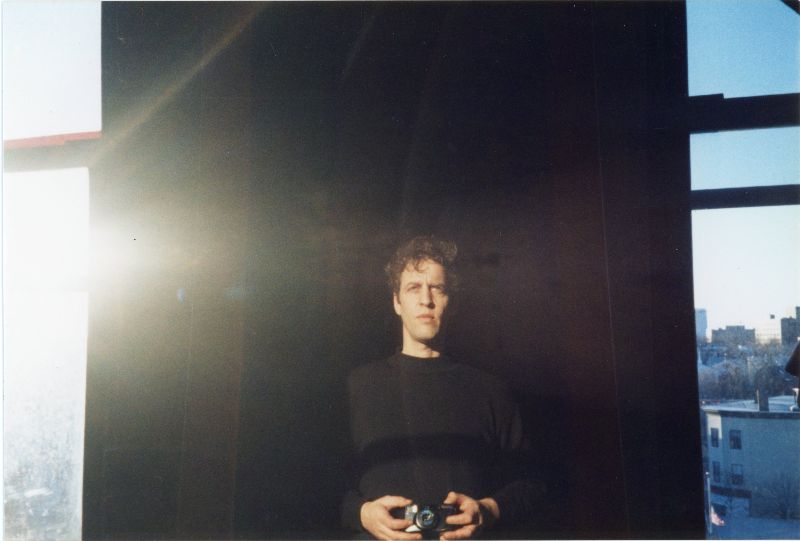
Cocoon is accompanied by never-before-seen artwork and photography by Sandman, including its cover image, a photograph he took of Hrechdakian’s reflection in a train window en route to Antwerp in 1998. The album’s reverse features Sandman himself, camera in hand, capturing his reflection in a mirror at home. The collection also includes liner notes by acclaimed American poet and essayist Hanif Abdurraqib, who writes about discovering Morphine after Sandman’s death and the unusual opportunity Cocoon offers both longtime listeners and those encountering the band for the first time. Reflecting on Colley’s return to the recordings, Abdurraqib writes of the rare opportunity to “touch it again, renew it in some way, bring it closer to the new, living world.”
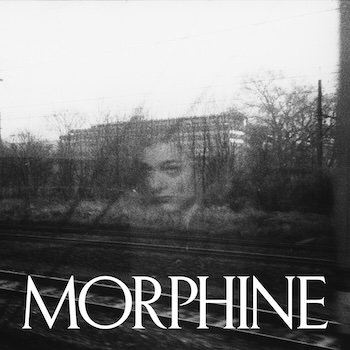
Morphine – Cocoon // Partisan Records – 04/12/26
1. Tomorrow
2. Wig
3. Patience
4. Spaceman Charm
5. Justine
6. Moons of Jupiter
7. Cocoon
8. Pretty Face