After four albums of Greek mythology inspired ambient post-rock, Swiss band Hubris are back with White Shores, their fifth album and their first to be inspired by the Lord of the Rings. Informed to a large degree by the passing of frontman Jonathan Hohl’s grandfather, the album titles line up to create a single sentence: “Death is just another path”, a hopeful sentiment that finds the gentle melancholy of the opening track giving way to a wider sense of hope.
We caught up with Jonathan to talk about the creation of the album, the challenges of creating post-rock, the importance of physical media, and more. Read on to discover the story behind the enigmatic beauty of White Shores.
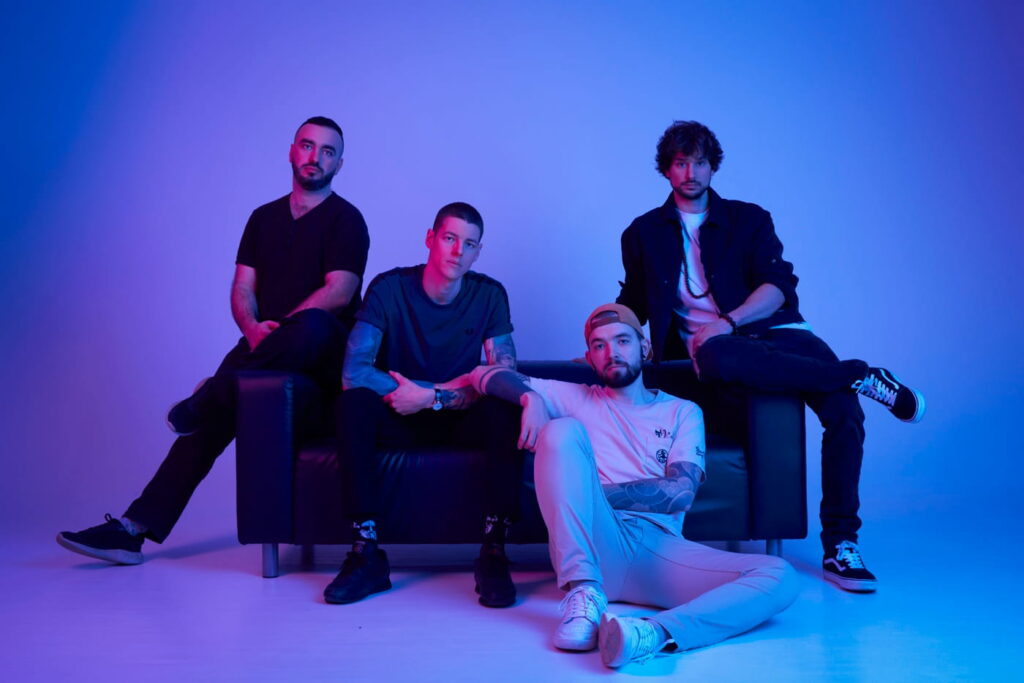
The band formed, I think, in 2014 and you very quickly released your debut album, Emersion, in 2015. So, you must have had a pretty fully formed idea of what you wanted to be and how you wanted to go about it right from the start?
Kind of. So, what happened is we had a metal band before that. Pretty much all the musicians who were in that band kept playing in what was to become Hubris, except for the singer, obviously, since we became an instrumental band. So, I know for a fact that we had compositions in that metal band…
[At this point, Jonathan is interrupted from my side by a government alert that sends my phone into a frenzy. Having only heard one of these things before, I’m also completely confused, checking everything from the burglar alarm to the computer I’m using to see what on earth is causing my ears to bleed]
So… you were working on compositions with the metal band.
Yeah, so basically some of the… not songs, but ideas we had, it was metal but kind of… do you know the Contortionist? Like prog metal but with an element of cinematic and ambient music in it. So, we had this in our band anyway, so we pretty much got rid of the metal and just kept the focus on that. So, a lot of the ideas that we had for Emersion had emerged already in the metal band and that’s why it didn’t take very long for us to compose it.
And also, it was the first time we had tried this so we didn’t really have any ideas on what would sound good and what we should focus upon, so we were just really free and wrote seven songs, I think, really quickly because we were super inspired and, therefore, did it super quickly!
It’s an interesting jump for me. In any event, post-rock is a challenging genre for two reasons, and I’ll come to the second in a moment. But the first one is, when I first encountered post-rock via Mogwai, they felt like they really expanded the horizons of what rock music was doing at the time. But there has become a tendency for some bands to fall into the quite fixed genre tropes that have been established and it can be quite difficult to get out of that quiet-loud dynamic. Particularly coming from a metal background where you’re taught to get to the point pretty quickly.
I agree and that’s also why, I think, we have our own signature because while we haven’t necessarily retained what we had in the metal band, I do have a metal background. So, obviously, when I compose, it’s somewhere deep within my psyche. And it’s maybe because when I compose our music, I’m not thinking in terms of “I must produce a post-rock song”, I’m really just trying to compose a song that I like listening to. And more often than not I end up having something that’s almost akin to a pop song in a way. It’ll have a verse and a chorus, and I never really think that a song needs to be ten minutes long because it’s post-rock. Sometimes it does happen and I compose a song that’s thirteen minutes long somehow. But it’s just that the idea is to develop on what I have, whether it’s a few chords that I can make a chorus or a verse from.
And also, we do keep a metal aspect. We have heavy, distorted aspects in the music but it’s more of a way to, I think what it helped me with is to, get this heaviness in post-rock. For example, Mogwai, I think that heaviness is lacking a little bit – me being from a metal background. They do it in a different way, but it helps me in that regard.
But I don’t think that I really compose post-rock music as such, it just happens to fit that category. That’s why I use it, because the people I know who like post-rock music generally tend to stay in this kind of niche so it’s a lot easier to promote your music once you have a category. But I never really think of myself in that way. More, I think of myself coming from a metal background and I’m now composing cinematic music, I guess. Something that makes me feel introspective and dreamy or something like that.
One of the things, I think, that sets this record apart from a lot of the other post-rock bands I follow is that some of the lead work is quite a bit more direct than is typical in the genre. The first song in particular, Death, I was listening through a few times trying to figure out what it was that the leads reminded of and, I hope you don’t take this the wrong way, but there was like a Satriani vibe to them that was totally unexpected but it fits perfectly.
Oh, I actually take this as a compliment. I love Satriani. And yeah, this is true. It stems more from the drummer, Nathan. He doesn’t play drums for the band anymore, but he used to always say “we don’t have a vocalist, but we need to make up for it.” The easiest way for us was simply to compose leads on the guitar. So, the leads provide the hook, the way to have a melody going on and that’s why I always try… and I think that’s what Joe Satriani does very well in every song I’ve heard of his, there’s a clear melody in what he’s playing on the guitar and it’s something you can sing along to. And that’s obviously what I’ve tried to implement in our music, so I take it as a huge compliment!
It’s an interesting point that you make about how to replace the vocal aspect. And, obviously, the most direct route to emotion in music is through the lyrics and also how they’re delivered vocally. But then you listen to someone like Steve Hackett (ex-Genesis), who talks about how the guitar mimics the human voice in the way it cries and wails – is that a view you would subscribe to?
Yeah, probably. I’m not sure how I’d go about the lyrics, there’s no way we could mimic that. But definitely the element of… and that’s also why we focused heavily on elements of Greek mythology because it’s a good way to tell a story and, if you have a good title and you tell people, “This is what you’re supposed to be imagining”, I think it does the work for people and gives them a frame of reference. Greek mythology is good for this because you have a multitude of very short stories and, with just one name in the title, you can give a lot of context to people listening to your song.
The other thing about Greek mythology is that it’s very evocative of wide-open spaces, so it really lends itself to this type of music.
Oh, 100%, I agree.
It’s quite unusual, as well, that you built a sentence through the song titles. When you were working on the album, did you have a conceptual thread in mind that led to the writing of the songs in a particular way or order; or did you write the songs and then apply the framework as it became apparent which song belonged where in the running order?
I think it kind of happened, both of those at once. I had three songs that were pretty much one big composition. They were not in the same key or tempo, but it was really thought of as one big piece. Then I added two extra ones on top. So, yeah, it was originally thought of as one big piece because, right after my grandfather passed, I was so inspired and I was pouring everything into my music. It was a twenty-five minutes and I was like “I cannot do this, I cannot have a song that’s twenty-five minutes long on Spotify, that will not work!” So, I just thought of a way to make it… I mean, I did think of releasing a smaller album or one big single, but it just didn’t sit right because we hadn’t released an album since 2023 and it just wasn’t the right moment to do it. So, I added two compositions to the big one, and it became the whole work, I guess.
The topic, death was originally the idea but, because I’m a huge Lord of the Rings fan and the way death is dealt with in Lord of the Rings, I was thinking of a way to give this frame of reference to people through the titles. I think it was while I was watching the film, where Gandalf says, “Death is just another path” and it just clicked, it’s absolutely perfect. And I know it’s not in the books, but the sentence is just so powerful, and I remember watching the movies as a kid and being so inspired, so I just didn’t really think about it more than that.
I’m sorry to hear of your loss but I also understand that music is cathartic and, listening to the album, the overwhelming sense I got was more of hope than of loss, so it feels like you tapped very much into the emotional core of the sentence that you’ve applied.
Oh well, thank you. It’s mainly my personal view on death. I mean obviously I know that, when struck with tragedy, it’s really hard to remember that there might be something after and to focus on this because you may not be able to see the person in the moment anymore, that’s just not going to happen anymore. But it’s really just my own beliefs about death, that it’s a long voyage and this is just a tiny portion of that voyage. It’s an end to this portion of the voyage and I’m not going to see my grandfather again, obviously, but I also feel so grateful for the moments we spent together and also for him to discover something else. I don’t know where he’s going to be, but the voyage hasn’t ended. It’s still continuing and I think that’s what made me just so inspired. I shared moments with my grandfather, and I could just pour it out into my music. It was so easy. Like three songs, or that big one song, just came out pretty much instantly, it was so, just like you said, cathartic.
It’s very easy to pin your own interpretation on things but there’s a very interesting range of influences across the album. Especially, Is, which starts out in a sort of Pink Floyd vein and then you get elements of acts like Chemical Brothers and Orbital at the more psychedelic end of their work. I was wondering how far you’re influenced by elements outside of the traditional rock space?
Oh, actually, pretty much 100% [laughs]. I listen to pretty much everything but metal and rock music. It’s my background and I come from this and when there’s a really good song that’s been released or someone shares something with me, I’ll always appreciate it. But, in my own time, I pretty much never listen to rock or metal music. It’s either jazz, especially one pianist, Esbjörn Svensson, a Swedish jazz pianist; that’s pretty much my main reference. Other than that, it’s just completely random but pretty much everything but metal and rock music, which is funny because I don’t compose the types of music I listen to. But I think that’s pretty much why I don’t listen to it that much, because I play it so often. I just have shows and practice and so, when I get back outside of this world, if I keep listening to it, it doesn’t feel right, I need some sort of a break or something and other influences to keep me going.
I hear that a lot and feel it myself. It’s also very interesting because if you only listen to the stuff you play, you’ll never really expand beyond it, whereas if you’re listening to all kinds of weird and wonderful things, it creeps in whether you’re trying to draw from it or not.
Yes. And I’m definitely not trying to draw on jazz. I’ve never pretended to be a jazz player, I really don’t know jazz to be fair, I just know a few bands. But that’s what I love about it. I know that subconsciously it does influence my music. Somehow it just creeps into what I compose even if I don’t realise it or if nobody else realises it.
I think it creeps in. On Just, there’s a very cyclical rhythm that plays out before the song expands and it’s that kind of dynamic that you don’t normally hear, outside of bands like Swans or something, in the rock realm.
A lot of the time, because I compose at home and I have my band behind me being able to tell me or being able to play whatever ideas I have. A lot of the time it’s me using a looper pedal and oftentimes I just happen to create a loop, and the loop pretty much stays throughout the whole song and I build on it. The repetition has the benefit of almost allowing someone to get into a trance or something. You eventually completely forget about the loop, like it’s not there anymore, but it actually kept you going the whole time. So, I started it with our previous album, there’s a song called Of Light, which is 100% built on loops. So, I stacked four different loops and that became like one guitar – essentially one track. And I built on these four separate loops. And I think Just was similar in that I had one guitar looped throughout the whole track and I was trying to embellish it with other guitars or other elements.
I love that. Recording with loops does make you think in a different way. Sometimes, it can make you a little lazy and it just sits in the background the whole way through and sometimes it can force you to try totally different loops that run sequentially. But it’s very different to sort of linear song writing, if you like, and sometimes you’ll build a song out from a loop that becomes the chorus or whatever. I really enjoy it, like building loop over loop until you’ve got something that’s just incredibly heavy and intense.
Yeah. True. I never really think of one loop as being the whole song. I know it can be the trap with playing with a lot of loops. But I see it as one element of the whole song. I have, I don’t know how many gigabytes on my hard drive of just riffs and loops that don’t work. I mean they do work as a loop or a riff, but they don’t work as a song because it’s hard to build outside of that spectrum.
For Just it did work, which is interesting. I always do this not thinking about how to play it live. I just compose what feels right and then tackle the issues later on. Which sometimes is extremely difficult when you realise you only have two guitarists and can only loop so many tracks. Sometimes, we do have to rearrange just a little bit so we can tweak it into working out. But most of the time I’ll compose whatever I feel like and then we’ll worry about playing it live when it matters.
I like that, though, because as nice as it is to hear a band play the songs as they are on record; but I was always drawn to bands where they can be one thing on record, and even quite polished, and then they become something completely different and more visceral live.
It’s never too jarring with us. We always try to stick as much to the original as possible. I, for one, love it when I go to see a band and hear what I’m used to. And I know it’s completely contradictory to jazz – with jazz what you experience on record will be completely different to what you experience live. But I like this aspect that, when you know a song… almost like when you know the lyrics to a song and then you go to a show and they’ve changed the lyrics, you’d be; well, you might be pleasantly surprised but if you want to sing along you can’t because the lyric has changed.
So, I try to meet somewhere in the middle where we have some changes, which make it possible to play in the first place, but we are also as consistent as possible or as true as possible to the original material, so people can remember or feel what they felt when they first heard the song.
It is interesting, though, that when people know a song, and especially a song based around repetitive elements, you can play, say, one elements and segue to another and, in their minds, they still hear that first element. They fill in the gaps for you, if you like. There’s a lot of scope for cheating your way around it a bit.
100% yeah. I love playing with loops and it’s one thing, but playing with loops live is a different story. Playing with loops live, honestly, I’d never do without because I want to play everything that people hear live. That’s one of my main things. We’ll have percussion or a synth in the backing tracks, just to maybe round the edges or make the sound a little bit more polished. But every guitar part has to be played. So, sometimes you end up having to loop four different parts, one after the other, and if you mess it up once in one of these parts, I mean sometimes you won’t hear it too badly but other times it’s at the forefront and, you know, it’s like a wrong note or something that doesn’t fit well. It makes it so much more terrifying.
That’s when you start to tap dance across your pedal board and no one’s quite sure what’s going on!
[Laughs] Well, we don’t have to do that anymore because we midi control everything. That was one big aspect I hated about playing, like having to do tap tempos and all that sort of stuff, it was just too much. Loops on top of that… we needed an easier solution than that.
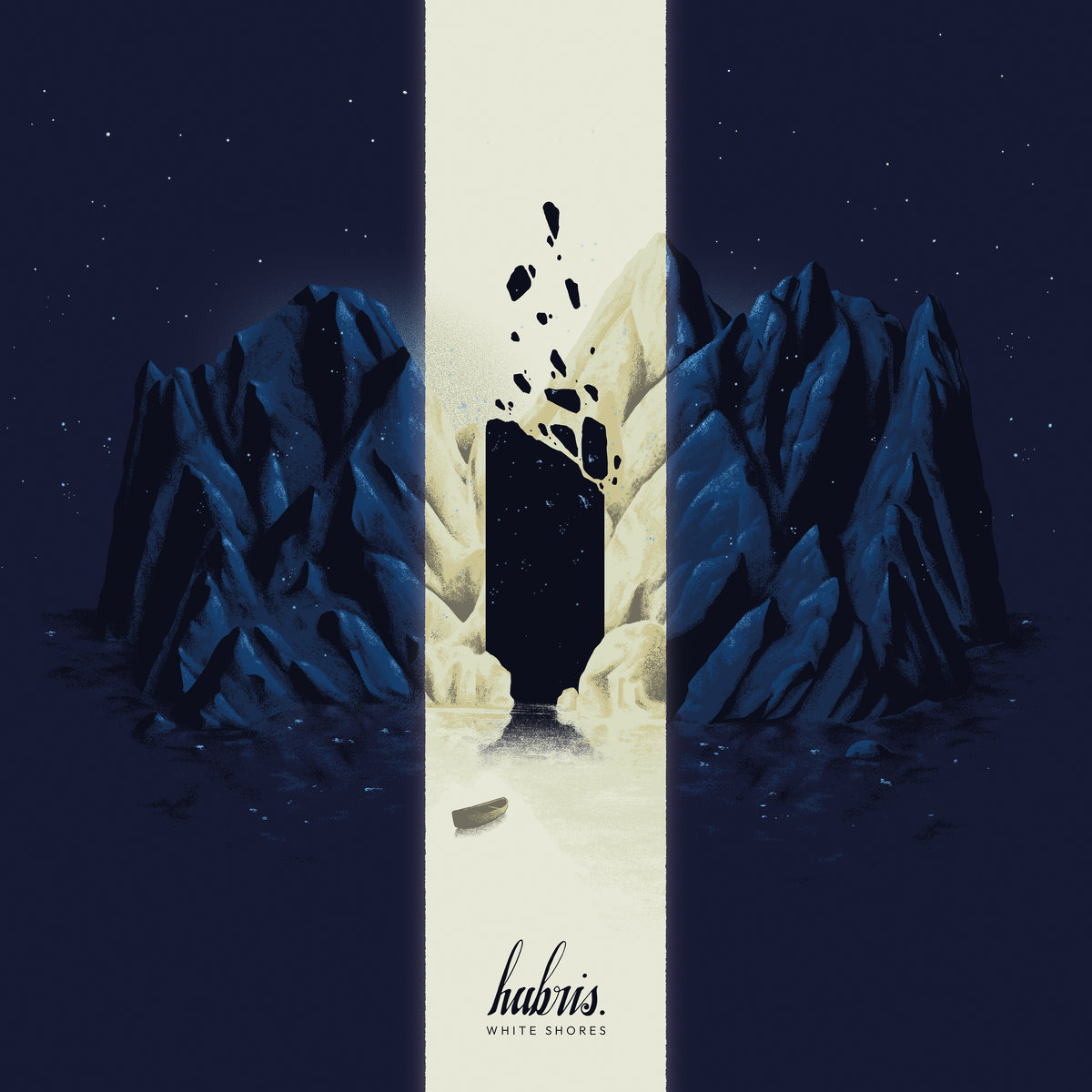
The band, like a lot of bands in this sphere, you have a very strong visual identity that goes with the albums. How involved are you in developing that? Do you give a detailed brief? Sketches? Or do you leave the artists to figure it out?
So, I learnt through this. I’m the kind of person who doesn’t like to leave a lot to the unknown, I like to control everything and I’ve learnt that artists, most of the time if you give them a completely blank page, they don’t like it. They like to have at least a little guidance and so all the albums that we’ve done, the main idea was always there. I’d tell them the topic of the album, the idea we had for the artwork, but they were free to do it as they wanted. I just want… for example, with this album I wanted a visual representation of white shores, so I wanted to be able to see the water, I wanted to be able to see the main element in the middle – somewhere to get to. I want to see, like, either a boat or a canoe… some element to get there. As to the colours, the style, or how it would look on the page, that was up to the artist.
So, we worked with a good friend of mine from the south of France, and originally, I asked him if he wanted details or if he wanted me to let him go for it and he told me that he wouldn’t be able to do it if I didn’t give some detail [laughs]. So, I gave him some hints.
Obviously, now it’s such a challenge for independent bands to deal with physical media with all the changing regulations around postage and you’ve got the digital realm as well. Is the physical side very important to you as individuals – is it something you grew up with and still love? Or is it more of a necessary evil?
I feel like it’s a bit of both. I love having vinyl. I feel like it looks amazing. I don’t have a turntable, but I love having the object – it’s a physical representation of all the work that you’ve produced, and I keep at least 2 or 3 copies of all the music we’ve produced. If I think of myself in 60 years or something, I’ll be 90-something, on my death bed… at least I’ll have something to hold on to where I can say all the hours, all the years, I spent in the band, this is what we made and I can still listen to it. Imagine if the internet is completely out of the picture tomorrow, which could happen, at least you have a physical object to still rely on.
I know it’s a necessary evil because also it costs a lot of money to produce, shipping costs get more and more expensive and people complain more and more about it and there’s not much we can do our end. I don’t think we’ll ever do without, either a CD or vinyl. Preferably a vinyl as they just look better than a CD. They’re a bit more bothersome to have around because obviously they’re bigger, but I think it’s worth it.
How do you see yourself touring this record? Are you going to be incorporating tracks into a wider set or will you do it as a complete piece?
We’re actually kind of discussing this at the moment because when you play the kind of music we play, it’s hard to do it live because a lot of the songs we would want to play are too long. We can’t fit them in the set. Especially when we play a festival and we have, like, a thirty-minute set. That limits our options drastically because we either play two songs, or four shorter songs. But it doesn’t allow you to play a full new album. And it’s especially hard when you have a composition that feels like the whole thing is one big composition and you can’t just break it into parts. Sometimes we can, you know, take a section and make it a bit shorter or take a repetition away or move stuff around. And sometimes it’s really not possible, it just doesn’t work.
So, a lot of the songs we’d love to play we can’t because of the logistics of it. And this is what we’re discussing right now because the tour that comes up in September / October, we need a setlist that’s 45 minutes, and hour, an hour and fifteen… depending on how long we have. And obviously when you headline it’s a little easier because most of the time you get at least an hour if not a little bit more. And if we have an hour, we can play the full new album plus two or three other tracks. But I think we probably won’t be playing the whole entire album just because we now feel like there are songs we have to play. There’s a song that we have that has like a million or something streams and we almost feel like it would be, to anyone who’s not seen us live, it’d be almost a disservice to not play that song at least. So, there are a couple of songs that we almost have to play, that we’re forced to play. Not forced in the sense that we don’t like playing them, we love playing them, it’s just that we feel that we owe it to the people supporting us. But yeah, it’s more complicated at shows where we’re supporting, less so when we’re headlining. But festivals with 30 minutes, that’s going to be a tough one.
It’s always a challenge, especially if you have a big glowing clock on the stage-side!
Oh, 100%! Everything we do, since we have backing tracks, everything is set up on the computer, so we press play and that’s it. We don’t touch the computer for the rest of the set, so we know exactly when it’s going to end. It’s happened to us at a festival where someone showed up in front of me with a sign and it said, “10 minutes left” and he was looking at me really angrily and I was like, “mate, there’s absolutely nothing I can do!” [Laughs] “The set will end when it will end!” We respected the timeframe though. We didn’t go over because obviously, when you start, you look at the clock and adjust the set accordingly, but it was just a little bit of added pressure when I didn’t need it! [Laughs]
White Shore is out on September 10, 2026.


1 thought on “Hubris Speak To SonicAbuse”