You know it’s funny. I do a lot of interviews for SonicAbuse and it’s a process I always enjoy but, just sometimes, I get to speak to an artist who has been such a part of my musical upbringing – and for so long – that there are almost too many questions rattling through my head. Which, inevitably, results in paralysis followed by a set of nerves normally reserved for a trip to the dentist.
This is very much the case when it comes to interviewing Mark Chadwick, frontman of the Levellers and solo artist, who has just produced one of the year’s most compelling, surprising, and wonderfully leftfield albums.
I mean, the Levellers are just part of my DNA. I was first introduced to the band in the mid 90s by a friend and not only did they inform countless walks around Dorset and Somerset but, along with Alice in Chains and Nirvana, they were also the band that essentially taught me to play guitar (for which I can only apologise).
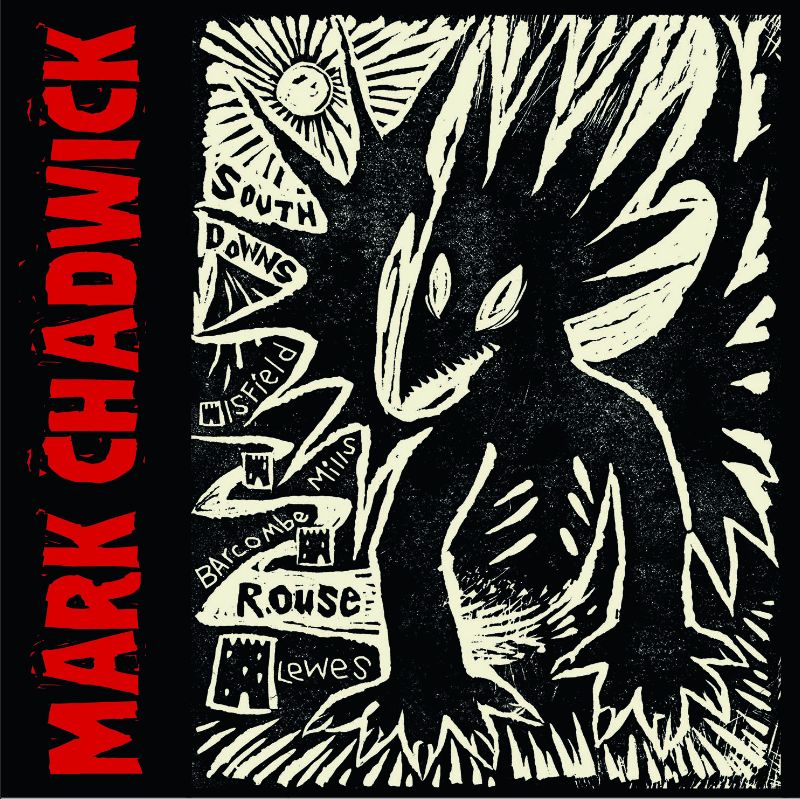
Annnnnnnyway. Having given myself a stern talking to, I managed to excise the bulk of my fanboy excess and focus on Ouse Dragon, a truly remarkable concept record that explores the dark side of Mark’s hometown. Honestly, whether you like the Levellers, or if you’ve never heard (or care to hear) a note, this is an album that should be on your radar because it is as unique and as wonderful a piece of work as has ever crossed the SonicAbuse desk.
You can read the full review here, but believe me, it’s better to go in cold because it will surprise the hell out of you.
Join me for a chat with Mark Chadwick as he guides me through the creation of the album.
The first question I’ve got for you is that it’s something really exciting when a singer you know so well, and your voice is one of the more recognisable in the rock firmament, steps outside of their comfort zone and does something so completely different – what started you down the path towards this more electronic / ambient piece of work?
It’s a weird one. I was just really into films like Dune and the last Blade Runner and their soundtracks, I didn’t know who Hans Zimmer was, but the soundtracks were so amazing. It really is – a bottom end like you’ve never heard. It’s music, but it hasn’t got a vocal [laughs] and I thought, wouldn’t it be nice to have a vocal on that sound. And obviously I couldn’t achieve that sort of sound, it costs a fortune, but the closest I could get was old analogue… wave generators, really; not even synthesizers; and yeah, just using those. And the mad boffins that use stuff like that with keyboards attached. They are literally just, well, they’re more like a telephone exchange [laughs].
So, what I did, was I sang the songs as songs and then got them to emote around them – to make noises that would suit that sort of thing. They rarely come out from their basements, those sort of people and they loved it, it was great. They really captured it. They went down a road they didn’t know. They’re not musicians, these people, they’re just enthusiasts. So, I’d be like, “keep going down that road with that noise, can you add that?” and they’d be like “yeah, yeah!”. It was like… conducting freaks, really! [Laughs] It was really good fun. I mean, they’re fantastic and they know that world, so just taking it and doing other things to it and then I added some real music – some real instruments – to it occasionally. Not too much. I didn’t want to step away from the formula, as it were, as much as possible.
I remember reading an interview you did a few years ago now and I remember you talking about how you’re always writing and one of the things that triggers you is when someone comes to you with a subject and that sort of pushes you to do your best writing and – this is a conceptual piece, I think – I’m sort of surprised you’ve not done something like it before…
Um, yeah. Others have done it and the concept hasn’t arrived at my doorstep. The actual concept of this record, the dark side of the town that I live in – because it is a weird town, there’s no denying it, it’s odd. And that’s one of the main reasons I live here because it’s not your average market town. There’s a darkness that I like. There’s something old here that I really appreciate. Yeah, so the stories, and mysteries, and odd things that happened here, it is worth writing about and capturing it in this format rather than the traditional style.
I think it’s very evocative, this type of music. And there’s an album that sprung to mind while I was reviewing it which was this weird, electronic/noise album by Axis of Perdition (Urfe) and they basically created a fictional world where they went as far as mapping it out and I was wondering when you were writing this, did you keep the images and stories in your mind or did you go as far as trying to map out a trajectory for the journey you wanted the listener to take?
That does sound quite extreme! [Laughs] No, I didn’t, no, but actually the concept of the journey is very important. I really wanted people to feel that every word is important and there’s a noise that pretty much reflects that word as you’re listening to it. There’s an atmosphere or a tone, certain bits will repeat, certain words. And it’s just to get to that idea that this is more than just a straightforward listen, that’s the whole point. You will have to listen to this more than once if you want to get anything out of it.
I think that’s always been at the core of the best albums really. You get albums that are very direct and you listen and straight away you fall in love, but often they kind of give up their charms too quickly, whereas something like this, I think I’ve already listened 7-8 times and every time, I’m hearing completely different things depending on my mood or what I’m doing.
Yeah! That’s it, that’s the idea. That’s really good.
I think it must be interesting for you as a songwriter because this, more so than the Levellers I would think, you have to give up some of the control over what the listener feels. You can guide it, with the sounds you create and the lyrics, but then, because it’s a little more abstract sonically, it becomes an individual journey for each listener?
Yeah, absolutely. That’s the point as well. It isn’t a traditional singer/songwriter format that’s led by the singer/songwriter as much. It’s a hard thing to gauge, but it’s important to let it do its own thing and hopefully follow it, if it’s going the right way. So, you’re guiding it and sometimes it doesn’t go the right way, so you stop, it’s not right – “that’s too shiny a sound, it’s too happy, I don’t like that!”
In terms of the recording process, you said you got these people in to help with the electronic elements. But how did you actually do it? Did you go into the studio with them in one session, or were you capturing different bits and assembling it yourself?
It was done in two different studios. In Audio Laboratory Studio, which is just down the road from me, it’s run by a friend of mine, and he does a lot of film music, and advertising music, and music for moving images; and Atmos as well. He does a lot of that sort of thing there.
So, I did quite a bit of it there and taking samples and really fucking with samples as well. As well as old analogue synthesizers. So, yeah, just working on it quite regularly but not putting a time limit on it. I didn’t put a time limit on it at all. I just wanted to get a collection of songs that all sat together reasonably well that were all linked by the same concept of this town. And something else, an exploration of the things that you don’t see, but you feel?
Did you find the process itself very different from the rock band format, because sometimes I think the experience of recording itself, in different ways, can drive different impulses musically.
Yeah, well I did work with other people, and I don’t want to be dictatorial about anything because other people come up with things that excite you and it’s great and you can use it and it’s really good.
Sometimes, it’ll just be in the studio, and you’ll say “that’s really good, right there,” and they’ll be like, “what do you mean?” and you’ll tell them, “that thing you did right there, it’s really good.” And, if you’ve got it on tape, you can use it again. So, yeah, it’s as collaborative as possible and if someone suggests that we need a certain part at a given point, I’ll always say “yeah, try it. Yeah, that works, that’s great, let’s do that.”
That’s the mark of a genuine collaboration, really, isn’t it – where you take on board what they want to do and then the music itself, which started with you, takes on a whole new life.
Exactly. And it’s not like a traditional band where it’s “1,2,3,4 these are the chords, go!” [Laughs] It’s not that. It was quite different in building things up and we started with just the vocal, actually, and then added things in later. I used more acoustic guitar than I originally intended but it kinda worked, I suppose, for it to be me.
That’s really interesting. It never occurred to me that the vocal would come first because of the number of layers. Especially on the first track – there’s a lot of space before you even arrive.
Yeah, absolutely, yeah. It’s all done on purpose.
It’s a very dynamic album as well, did you spend a lot of time working on the final mix to get those swells between tracks? Especially if you did it over a long period of time, it must have taken some final assembling?
Yeah, there was quite a bit of work. It had, I think, three different mix engineers on it and the final one, which you won’t have heard yet, is on Atmos and will hopefully be out on Apple Atmos, and that’s the ultimate end for it – to have it in Atmos. I performed two of the songs live, to recordings, in an Atmos-friendly cinema and it really worked. People were quite freaked out by that, it was very loud and noises coming from behind you and beside you and across from you, diagonal and back-to-front directions… it’s really quite different.
And again, that’s really exciting. I’m very geeky in that sense and I always appreciate it when bands create that kind of multi-dimensional aspect to it. It does change your whole understanding of the music you’re hearing.
Yeah, exactly. You know, [laughs] I was speaking to one guy, and I asked him if he’d listened to it, and he said yeah. So, I asked him how, and he said, “ah, just on my computer”. And I asked him if it was on headphones, and he said no, so I said, “OK, tell you what, before we carry on this conversation, we’ll stop it there and you go and have a listen to it with headphones because it’s the best way you can listen to it.” So, he did that, came back to me, and said “ah!” [Laughs]
So, yeah, that’s how it’s supposed to be listened to. And it’s all clear on the artwork although, at the moment, people don’t have that, I get it.
I guess a lot has changed though because, when I started buying records, that’s exactly what you did. You took it home and stuck it on the best stereo system, which was usually your parents’, and then headphones as well.
That’s right, yeah, yeah, yeah, took the speakers off the wall, stuck them either side of your head and listened to it, that’s what I did! [Laughs]
One of the things that really catches me out every damn time, and it’s been a good few times now, but it’s that telephone call in the middle of Chrysanthemums and Diadems. It has me hunting around, like “what is wrong with my computer?” I think three times, I stopped it…
[Laughs] Yeah, I think people are going to curse me for that one! I love it. It’s a bit of humour, a little bit of humour there!
How did it come about?
Well, it actually happened! When I was actually playing a demo of it to one of the mix engineers on my phone and, as it can, my phone rang and we both looked at each other and went “that should happen, that should happen, we should do that!”
So, that’s a happy accident? That’s fantastic!
Yeah, yeah! It was like, “let’s put it in there, it’s brilliant!” And it all adds to the narrative, which is great, in a very untraditional way.
I guess it’s stuff like that, when you’re brought together in a very creative environment, where you get these moments where some random feedback or one of your synths malfunctions, and you get something that was not planned or expected but it’s so cool.
That’s what it’s all about, getting those moments. They’re golden.
There’s a precedent in the Levellers over the years for this and the one that’s stuck with me over the years is Elation. I remember the first time I heard it was in Somerset. A friend had the album on cassette and a few of us had driven out to some reservoir at night and he was like “you guys have to hear this…” and he put it on at full volume and there was that massive drone bass, the ethereal female vocals… So, my first experience of it was very cinematic, I guess, and this album really reminded me of that experience.
That’s good! That’s a good thing. Definitely. It’s a drone, basically.
And there is something very earthy about a drone, right, because although this is something really unique, those roots are still there.
Yeah. I think if you were to look over the history of mankind and all the music we’ve ever made, the vast majority of the music we’ve made has been made with a drone.
It’s quite primal.
Exactly, it’s the oldest thing.
So, will you try to take this, as it is, live. Or will you be doing it more acoustic?
Do you know what, I have no plans to do so at the moment. I have done two of the tracks live in a cinema, as I said, and it worked and it was great, but it took a lot of effort. So, I probably will do, depending on how well it goes down. If it goes down well, after a year or so and someone asks if there’s any chance of doing it live, I’ll think about it. Get some of the freaks out of their cellars with their crazy equipment and see if they can do it the same every night [laughs]. That’ll be fun.
Yeah, as you say, those things look like telephone boxes.
Yeah, they really do! I’ve never seen so many wires in my life!
It’s interesting to know that’s how you do it, because I spent some time trying to figure out if it was loopers, an arsenal of FX boxes, how much is synth, how much is guitar.
Some of that! Some of that for sure. A few bits are electric guitars through fuck-knows how many effects [laughs]! A lot. A lot of pedals and onboard as well.
You can totally lose yourself in that world with reverb and delay alone.
You can, you really, really, really can! [Laughs] Some of these guys spend a lot of time on that, but they’re brilliant, absolutely brilliant.
And, in terms of the lyrics, when you were writing the narrative, did you write it more or less in order, or did you sequence it all at the end according to the dynamic of the music?
No, no, they were first – they informed the music.
Did the other musicians know what the lyrics were as well? Or were they basing their mood and emotions off you?
Um, no, I was asking them to use their own perception of what they thought they were hearing.
There’s one song in particular, the Paxos Room, which… I mean you mentioned Cinema, which I totally missed, but I was thinking video games like Silent Hill, which have a similar vibe.
Yeah, yeah, yeah, yeah. Exactly, that’s exactly it. The technology exists and, well people have used it for songwriting, of course they have… but I haven’t! [Laughs] So, I wanted to get as much of a cinematic effect on the whole thing as possible because you know, you go to the pictures, the actors and the script tell you the story, and the music is there to back that up. But, in this instance, it’s the vocal in the middle that tells you the story, and the atmosphere is all around you. It’s couched in the atmosphere. So, it is actually very cinematic in that sense. If you’re in a darkened room with just the headphones on, with the Atmos when it finally comes out, it’ll be very cinematic.
There are very few bands who have done this, because it’s a very expensive endeavour, but given its conception, would you consider trying to do video for each song on the album?
Ahhhhhh, it is a lot of work and there’s a lot going on with The Levellers, so I don’t think we’d be able to do that. And it wasn’t really the time. It’ll sell and I just want people to hear it as much as possible out of interest, from reading things like your reviews and stuff and thinking it sounds really interesting. It doesn’t sound like the Levellers, it’s interesting, maybe they’ll try it. It’s almost so it comes without prejudice of any kind.
My final question, really, is that now you’ve spent time doing this – as a songwriter, everything you do informs what comes next, I guess – do you see this creeping more into what you’ll do in the future or is it more of a digression?
No, no. I think I will. I did some work for a film recently. Just for a friend who’s done a film and he asked me to do some music for it. And, again, I did it using the same route… but this time with no vocal. [Laughs] So, this time, I became Hans Zimmer! [Laughs] Which is fun. So, yeah, I’d like to do more of that. Possibly with a bigger budget than my friends’.
That’s really exciting because I remember Asian Dub Foundation doing like live cinema scoring for La Haine and they talked about how it changed their perspective on writing.
Yeah, yeah, yeah, that’s right – it would do! They’re great as well.
Could you see yourself doing something like that where you’d score live? Or is that a step too far into improv territory?
No, I’d do that! I’d definitely do that. Yeah, that’d be amazing.
Cool, that’s me out of questions and thank you so much for talking me through it.
It was a pleasure talking to you