With some artists, you have a very good idea of how things are going to go. With others, any preconceived notions go out of the window the moment you actually sit down with them. In the case of Mortiis, former Emperor bassist and purveyor of eclectic, synth-cased music, I was hardly prepared for the friendly individual who greets me as the screen flickers into life. Across the interview he talks candidly, laughs often, and explores a remarkable musical career with wit and warmth.
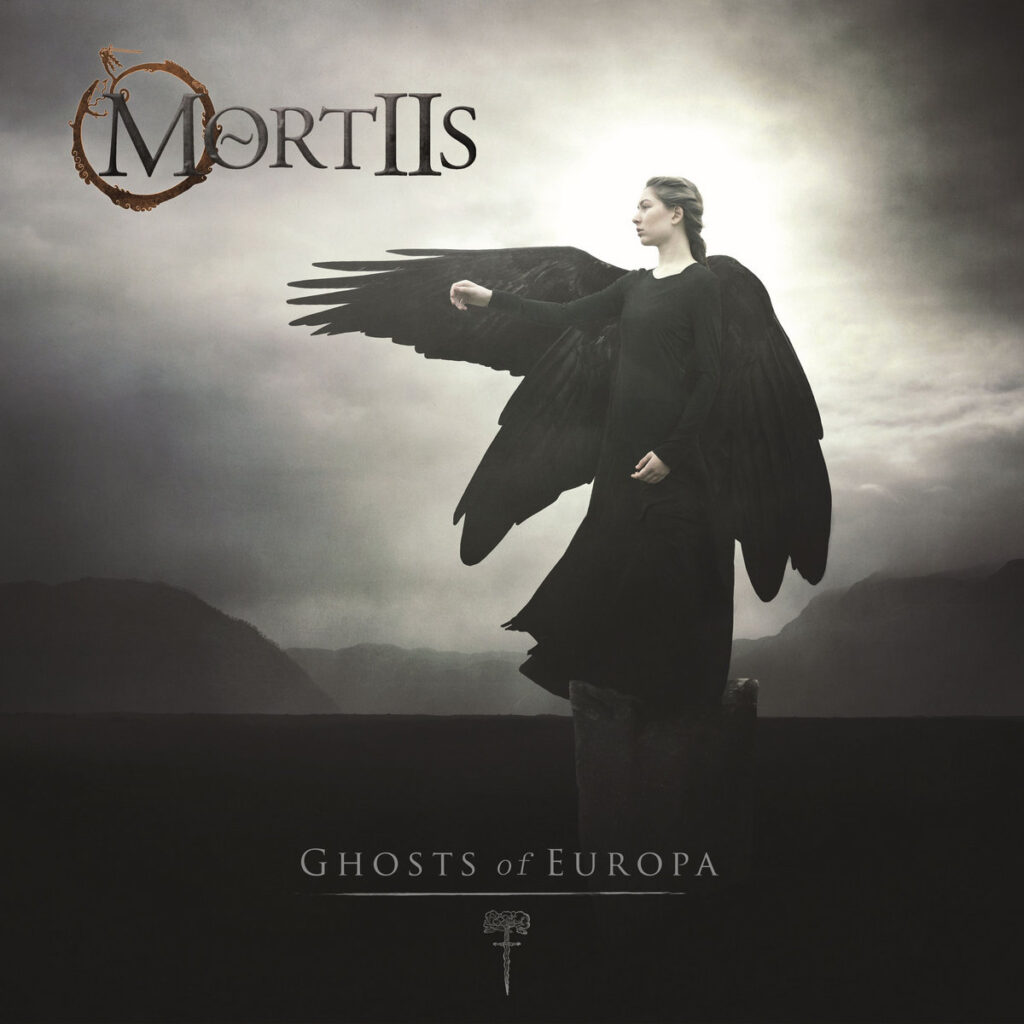
The reason for this call is, of course, the outstanding Ghosts Of Europa album, which is available now so, if you’ve not already taken a moment to catch up with it, be sure to grab a copy and pop it on while reading – it provides the perfect soundtrack.

It’s nice to meet you thank you so much for making time for me.
Absolutely no problem.
You were very young when you left Emperor; when you were asked, I guess, to leave; and I wondered whether that early experience pushed you towards forming a project where you could do things on your own terms as a solo artist, or if that idea had already been kicking around by that point?
When I started Mortiis as a solo thing, it didn’t include other people for a long time after that so, yeah. The thing is, Emperor was my third band in a fairly short time. Emperor lasted, well a little over a year for me – fourteen months or so, I can’t quite remember – and there were a couple of bands before that, which only lasted a few months each. So, when Emperor ended, I thought, “you know what? Maybe bands are not really my thing!” [Laughs]
Yeah, after that, I was sort of like, “fuck people, man!”
And, at the same time, during the Emperor period, I started to broaden my musical tastes just a little bit. I was starting to get into that whole 70s, early electronic music – synthesiser music, for want of a better term – and Tangerine Dream, of course. Klaus Schulze, Kraftwerk… a lot of German dudes. And Vangelis, Jean Michele Jarre from France, and even Mike Oldfield from the UK.
And the thing I liked about a lot of these was that they were kind of controlled by one guy. Not all of them but a good portion of these were basically solo projects. So, that made me realise that I could still make music. I didn’t really need to have a bunch of other people there. So, it was a combination of that sort of learned awareness and the fact that I was a little disillusioned by the whole band thing.
And, you know, from there on, it’s been going on until today. With and without people. I mean, I’ve changed over the years as well and it’s always been my call, you know that kind of thing; even with collaborations or when Mortiis was presented in more of a band format, I always called the shots… for better or for worse. [Laughs]
Quite a lot of people who started in the black metal realm, it seems, have transitioned to synth-based music; either partially (or completely in the case of Ulver); and I couldn’t quite see the connection at first, but I spent some time with it (and some of your interviews as well) and I guess one of the connecting threads is that, with synth, you can create a really unique, cold ambience – and I wondered if that’s part of the crossover between two very distinct genres.
[Ponders for a moment] It might be. I’m not sure if I’m the right guy to answer. It’s been a long time since my black metal days but I was there at the very beginning of that Scandinavian variety of black metal and I know that one aspect, or one vibe that we all really kind of dug, was that whole cold, isolationistic, devoid-of-feeling… that kind of atmosphere that Darkthrone did well in their music. There’s just no warmth in it at all. It’s just something that we liked, and I think you could simply describe it as “atmospheric”. We were really into that aspect of it and I think that’s why at least some of us got into, again, some of the 70s electronic music that was, perhaps, more drone-y and monotonous. Stuff like Klaus Schulze would sometimes do. I know Euronymous is a great example of someone who was a great fan of Klaus and he was featured on the first Tangerine Dream record and then branched out and did his own thing.
So, you know, if nothing else, there is an atmospheric connection between black metal and certain sonic soundscapes that you can achieve with synthesisers.
I understand, again from some of your past interviews, that the idea behind the demo you did back in ’93 – The Song of a Long-Forgotten Ghost… you had this idea to go and record in a Transylvanian Castle. I know it didn’t pan out, but I love the sheer ambition of that. There is something, when you’re making music (and I think it’s something that can continue if you keep that artistic impulse), where you’re always striving to achieve the impossible and try to find ways to be bigger than you are.
[Laughs] Yeah, I was a pretty crazy kid, there’s no doubt about that! And I think some of that drove the guys in Emperor to ask me to leave. I had a very flary temper, and I wasn’t necessarily very realistic in my ambitions about things.
My initial idea, of course in my fever dream, was to find a Transylvanian castle and record there for the sheer atmosphere and authenticity it would have brought to the music. I still think it’s a fantastic idea. I’m not dead yet, who knows, maybe I’ll do it one day! [Laughs] Without a doubt, the possibility of my making that happen are greater now than when I was 17 and had zero resources! [Laughs]
[Pauses for a moment] You know, maybe I should follow up and fucking do that one day, thanks for reminding me! But there is something about that. If you reach for the stars, maybe you’ll at least reach the top of the trees. So, that’s kind of like a saying we have in Sweden. There’s nothing wrong with being over-ambitious because you’ll try really hard and maybe you’ll end up somewhere that is still higher, or better, than you would have been if you had had zero ambition or didn’t put as much effort into it.
Be unrealistic, you know, you might achieve more than you think.
This ties into the idea of recording back in the 90s, making synth music with zero budget was really difficult. I don’t know if you started with tape recorders – but there’s something in that where you’re trying to make the sounds in your head but you have to push your own boundaries – and the technological boundaries – to make it happen and that’s where you make something that is, I guess, really unique and really cool.
Yeah! It was a little more difficult back in those days. We didn’t have… you couldn’t walk out there and get a cheap laptop and a cheap version of Cubase for like 150 Euros or whatever. So, yeah, in those days, if you wanted to record something, you had to get yourself a four-track and that’s going to sound fairly fucking shitty. But, to us, it was kind of atmospheric. And yeah, you’d walk down to the music store and spend a bunch of money on synthesisers. Then you had to figure out how everything works.
But, you know, it’s all part of… if you want to make music, you have to figure a few things out man. It was definitely harder but then, we didn’t know. We didn’t have anything to compare it to. We thought it was easy compared to what came ten years before us. That was probably harder – they had these big old analogue synths that drifted out of tune every five minutes!
I mean, I have a bunch of those now because I think they sound wonderful, but there’s… you’ve got to tune them all the time, and you have to pay a lot of attention to that stuff. It keeps getting easier, I guess but then the competition gets worse and worse, so…
Yeah, I guess, it does (to a degree) get easier, although I sometimes think we’re spoilt for choice. But, to me, the cool thing about pushing the boundaries of what that older equipment could do – like endlessly bouncing down tracks – you got those happy accidents like tape warble and shit going wrong but it lends something… it’s a lot less clinical, I guess, than some of the production that we can get now.
Yeah, and a lot of people strive for that analogue sound now. I guess everybody started talking about that and, yeah, I mean that’s cool! My studios are semi-analogue now anyway. Most of my synths are old Rolands and Arp2600s and Oberheim and shit like that. Unfortunately, I don’t have an original Mini Moog. I fucking wish I did but, if you want one of those, you have to spend like ten grand [laughs] and I’m not ready to spend that yet. If I had a ton of money I would because, to me, it’s like… I feel like an instrument transcends money. So, that’s cool. But I don’t have ten grand to just throw away at the moment.
But yeah, it’s… speaking of tape warble, I think that’s on my fucking demo! I think something happened – that’s just reminded me again – I think something happened to that four track while we were recording and there are actually, I think during the first five minutes, it goes [imitates garbled tape noise] or something like that. And it’s kinda [imitates weird sound again] and then back into the music and I don’t know what the fuck happened, but it’s there, and that’s tape – that’s tape going crazy. That doesn’t happen on digital equipment!
Yeah, that’s all human error!
Or mechanical error, yeah!
You did a couple of soundtracks, and it’s a very different kind of composition because you’re trying to create a mood that goes alongside something already created. How did you approach those?
To be honest with you, the way that those soundtracks went, they were… the director’s name was Adam Mason, and he had directed the video for Decadent and Desperate from The Grudge album and he had told me about some movies he was working on.
And I think he was working on two movies at the same time, because he did both Broken and The Devil’s Chair and he just asked me if I wanted to contribute the music. Honestly, he never showed me much of the movie, so I just got the gist of it before I started. He basically just told me what the movies were and then I tried to create music that would fit. And, of course, I made… actually, I haven’t really done soundtracks ever since, I haven’t really got the opportunity and it kinda pisses me off because I really would like to do more of that stuff, but I made what I believe is one of those beginner mistakes where you just pile on way too much music because you get lost in your own ego and your own inspiration and you forget that it’s a movie not a record. So, yeah, one lesson I learned was: don’t compete with what’s happening on the screen, you’re supposed to enhance it. I mean, I’m no Mr Zimmer, but I think that’s probably soundtrack 101 – don’t try to compete with what’s going on; you’re supposed to work with it, not try to outclass it. And I probably did that. I approached it like an album which is, I believe, a mistake.
That being said, I mean I still like a lot of the music on that record to this day. And I’m calling it a record – you see, you see the mistakes I’m making? [Laughs] Eventually, it was sort of sitting around and some of that stuff got used in those movies, but I made about forty or fifty minutes of music or so. It was sitting on a shelf for years and years and I just figured I’d put it out as a record because I owned the copyright… actually, the movie company wanted to keep hold of the rights but that was never part of the deal, so I had to argue quite a lot to keep hold of it.
It was put out quite a long time ago now; a very limited edition called The Unravelling Mind. So, that album is those soundtracks smashed together as one album.
There’s been a few bands who have gone out and done live soundtrack scores with the movie screening in the background – with your performances having a lot of atmosphere and character, is that something you’ve ever considered?
I don’t know how good I would be at improvising because I’m not really a great player. I do my stuff in the studio where I can fix my mistakes, I can do another take if I’m not happy with the first one, and that’s also how I develop my ideas. I’m never at my best on my first take. I’ll do many, many takes and then those takes will inspire me to do something else. You don’t get those opportunities so much in a live scenario, you just have to do what you do and carry on! You can’t go back and fix it.
So, probably I would do the world a favour [laughs] if I let better players take care of that one and I’ll just stick to the studio and I’ll do a decent job there.
The reason behind both of those questions is that the new album, for me… you mentioned Hans Zimmer a little while back and that’s one of the key sounds, I identified within the soundscapes you’ve created. It’s incredibly immersive and it feels like a soundtrack to an imaginary movie…
Yeah! But not improvised! [Laughs]
Within the process of writing the album, did you have any landscapes or narrative structures in mind as you developed the flow?
After a little while, because I’m pretentious enough to start imagining my music in images, I saw a lot of barren landscapes and sometimes I would think about paintings by artists like Beksiński, who is just… I’m not even going to try to say his first name because I’ll butcher it… but some of his eras; I mean, he went through a variety of styles, and some of those are so mysterious and weird and, to me, timeless. I don’t even know if he was intending for these places to be on earth. They could be anywhere in the cosmos as far as I’m concerned. There are these giant strange, already millennia-old temples that also look futuristic. So, it just places things in these weird, endless, all-direction-timeline, cosmic dream state. And that really got my imagination going.
So, yeah, I did think about my own music a bit in that way. Like, wouldn’t it be cool if people just started floating away and, like, are we still on the same planet? I sound like a hippy now, and I haven’t made a Hawkwind record [laughs]
Not yet at any rate…
It sounds like I’m recording a Hawkwind album from ’78 or something, but it was just a fun, cool, inspirational way for me to visualise the music in that kind of way. So, that bled a lot into when it was time to create the artwork and do videos. I wanted to recreate some of those ideas and images that I created along the way.
I really love that. It parallels a lot of what you’ve done over the course of your career where you have these eras where you’ve really evolved your style and even the character of Mortiis – it comes full circle in a way, right?
It does. Musically I feel, when I was still making the album, I might have sort of blown that trumpet a bit too hard in terms of it being a return to Smell of Rain. It’s not really a huge return to that album, but it does definitely nod a few times towards it. I mean, I think certain songs like Heart of Hell could have had space on Smell of Rain had I written it in those days. And other songs are just completely out there. But, you know, I feel like I’ve grabbed elements and ideas from every era, so to speak, that I’ve done, moulded it altogether, and thrown it into orbit [laughs]. And added a bunch of new ideas and things I’ve tried out – all these evolving soundscapes and stuff. But even that sort of nods back to The Unravelling Mind album, where I did a bit of that stuff anyway.
So, you know, I guess I ripped myself off a bit. [Laughs]
You have some returning guests and then there’s Thorsten from Tangerine Dream, which is very cool. How did you approach bringing the different people on board?
Well, with Sarah, it was kind of a given. Once some of that early music started shaping up a little bit, I started realising that maybe I was taking a step back towards some of those 2010 things that I had done or maybe a bit of Smell of Rain. So, yeah, I thought it would be cool if Sarah tried something in there. So, that was an idea that came pretty fast.
Other singers, like Lorieann House, I was actually advised by her and a bunch of others, so I made a big list of these singers that people were telling me about and I started checking them out and, you know, when I got down to Lorianne House and I heard her stuff on YouTube, it was like “wow!” She just has this amazing Dead Can Dance-y, Lord of the Rings type of vibe to her voice. It’s really ancient and very, very mysterious.
So, I contacted her, she got back to me, and we started collaborating on stuff. I did give a lot of free rein. A lot of times I simply told them to try stuff. I’d send them a very early version of the music because, you know, some of this goes back a couple of years by now. So, I didn’t send them final versions, I sent them works in progress and several times, when I got stuff back from them – their contributions – they were so fucking good that I would rearrange my music around it a bit more to make it fit even better.
I’m glad I did. It’s time-consuming stuff and it’s one of the reasons that it’s taken so long to get this album out because I’ve really taken my time with it, but I think it paid off. Of course, as you said, there’s Thorsten. He remembers our meeting better than I did because I saw him talk about it not too long ago. Apparently, I’d forgotten how we met!
We actually met online at one of these dungeon synth festival things during COVID. Because nothing could happen physically at the time, it all just went online, and he had some sort of live performance there, doing his thing with more of a dungeon synth sort of edge to it. And I was there doing something else. I think it was a sort of premiering or showcasing of some music I was working on but actually never released – it’s back in the vault [laughs].
Anyway, we got to chatting a little bit after that and, of course, as musicians do so much when they get along, they go “hey, we should do something!” [Laughs]. It’s inevitable, it’s fucking inevitable [laughs]. So, eventually we did. It was the same process. I sent him some works in progress, and that happened to be Ghosts of Europa in some sort of half-finished state, and he contributed some really cool synths and pads and, most of all, which is what Tangerine Dream has always been very good at, the arpeggios and sequences.
So, that’s all Thorsten more or less, pretty much all of that sequenced synth stuff you hear on Ghosts, that’s Thorsten. So, yeah, he gave it so much additional identity without a doubt. And yeah, the list goes on, there were way more people, but I’d be talking for the rest of the night, so you know… [laughs]
That’s really cool because what you’ve described is a genuine collaboration rather than a guest spot, with you redesigning your work around their contributions. That’s kind of amazing.
Oh yeah. That’s… to me, it feels like it would be a crime if I didn’t do that. When someone does a great job, you know, contributing to a song; what they did should inspire you further along. It should trigger more ideas, trigger more creativity, and that’s what that’s all about. You know that’s why I was so fucking happy about all these contributions, because it could have gone the other way too. You get some people who just go through the motions, like blah blah blah, you know and it’s [sighs] I don’t know. I’ve been in those situations before where I’ve been, like, “oh god, this is what you’re sending me? Oh shit!” [Laughs]
It’s like, how do you tell someone it isn’t that great? But, on this record, it was pretty much all really fucking cool and, like I said, it triggered additional ideas and I started hearing a song in a new way.
So, yeah, you go back to the song, and you start twisting it around to fit all these new elements.
It’s a game of trust, isn’t it, basically – on both sides. Creating something is quite personal and it can make you feel quite vulnerable and then having to decide whether to accept something (or not) that is subpar is just very difficult.
It can be. And I have been, not on this record, but earlier – I’ve had stuff from people sitting there and you try to force it into the song, and you try all these things to make it work and it just doesn’t come together. It’s rough man. It’s a hard one. But yeah, again, thankfully, I didn’t have to deal with that on this one.
The album flows beautifully and, as I said, it’s very cinematic. I know you said you spent time, initially, on the tracks and then, through the collaborations, changing them. So, at what point did you start to formulate a sequence? Did you have a narrative journey in mind.
No, that sort of came towards the end. It wasn’t something I worried about in the process of making the songs. For no particular reason but, I can imagine, if you start worrying about whether these songs are going to work in any kind of order while you’re making them, perhaps that would affect the way you write the songs.
Is that a good thing? Maybe it’s a cool thing, I don’t know! It seems like that would change the dynamic. It’s interesting. I don’t think it’s positive or negative, I think it’s just a thing. It depends on what kind of record you want to make, I guess!
But, yeah, as it is, I didn’t really give it that much thought. It’s something I started to think about while we were mixing with Sean Beaven. I think we had an order but, in my mind, it wasn’t cast in stone. And I did make a couple of last-minute changes. I think it worked out pretty nicely and then I switched around a couple of songs. When you’re at that point where the music is done, I try to kind of take into consideration how songs end and start and how they meet. So, yeah, I consider how the crossover works. So, it wasn’t really difficult. Maybe I got lucky, but I do think the ordering turned out pretty nice.
I always think there’s an art to it. I’m such a huge fan of the album as complete thing and some of these tracks segue so beautifully – the run between Ghosts of Europa for example, and Return to The Old Fields, it sounds so perfectly sequenced, it’s lovely.
Well, there is a little back story there. The reason those two work so well is because, in the very, very beginning (and I’m 95% sure this is the way it was), the end of Return to The Old Fields – a very, very different version of it – was actually the intro to Ghosts of Europa, that’s why you feel that way [laughs]. So, that’s a good catch! But, at some point I split them up because I felt like the intro was a standalone thing and that just expanded into Return to The Old Fields. I just kept adding stuff and then it just started getting bigger towards the end. But yeah, that started life as an intro to Ghosts of Europa.
That makes a lot of sense!
There you go! [Laughs] So, it’s not always that I’m great at ordering and sequencing tracks, sometimes they used to be one track and turned into two! [Laughs] You know, so yeah, you reminded me about that. I was thinking about it the other day for some reason.
My final question for you is to do with the mixing. Were you present with Sean, or were you working remotely?
We work remotely. I’d love to be in the studio with him. He’s obviously a fantastic mixer, engineer, and technician; So, we did it through email. I’ve got about 500 emails from Sean in my inbox probably.
I’d have loved to be there but, I don’t know how other bands do it when they send stuff, but I explained to him that I prefer to do things where, as I work on songs, I kind of mix them as we move along. So, I make these mixes that basically reflect roughly the atmospheres and ambiences that I like. Then I want someone who actually knows how to do these things come in and do it. So, that’s where Sean comes in, you know. He takes my vision and he was very respectful of it because it sounded very similar in a way to what I had sent, except about 500 times better [laughs]. He just put magic dust on it, like everything that I don’t know how to do but I wish I did and I tried to do. He did that.
So, needless to say, when he sent the first song back, I didn’t know what to expect. I was very, very nervous, I have to admit it, when I opened the song. You know, I put it on in my studio through the speakers and it was like “oh god, I hope this is good…” And it was fantastic. He’s been fucking amazing.
It is that thing. You can get the balances right and the spacing, but there’s something that mix engineers bring – the magic as you call it – the width and the depth that seems to come out of years of experience and equipment, I guess, as well.
Yeah, those guys know what to do. I’m not at that level. I know… I can present my vision to a degree where I think it’s understandable to people like Sean and they’ll take it the rest of the way. So, that’s a good situation.
Have you got tour dates?
Oh yeah, well, I mean the album’s out in June. Actually, I’m doing a tour in May and June in the States. But that’s mainly a Smell of Rain tour. We’ll do a couple of songs of the album, but we can’t do a lot because nobody really knows the record yet. We can’t go on stage and waste everybody’s time for half an hour with music they haven’t heard. I mean, you could, but how’s that going to work out? I’m not sure. I’m not that brave.
So, you know, this is still a bit into the future, in terms of Ghosts of Europa tours. So, once this is done and the album is not too far away, then we’ll see what happens.
Awesome. Thank you for spending this time with me.
Mortiis Ghosts Of Europa is available now:
EU web store: https://mortiiswebstore.com
US web store: https://mortiiswebstore.us
Alternatively, you can order directly from Prophecy Productions right here (even more exclusive vinyl colors, for the avid collector): https://spkr.store/collections/mortiis
Spotify: https://tinyurl.com/goespotify