There are some artists who hook you from the very first moment you hear them. Now, in the era of the internet, tracking down said artist is easy. Google, YouTube, Discogs, Spotify (ugh)… you have the world at your fingertips. But, in 1996, tracking down an artist from whom you’d maybe heard just one song involved a lot of crate digging. It was a labour of love and, while it often proved to be worthwhile, it was hardly easy.
This was the case with NY Loose. The band, who released their debut (and only) album, Year of the Rat, in 1996, first landed on my radar thanks to The Crow II: City of Angels soundtrack. For fans of alternative music, both Crow movies offered amazing soundtracks. Populated with the likes of The Cure, Nine Inch Nails, Stone Temple Pilots, Filter, PJ Harvey, Bush, White Zombie, and NY Loose, I’d argue they’re essential compilations for anyone who would like a snapshot of what the alternative scene was up to at the time. Yet, where most of the artists were relatively easy to track down, NY Loose proved elusive – something not helped by the fact that the band split just a year after releasing Year of the Rat despite a high-profile support slot with Marilyn Manson on his chaotic Antichrist Superstar tour.
Eventually, I did manage to track down a copy of Year of the Rat, and it was everything I hoped it would be – to the extent it still gets regularly played some thirty years after the fact. It was also, I thought, likely to be the only thing I’d ever actually be able to buy from the band.
Imagine my surprise, then, when an email dropped into my inbox promoting Monolith Kids, a collection of rare pre-album singles, EPs, and recordings that showcases the raw talent that led to the band getting signed in the first place. Honestly, it was as exciting, if not more so, than finding The Year of the Rat (and believe me, that involved no small amount of searching), and it’s been annoying the neighbours ever since.
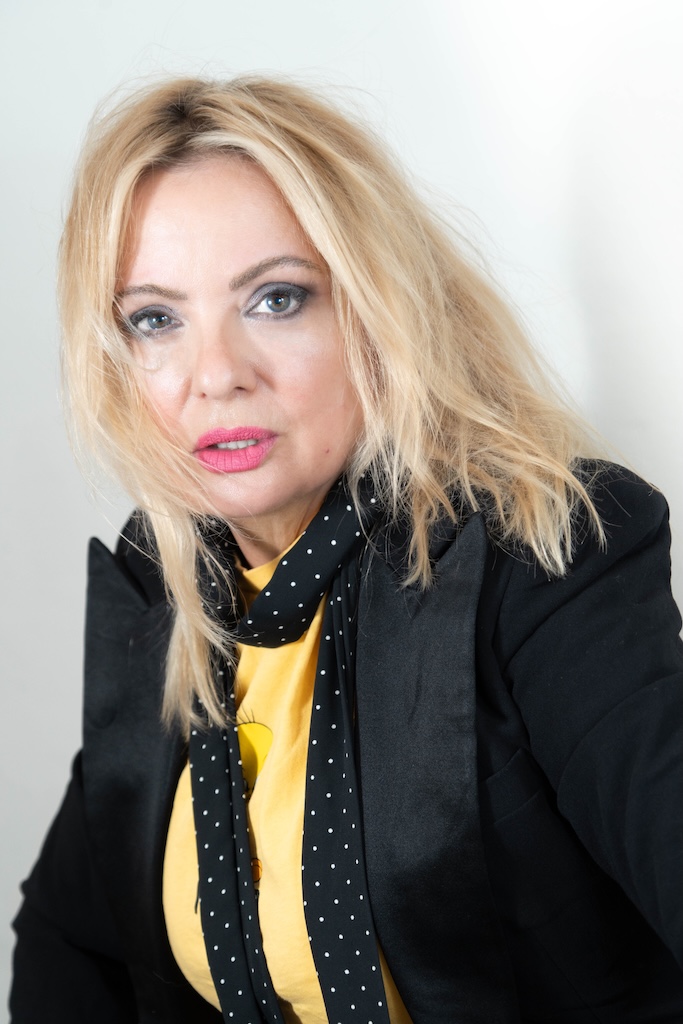
At the same time, I was offered the chance to chat with NY Loose singer, guitarist, and songwriter Brijitte West. Having shaken off the initial bout of fanboy nerves, I set to work on the questions and, what follows, is both an overview of NY Loose’s career and, happily, Brijitte’s ongoing creative journey, in the form of Brijitte West and the Greenowskis. Read on to learn about the Monolith Kids and the history of one of the great unsung bands from the 90s.
So, the first question goes back to an interview you did, probably around the time of Year of the Rat, where you said you picked up a guitar and as soon as you plugged it into an amp, you felt powerful for the first time and that really resonated with me because I had a very similar experience because when I have a guitar in my hand I’m very different (and much less awkward than I might appear right now). So, my first question is about the experience of finding music, of finding your place in the world through that, and how important that is, possibly more now than ever.
So, I guess… the first part of the question, the finding of the music, it was a place I could call my own. I had a really difficult childhood, and it was a place where I could just express myself. It’s all very cliché. [sighs] You know, express my own emotions, there were no rules. I could emulate somebody else; I could be somebody else. Even though it was, you know, purely very much me, it was also another part of me. The voice that wanted to speak up when I couldn’t, right? The voice that wanted to be loud when I was told I needed to be quiet. And, once I realised that music could provide that for me and my art, so to speak, could propel me into that sort of space mentally, I was completely addicted and I was, like, “OK, this is what I need to do”. I need to be in that zone as much as I possibly can. I hope that answers the question.
It does and, honestly, I don’t know how “cliché” that is because a lot of people talk in broad terms about the power of music but not so often about the performative power and how it unlocks a different side of you once you move into the musical / artistic realm; but it’s something that’s saved a lot of people and helped a lot of people. And it’s all the more important now, when schools are not providing much (or any) support for music. It seems like young people are really missing out on something there.
That’s right. Well, I actually am friends, funnily enough, with someone called Hugh Bonneville, [Paddington actor] who is a really quite well-known actor. And he is campaigning for the arts in schools, you know, and if I were well-known enough, I would also do that. It is so, so important for people and teens especially in this time of social media to be able to decipher who they are amongst all of the noise and all of the stuff that’s being thrown at them all of the time. Art, theatre, music, and performance really get you to understand who you are at a much, much deeper level and get you to really ground yourself and who you are as a person. And therefore, you can go out into the world as a much stronger and more confident human being. And really that, to me, is one of the most important parts of education. It’s becoming confident and, yeah, without that, it doesn’t matter how many A-levels you have or what your G.C.S.E. score was. If you don’t have confidence in yourself out in the world, you can’t work with people and understand who you are first and how you fit into the world. It’s so important and that’s what the arts do.
I was really, really lucky that I was able to find that. And I found that, coincidentally, on my own. I had no formal education, I never ever had a guitar lesson, I never was supported in any way, shape, or form through my family or through my school with music. I did it on my own with a guitar book and an old acoustic guitar. But I think nowadays that it’s really, really important for that to happen. It’s just sad, what you said about the education systems taking all that down as if it’s not important. But it is very, very important.
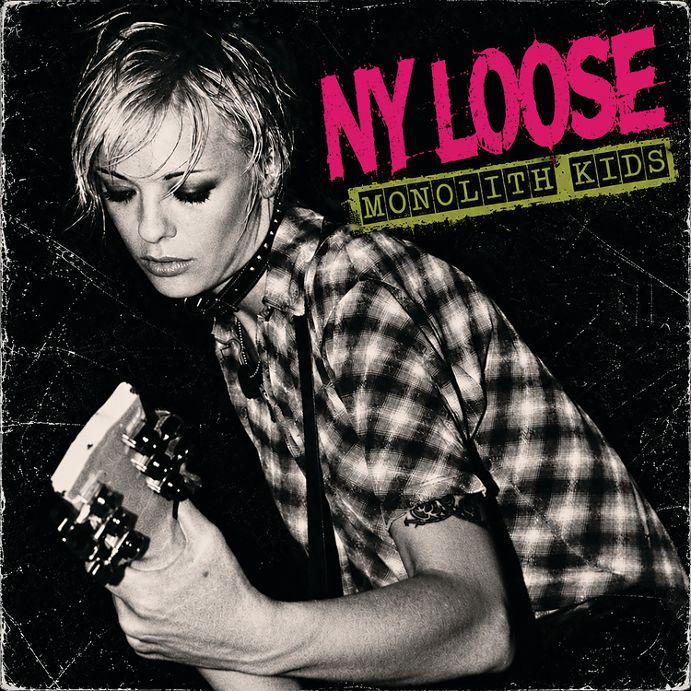
I firmly believe it’s very important. So, in terms of the development of this compilation, this covers the whole period before Year of the Rat. Why the timing of this release and how did you go about selecting the elements that make it up?
To be honest, I didn’t. I work with somebody called Paul Unger and he is kind of like… it’s like I’m the artist and he’s the curator, if you know what I mean. He did it. He really did. He said, “you know what, Brijitte, let’s do this. We’ll remaster all these records from that time. Let’s dig deep into the archives and let’s do that.”
So, I was really, really happy with the outcome but, to be honest with you, it was his idea and it was his project and I just went with it. It sounds great and here it is. I’m so, so pleased with it as well because the songs have never sounded this good. They just, you know, they were all recorded with a very nickel and dime budget, with no money. But, through digital mastering we’re able to… things are coming through on the recordings that never could before. Mainly my voice, because it was very much buried on the original records.
It’s interesting though because, to use your phrase, “nickel and dime” punk rock production just doesn’t age as badly as some of the more expensive digital techniques, because that can really date a recording. Because something like Bitch could have been recorded in 1978, it could have been recorded yesterday – it sounds amazing and the compilation captures the eclecticism of the band as well.
I think that… I really appreciate that sentiment and I do actually agree with you because there’s nothing worse than listening to your own music as an artist because you always think it’s going to sound like… there’s a whole cringe, like [mimics ducking head under the covers] especially after so long. I think it’s down to the song and that’s for me, if there’s one sentiment I want to share as an artist, it’s always about the song. It’s not the production, it’s not the punk, it’s not the rock ‘n’ roll, it’s not about the hairstyle… it’s not about anything, it’s about the song, right?
And, for me, I’ve always been a song writer first. Bitch was a story about me living on the Lower East Side as a quite young woman; single; in a band; lots and lots of attention from men; lots and lots of hatred from other women because of that; and yeah, just trying to make my own way and not putting up with it and just going, “you know what, I’m not going to fall to my knees for every rock ‘n’ roll boy that’s out there just because you’re in a cool band.” And a lot of people called me a bitch! And I decided to take it as a compliment, so I wrote a song about it.
I get the impression from interviews you’ve given before that you’re a music lifer and you have the compulsion to always be creating?
Yeah. You’d be surprised. I rarely listen to music and, when I do, it’s not rock. I have a weird, other world that I listen to which I’ll share with you. I love Swedish sort of Cloud Rap, basically. People like the Drain Gang and I love Bladee, that sort of stuff. So, I like really weird kind of music. I kind of like going down this weird… I mean, I’m absolutely in love with Bladee so, if you’re reading this, get in touch. [Laughs]
Anyway, so, creatively I’ve used a lot of different mediums. I work with art; I do lots of different things. But yeah, when I sit down to write a song, it’s a flow. It’s another world. It accesses a different part of me and yeah, it is a creative process for me. It’s a very insanely creative process for me. It drives me mad, it makes me stay up all night, it makes me walk the floor, it makes me… it has to be perfect, it has to tell the story, it has to be interesting, it has to be way more interesting than anything else. Yeah, I do go a little bit nuts when I’m writing.
It’s interesting what you’re saying about not really listening to rock music because I hear a lot of that and I think, yeah, when you’re living it and recording it, you do tend to gravitate to something outside of your own realm…
It’s boring! I’m sorry, but I find it boring. Today I put on… I was singing Beetlebum to my dog (by Blur). I love Blur. I put it on and I watched the video and I saw the little guitar intro at the beginning and I thought [sighs] you know what, I would love to hear this song recorded by White Armor or someone else. Wouldn’t that be interesting? Like a whole other palette of sound.
You should check out, ah I can’t remember who it was, I think it’s the William Orbit remix of that song [it wasn’t, it was Moby] – it strips all the guitars out, but it has all the harmonies and that floaty “she turns me on” line is foregrounded. You’ll love it!
I can’t believe someone’s done it, I’m happy!
I guess, for an artist, hearing stuff that’s so far outside what you do makes your own music that much more eclectic and interesting?
Yeah! I think, well maybe. I just think that, as an artist, I want to see what other people are doing. I also dive way deep into 1960s Italian music, like really cheesy, Italian movie music. Love that. I love Bossa Nova from the 1950s. I listen to a lot of different things.
The other thing that marks you out is how much attention you put into your lyrics and how you make them universal rather than introspective.
I really appreciate that. Can you tell me any of your favourite lyrics?
The first one that comes to mind is Sorry for Being a Stranger, from your new album.
That’s amazing, I’m happy. And yeah, I really appreciate that because, you know what, I really do put a lot into my lyrics. I don’t think a lot of artists… maybe they do, maybe they don’t, but I love it when they do. I love listening to really, really good lyrics. So, another reason why I love Bladee, because his lyrics are amazing.
So, Sorry for Being a Stranger, yeah, that’s a song actually… I was in (this is going to sound really grandiose) … I was in Venice and I ran into a friend of mine who is Venetian. And I knew him as my Italian tour manager ten or fifteen years earlier. And we kind of had a falling out and when I was in Venice, I thought I’d say I was there. I think that’s what happened, I can’t quite remember. But anyway, I saw him and I just went “oh my god!” Like it was so dumb, I should have kept in touch with him.
So, anyway, I wrote the song. So, it’s a real-life story that happened to me, which is that I really didn’t… sometimes you think that people don’t mean anything to you. You see their Facebook post, you see their Instagram post and it’s like, “yeah, whatever, who the fuck cares?” But then, when you see them in real life, you look into their eyes, and you get that face-to-face, human connection, you’re like “oh, you actually did mean something to me.” So, that’s what that song’s about, just that realisation.
Again, that’s such a universal emotion to tap into and it felt powerful the first time I heard it.
Thank you.
And then, very early in your career, you had Pretty Like a Suicide, which is based (I think) on a photograph, Death at an Early Age. It’s a very heavy subject matter to build into a song, and yet you do it with both compassion and yet rock energy. It’s a challenging line to walk, I would think?
Hmmm, thank you. I walked the line on that one of if I would have known that girl. So, I looked at the photograph, and I looked at what she was wearing and the time period, and whatever. And I think it was in the early 50s and I just thought, you know, “I wonder why she did that?” Let’s think about it, why did she do it? And, I never say it in the song, but my thought was that she was probably pregnant and there was just too much shame around it. And she was, you know, a very, very beautiful girl, and I related to her in a lot of ways because I think that, when you have looks and when you’re pretty, you have no problems. And, a lot of times, it brings on a lot of problems in your life. You can’t fade into the woodwork, you can’t just be, you know, the person that doesn’t get paid attention to or doesn’t have to react. So, I related to her and so I wrote a song and I think one of the lines is “I really wish that I could have held her”. I really wish I could have been there and talked her down. Anyway, yeah, sad.
It’s those moments… we do gravitate towards the lovely and the lost… right back to Shakespeare and Ophelia (and I’m sure before).
“Lovely and lost” is such a good way to put it. And, as Sparklehorse says, it’s a sad and beautiful world.
There were two interviews that came to mind when I was preparing for this – one from you and one from a metal band. I think the guy from the metal band was talking about Seattle and grunge and one of the things he said was that he really envied how supportive the bands in that scene were of each other (in the main) whereas other scenes were a lot more competitive. And, similarly, you had talked about how cutthroat the New York scene was. Was that one of the reasons that NY Loose split?
I would say… implicitly probably. But explicitly no. It was the fact that… there was a lot of stuff going on. The fact that Courtney Love was out at the same time as I was, just wasn’t going to be allowed, take that as you will.
I think that our record company didn’t know what to do with us. The guy that signed us got fired in the middle of our tour and all of our tour support got pulled. And instead of regrouping and saying; because we were just about to make another record, we wanted to make another record and we were writing for one; so, instead of the band pulling together and saying, “right, we’ve got this really good following, why don’t we just find another label?” There was mutiny in the ranks and two of the members decided to go ahead and do another band, which completely decimated me.
So, I was double heart broken, right? I was heartbroken because I got dropped by the label. And I was heartbroken because my righthand man, Danny Nordahl, left the ranks, left me, and joined… formed another band with one of the other members, which never went anywhere because, you know, it wasn’t NY Loose. It wasn’t ever going to be as good as NY Loose so, you know, whatever, right?
Yeah, that’s why. And so, I guess with Monolith Kids it’s really, really important for me to show the world this is who we were, this is where we came from. This is what we produced with a little bit of money behind us, and going into a real studio, and making a new album, which was Year of the Rat, which is what most people know of us. With Monolith Kids, this is the history, the high school yearbook, this is where it all came from. And that is so important for people to understand. It wasn’t just like a one-off kind of, put-together band. I was making records way, way before the Year of the Rat record came out.
The compilation works really well. It’s interesting that Paul re-ordered the Loosen Up EP. I thought it might be chronological, but it has a great flow.
I think he did a really, really good job. Paul did a really, really, really good job with this. So, yeah.
It’s such a shame, being on that Crow soundtrack [Crow II: City of Angels] felt like a leg-up because, you know, there were so many great (for want of a better word) alternative rock bands and, even then, it felt like it was difficult to be heard amongst all the noise and I never felt that you got the attention that you should have done in the UK.
Not anyway. I mean, in the US, we opened up for Marilyn Manson on the Antichrist Superstar tour, which was great. It really, really helped us. But, like I said, we got dropped and the band went away. So, yeah, I could have done Brijitte West solo. I should have done that, maybe I could have done that. But you know what, I was in such a mental state that I just couldn’t do that.
But anyway, I’m doing it now! And it’s probably better… the band is a million times better than NY Loose as far as their musicianship, their songwriting, and everything else. The collaboration of us as a band. And, yeah, it’s almost like the NY Loose that never was. And yeah, I love this new album, and I’m so excited for people to hear it.
There are a couple of songs that stood out. Another one, for me, was Don’t Hurt Yourself.
Oh, I’m glad you liked that one.
It has real empathy in the way it addresses the audience or perhaps the protagonist. But the music is very powerful and it’s that combination again.
You know what it’s about, can you guess?
I will almost certainly get it wrong, but it felt like this era of social media pushing people towards doing things they don’t necessarily want to do.
It’s self-harm, which is an epidemic and I see many people, unfortunately, are succumbing to. Someone very close to me had an incredibly bad, I would say, habit. I mean, I don’t know, so don’t kill me, but I feel like it could almost become a habit and it’s something that you almost have to break, and it was very, very painful to me to watch someone that I care about hurt themselves.
And, I think in that song, when I say “the victim and the criminal are one and the same” for me, it’s sort of like trying to put myself into their shoes and understanding that they’re victimising themselves and there’s no need to do that. Ever. No matter what you’re going through. Please don’t hurt yourself. The world is hard enough. The world is going to hurt you enough. The last thing you need to do is hurt yourself. So, yeah, that’s what that’s about, it’s about self-harm.
Now, it does feel that people are more introverted, seemingly in spite of all the potential avenues for communication, and turning their anger and their frustration upon themselves, so it’s a very important message to share.
Yeah. I thought so. I wanted to tackle that one. And Fade, actually, which is on Monolith Kids, and which was meant to go on to the Year of the Rat album but never did, that song is obviously about anorexia. That’s my story about a friend of mine who was struggling with anorexia. So, I’m trying to, you know, work with subject matters that other people, or not many artists, really try to address. I figure “hey, why not? Why shouldn’t I?” These kinds of things have touched my life, and they’ve touched the people that I love and so, I’m going to write about them.
And that’s the artistic imperative, isn’t it? To bring things from your life and make them accessible.
Yeah, for sure.
And do your band, the Greenowskis, do they know the lyrics in advance as they’re developing the music? Or is it music first and the lyrics follow?
So, with Brijitte West and the Greenowskis, a lot of the music was developed through the artist Lester Greenowski, which is why they’re called the Greenowskis, and he had a lot of songs, and he asked me to write some lyrics to them. So, yeah, a lot of them, I added lyrics to stuff that was almost already finished. But then, things like Don’t Hurt Yourself, I wrote from scratch, 100%. I wrote that one. So, it was very much a collaboration.
I guess it’s a question of how much of the music is directly influenced by the lyrics and how much of it is inference from interaction in the studio?
Yeah, my band is Italian. I mean they can speak English, but they weren’t really that bothered, to be honest. But they got the hook. So, I don’t know. I don’t know how much they really dug into the lyrics and, but the time we got into the studio, a lot of it had already happened in the rehearsal space because that’s when you’re rehearing the recordings. We did a lot of that working out in the rehearsal space.
The guitar player of the Greenowskis is called Wilko Zanni and he was in a legendary rock band, Italian rock band, called Rats. I am the luckiest girl to have him on this record. I just want to make a major, major point in saying he is the best guitar player I have ever played with. Emotionally, he links up with me through his playing like no one else has ever done. Honestly, he was a dream to work with. And if I had a dream line up, I would choose him over any other guitar player on earth. He is the most amazing guitarist and individual. As a person, he’s fantastic. So, I wanted to give a big shout out to him.
You have this album coming out, and you have Monolith Kids coming out too – are you going to go out on the road and add NY Loose tracks into the set, or do you keep it very separate?
No, of course. I mean, if we do live gigs, we’ll definitely put in some NY Loose stuff absolutely, 100%. But, we don’t have anything booked and I don’t know if it’s ever going to go on the road. We will see, we will see. I mean, I guess it depends on what happens with the record and, you know, what happens next year. And if we’re asked and it happens, then great. I’m just happy to get the record out, so…
Thank you so much for your time. It’s been amazing and so cool.
Likewise, it’s been a pleasure.
NY loose – Monolith Kids is out now.
AND
Brijitte’s new album, ‘ Brijitte West And The Greenowskis’, is out 13th November
Pre order here : https://rumbarrecords.bandcamp.com/album/brijitte-west-and-the-greenowskis