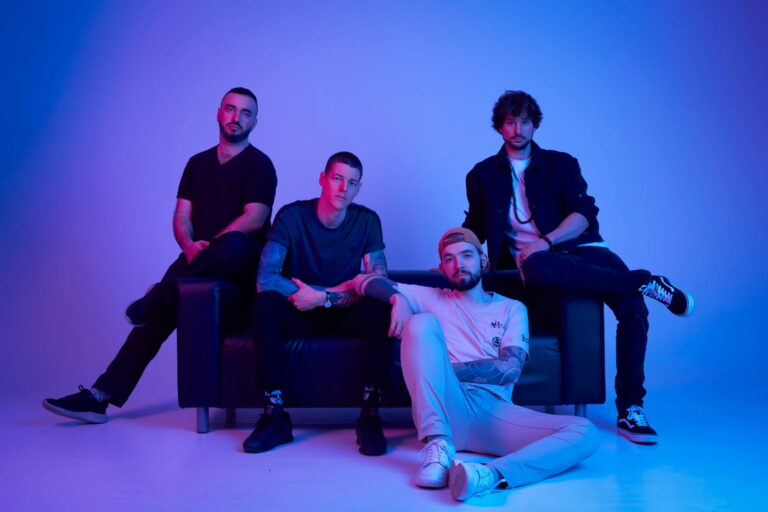
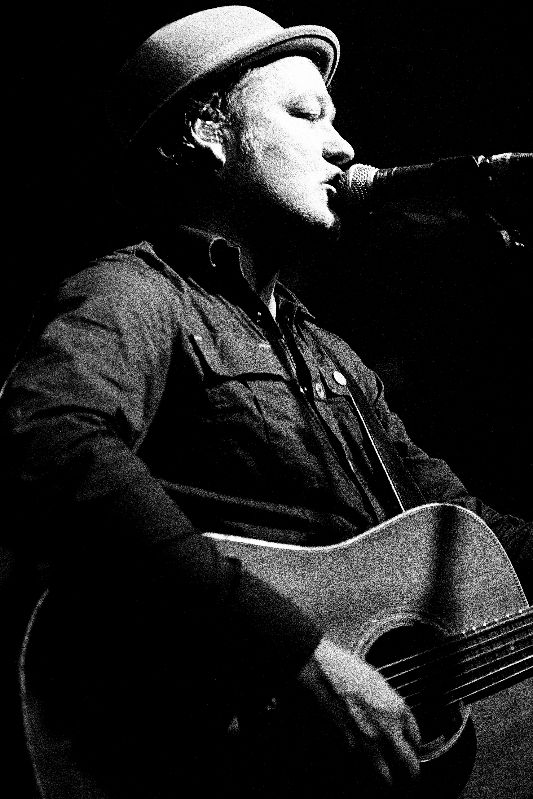
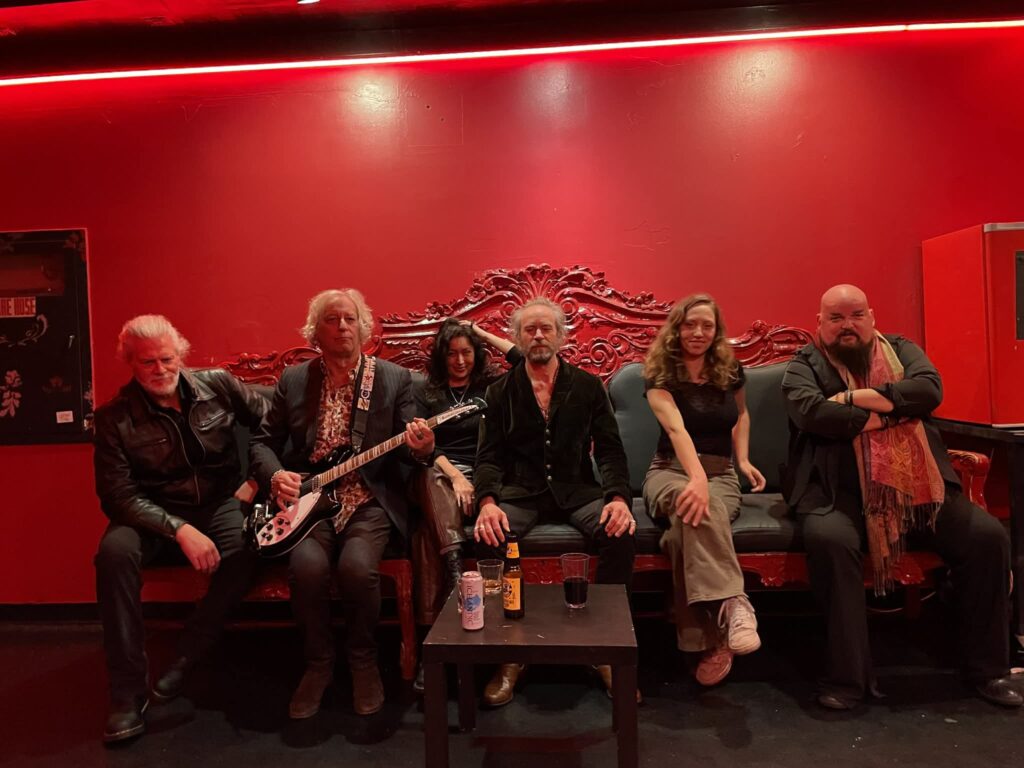
While it feels like a lifetime ago, it’s really little less than a year since I last caught up with Drink The Sea, the remarkable and eclectic group put together by former Screaming Trees sticksman Barrett Martin. At that time, the band were promoting their remarkable debut set – the double album simply titled I & II and, as the screen flickered into life, I found myself confronted by the entire line-up – something that came with its own fair share of nerves (you can read the full interview here).
This time around, with the band about to share the stunning follow-up, III (reviewed here), with the world, I am speaking with Alain Johannes and Duke Garwood about the band’s experiences, the success of their globe-trotting tour, and how they found their way to a third album that, almost implausibly, is the equal of its immaculate forebears.
Alain: I like the “Vs.”! So, we’re going to be antagonistic, are we?
Duke: Yeah, yeah!
Alain: How’s it going, where are you?
We’re based in Leicester, in the UK.
Alain: Nice!
Duke: Lovely Leicester!
Alain: Is that the one that’s spelled L.E.I.C.E.S.T.E.R?
Yeah, it’s the one that’s entirely unphonetic.
Alain: Yeah, there’s a lot of them… Worcester, right?
Duke: Woo-sester… Wooses…
Alain: Or Woos-ester-shire!
All of our cities are designed to confuse and disorient!
Alain: That’s good, well, it’s working for me!
How are you guys doing and where are you? I know you’re in rehearsal…
Alain: We’re in a really dark and dingy… well, it’s not dingy… apartment at Lacey, which is near Barrett. It’s a part of Olympia, Washington. That’s where Barrett lives and where his studio home is and that’s where we’re rehearsing. So, we’re just here running through the new stuff for the first time at the same time. Because, you know, we wrote and recorded it so fast that we never checked if we could play it and sing it at the same time!
Duke: Yeah, we neglected to check that!
That does seem to be a common theme with you guys…
Alain: Yeah, yeah. Well, if we just… something about this situation and I guess it’s just how we roll. It just kind of happens and we like it spontaneous, so there’s not a lot of going over it, not a lot of rehearsing it. There’s no planning or thinking about it. Lyrics get written right before they get sung and songs get written right before they’re recorded, you know.
I don’t mind it, actually, it’s really cool.
Duke: It’s a nice way to make songs and it’s a nice way to rediscover them when you’re singing them.
Alain: Exactly.
Duke: It keeps them kind of fresh.
Alain: Yeah.
Duke: They get a chance to get A – H on the road, nicely.
Yeah, it has that advantage. When we saw you just before Christmas… I want to say last year, you were playing the Jazz Café in Camden, and the songs had really evolved since the record and I guess day-to-day, that’s kind of a thing for you guys. When the songs are shifting on the road, is it as much about the audience interaction as it is about you bedding things in? Or is it more you learning your own places within the songs?
Duke: I think… well, the audience make a big difference, but our engine has to have a proper nice, cyclical energy between all of us, otherwise we’d be playing to their expectations so to speak, anyway.
Alain: Yeah.
Duke: It’s a lot of things. It’s the difference between a [mimes fingers on a guitar] move that might really hurt your body if you do it repeatedly, so you have to find a way to do that without hurting your body, so that you can keep playing. From that kind of minutiae, through to the big picture, where your mind encompasses the music growing and all that.
Alain: Yeah, I think also reacting to… there’s a little bit of licence and freedom where it feels like it’s OK to do that, it’s OK to experiment, you know? We don’t really have, like a… there’s no internal judgement where you can’t do something or try something. And that’s what I like about it; we get to keep exploring the songs. And, you know, this new album has a little bit more of a song structure compared to the first two, which were a little bit more open-ended sometimes. It’s really cool. I like that about this band and all the different aspects of it. Peter’s always writing cool riffs and, you know, we’re recording on the road these days And, we already have, like I mixed seven tracks that are not on this record from the sessions we just did just recently in South America. And now we’re going to be recording some more, so we should have album four ready by the time we finish this next touring cycle.
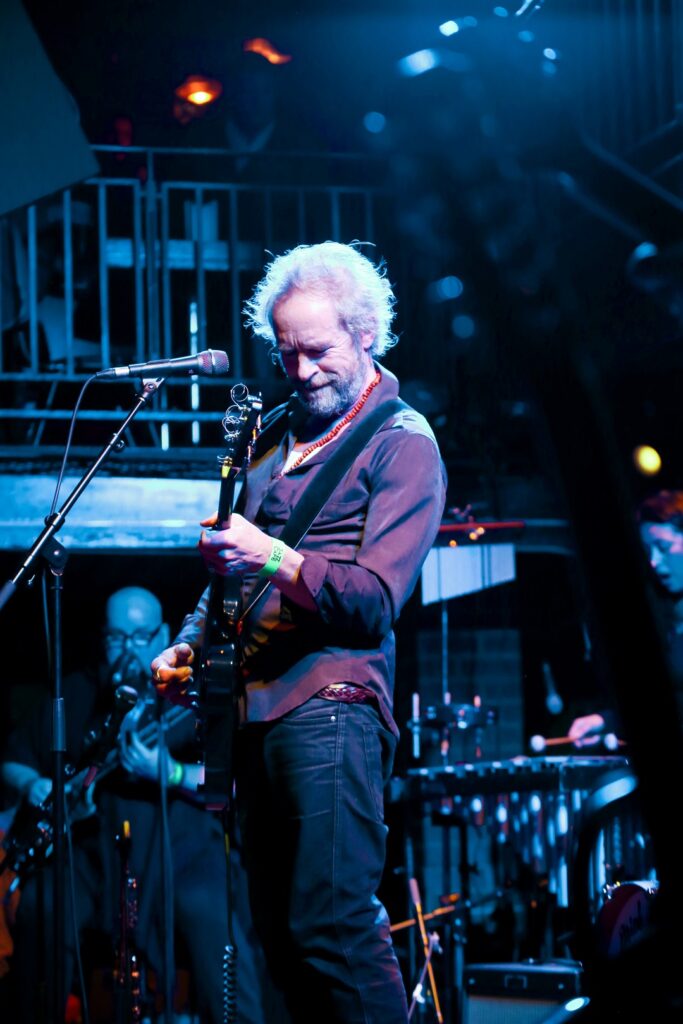
You guys are unstoppable… I loved watching you play. It’s so cool when you have the different instruments. You guys both have, like, a station with all the different instruments, and just throwing different things into the mix. Again, was that something you had to work out on the fly, where you had to, say, switch between say guitar and clarinet?
Duke: Yeah, as far as that goes, that’s a bit of showbiz timing, you know, you need those instincts. And also, to… A lot of it is I’ll sing this line and then, after that line, I know something’s coming up, and I have to make a move. It’s also because I can’t stop moving [laughs]. So, I either have to start dancing really badly or I have to keep moving between instruments.
Alain: Yeah, because we do have the ability to bring different textures. Usually, in the recording, you know, the main aspect of the song is there and then we hear other textures that we need to add. And, of course, we don’t have eight or nine players, so we just have those things available to suddenly grab and bring into the fold, you know?
Duke: Yeah.
Alain: So, that keeps it super interesting texturally. And we could even go further. Duke and I are both quite the instrumentalists. I mean, we have a collection of instruments. Um, you know, I like to say I play many things not very well! [Laughs]
Duke: I mean, if we could have more luggage space and bring more things, we certainly would…
Alain: We would!
Duke: There’s be tenor sax, clarinets here, a proper range. It’s just the way of the world.
Alain: Well, we’re travelling on our own.
Duke: We’re traveling on our own, often.
Alain: We have a couple of vans and no crew and whatever we can fit. I don’t know if you remember, but we have humble-sized, not-very-loud amps. It’s just so we can fit and make it work financially, you know. Because touring these days is quite on the edge of possibility and wishful thinking [laughs].
I was surprised at the size of the amps you had on stage, it did seem very stripped back. But then the sound that you achieved with that was amazing….
Alain: Oh awesome.
…But it was not necessarily the stage set up you’d associate given the bands you’ve collectively been part of in the past.
Alain: Oh yeah, that’s for sure. So, it’s good. And also, I think it helps because there’s a lot of listening to each other and reacting to each other, and I think that’s way more possible when you have a little bit more control to the sound on stage and you can hear everything that’s happening, it’s not overwhelming.
It goes to show that power doesn’t necessarily come from volume. Although, obviously, the PA is amplifying everything we’re doing. But I think on the stage, in our case, it served us well. I mean, there are a couple of moments where I’m like [turns a bit Beavis] “ah, turn it up just a little bit!” But then Duke’s going to have to turn up and Barrett’s going to have to grab the bigger sticks and then it’s total chaos [laughs].
It’d be really nice but I think we do pretty well with that and now, with this new record too, it’s going to be nice to have a few more [hesitates] I don’t want to say normal but a little bit more structured things to sprinkle in there with all the jammy, open stuff. A little more singing singing, you know.
For me, listening to the record, it feels like there’s quite a playful feel to some of the stuff. I mean, Parisian Voodoo has a very different vibe with that full-on, squealing… I think it’s a sax solo, but I guess it might be clarinet
Alain: That’s it, right on.
Was that you, Duke? It totally raises the roof, it’s awesome!
Alain: That’s Duke, he’s a squealer! Albert Ayler Society, local chapter! No, it’s incredible when that comes in and you can’t not get excited every time you hear it because it comes in screaming. It’s called Parisian Voodoo because the vibe of it began during a soundcheck in Paris. And so, we kind of tried to remember – I think Barrett recorded it on his phone – what that feeling was like…
Duke: Yeah, that’s right
Alain: And then we were at a really cool studio in Chile…
Duke: We put together the beat…
Alain: We jammed on it and it came to life. And then Duke had this amazing spoken-word thing, and it was born. There’s that and Deep as the Sun and, you know, there’s a lot of stuff that’s apart from Oh Desire, or the rocky riffs of Big Dirty, which are very cool and a bit Zeppelin-y. So, yeah, it’s cool. I really dig this record. I’ve been listening to it [British accent] proudly [returns to normal] I must say.
Parisian Voodoo, when we saw you, my wife was doing the photos and I remember her telling me that she pictures you, Duke, as this kind of bohemian artist travelling from jazz café to jazz café… Parisian Voodoo just seems to fit perfectly.
Duke: I like it, I’ll hold on to that!
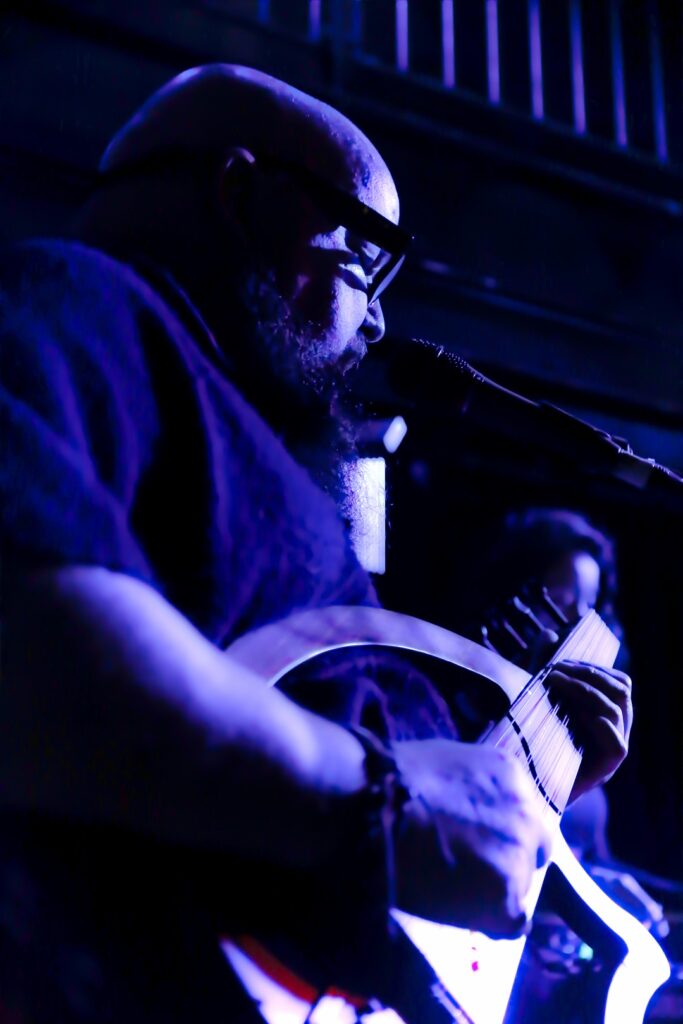
On this record… I remember on the last record, you brought in Lisette and Abbey for the live shows. But it looks from the promotional material like Lisette is now firmly in the band – has that subtly changed the writing process at all, maybe driven it in a more percussive way, because there are a couple of songs, like Turn to Gold, where there’s a lot of space and a lot of cool percussion happening.
Alain: Yeah. Lissette was a part of all the live stuff, and it seems to be, like, the bass chair is a little bit fluid. Now we’ve got, Dune Butler who’s joining us for stuff. But yeah, if you’re going to cement the core, I guess we’re the core and the bassist is a component that’s more free flowing.
Duke: Because they’re free to do their own thing. You can join a band, and you might have someone else. And we can roll with that.
Alain: Basically, a lot of the bass gets recorded by us. Barrett’s playing upright, I’m playing… all of us can play bass. But it’s cool.
I think, not so much Lisette’s presence; but this record is, even more so than the first one which came together over a longer period and often started with jams that were just Barrett and I, and then just Duke and Barrett travelling, and then Peter, Duke, and Barrett. This is all, pretty much, us travelling together and finding a day or two between, whenever there was a day or two break during shows, to create this record. So, it’s a little more focused in that way. When you’re in the studio for a couple of days and everyone is bringing songs, you don’t really think about loose jams. You sit down and write a song structure, and that’s what happened on this one, I think.
And actually, I just mixed nineteen songs. There are twelve on this one and we have seven left over that are done, they’re amazing. The next record, they’ll be on, and it’s going to be amazing. We just need to record a few more things to fill it up, you know. So, it was quite a creative spell considering that we only had eleven days in the studio during the five months [turns to Duke] how long were we out, five months?
Duke: Yeah. I think so.
Alain: With the breaks. We went to South America…
Duke: Yeah, it wasn’t much. Not in real studio time. Probably a couple of weeks at the most.
It’s still amazing to me that the record sounds so coherent given that it was recorded in different places, is that because it’s you, Alain, who brings it all together in the final mix?
Alain: I think it’s that I approach it sonically through my vision. But also, everyone involved has a sonic personality. So, we had a couple of things that we hadn’t gotten to, and Duke sent me, like, this amazing horn section and cool guitar vibes and I added a couple of things. But that’s what it is, as long as it’s… the cohesion comes from us being us and then me being in charge of the last bit.
Duke: Yeah, the delivery.
Alain: I think because we’ve all worked together before with Lanegan, for example. I worked on so many Lanegan records and Duke too. And, you know, Mark and I mixed Duke’s stuff. So, there’s a certain commonality in the language and what we like to hear and things that are…
Duke: It’s true.
Alain: … and the things we’ve done before, like there’s a certain approach. It doesn’t sound dissimilar to some of Duke’s records and some of Lanegan’s records, you know? Um, so, I think there’s a continuance there, which helped it come together. Because, once it got going, it didn’t take that long, right?
Duke: Yeah, it didn’t take long because our flavour is strong.
Alain: Maybe, like, I think ten days altogether, with getting reactions from these guys on mix stuff once I get going.
Duke: Oh yeah, the mixing was quick.
Alain: I mean, nineteen songs. It’s a lot but it’s cool and I’m really very excited about people hearing it in its totality. Because I think we’ve put out five songs now?
Duke: Five, yeah.
Alain: One left?
Duke: Yeah, one left to single out.
Alain: I think it’s next Friday actually.
Duke: Is it? Oh nice. And the record’s out on the second of October.
Alain: Or is it the day the record comes out, I don’t know.
Duke: We know nothing!
Alain: We don’t know anything! We know music! [Laughs]
I think I asked this last time and it’s a geeky thing, I guess. But for me, the sequence of a record is so important. You know, like the first two, you put this album on, and it takes you on this amazing journey and it’s very eclectic as well. Is it a challenge, once you’ve got the mix and everything’s there, is it a challenge to then get the order so that it does… what it does?
Alain: I think, in this case, Barrett was in charge, him being the label. And he’s pretty good at sequencing things. And it makes sense to us. The flow is… I think Duke and I would most likely have done a very similar thing. I always look at it like threes, like a set-up – tension – resolution kind of thing. A group of those, because it’s very important, the dramatic arc. Which is funny because people check it out on their phone, just one song, and they’re like “check it out, it sounds great!”
Duke: Yeah, there’s the story, the unfolding.
Alain: For us, that got used to music in that way.
Duke: It’s carefully constructed. The album cover that you can look at while you’re listening…
Alain: We’ve just got the vinyl, it looks amazing. Duke did a great job again.
Duke: Thank you.
How do you decide on who takes a lead vocal on a track because your styles are quite similar in a lot of ways. Is it the person who comes up with the lyrics? Is it the song writer?
Alain: I think, very often, it’s who started… Sometimes it’s Duke’s song, so he’s singing the song. Sometimes it’s my song. But sometimes, Peter writes the music and one of us will say “ooh, I like that” …
Duke: And then they get to do the number.
Alain: Yeah, so we both write lyrics to Peter’s songs and then we sing it. For example, It Makes the Rain Slow – that’s a Peter riff and Duke wrote the melody and lyrics. And I wrote Oh Desire melody and lyrics to Duke’s cool riffs. And then, the other stuff, like Big Dirty and Heal… it’s very obvious what needs to happen.
Duke: Yeah, it is really.
Alain: Yeah, and we kind of think about whose voice would be better for the song. There hasn’t been a single moment where we’ve, like, discussed it. It’s just happened and no one’s been like [puts on put-out voice] “oh, I wanted to sing that one!”
Duke: It’s very supportive. You hear a thing and if it inspires someone to write some words and a melody within a song, it’s their song. I mean, it’s everybody’s song… but the muse came to them to have it. I’m in full support of that, always.
Alain: yeah.
Duke: It’s nice.
Alain: And then, there are the jammier things where everyone just adds their thing to it.
Duke: Yeah, we throw in vocals and lines.
Alain: So, thankfully, it’s not hard. It’s not an issue.
Duke: We don’t have big meetings where it’s like “you’ve not been pulling your weight, Duke! Give us another song!”
Alain: And I like the multi-singer thing because obviously I was in the band with Natasha, Eleven, and we were both lead singers as it were. And I grew up on The Beatles where there was more than one possible singer and it’s just really interesting….
Duke: It gives so much scope, doesn’t it?
Alain: Yeah.
Duke: You can start singing more layers. Because voices are the most powerful thing. All the players can make all kinds of music, but the voice is this thing that kind of coats it all and carries it off as a song. And the more voices that are in, the more powerful it can become.
That’s why crowds like singing with bands – those things are powerful.
Alain: I think in the old days, people would have been “where’s the focal point?” Like, you know, marketing. And hopefully a handsome man or a beautiful woman to help things along.
Duke: We can hire someone!
A stunt vocalist!
Duke: Yeah, like really hot vocalist!
Alain: Can you imagine? Oh my gosh, that’s so bad.
Duke: I didn’t say any of that!
You can deny everything! I think, when you went out on tour, that was really the first time (bar rehearsal) you’d properly come together. Did that tour change your perception of what Drink the Sea could be, or did it confirm what you had in your minds from the outset?
Alain: Probably the latter. I think we all really felt what it could be.
Duke: Yeah.
Alain: Because the ground zero was the songs and there was already a lot of potential. Those frameworks, the playfulness of the improvisation live, extending the songs and playing for two-and-a-half hours, that kind of led to us… you know. And the more comfortable you become with the songs – once you can do it in your sleep (ish, there were a couple of songs I could never quite nail…[laughs])
Duke: That’s where a little swagger comes into it.
Alain: Yeah! By the time we finished that first Spanish run and we got over to you guys, we’d really started to find our legs. But even some of those early shows were interesting too.
Duke: They were, they were great. I liked the first one, the very first one.
Do you find… I mean, you both are multi-instrumentalists. Do you find the band is still pushing you to try different things or new instruments?
Alain: Definitely. I think at the moment, we’ve pushed out on the first two records and then, on this record, it’s a bit more comfortable, we reeled it in a tiny bit. There are more guitars, more electrics on, all the time. Less cigar box, less oud. But there’s Ebow and horns and feedback and all the things like that. I think for the next one we’ll probably expand a little more. It depends what Duke and I pick up on the road. We’ll see something and go “ooh!”
Duke: Yeah, it can slow you down because you end up, like, if you can do it with one guitar on all night, then you’re going to leave it on all night, because just like I said, all the… it can also be a great thing. It’s nice to have all the other instruments available to expand that sound but you can ideally do it all on one anyway. If you’re in tune [laughs].
Alain: The other thing is, the musical part, the function of the line, no matter what the instrument, is more important than the instrument. So, you can find yourself singing a guitar line, like an Ebow line, or intimating its presence because we can’t be in three places at the same time. So, we ended up like, somebody’s got to cover that. So, for example, the cascading part in Make the Rain Slow [sings the part], I asked Lissette to do that on the vibes. So, it’s present, but it’s not the original instrument. So, that’s what we’re doing, is to make sure the arrangement of the composition itself survives.
Because if something is really important to the feeling of the song, like it doesn’t really matter about the nature of the sound so much as that harmonically, it’s present. And that’s what I always liked about the live Zeppelin stuff, Page and JPJ always managed to intimate something being there when it actually wasn’t. It’s really cool. And they had to because the part had to be there.
That’s a really interesting point. I’ve often found if you’ve got a cyclical part, like an arpeggio or something, you can play it at the start and move on to a different part but the audience sort of fill in the blank because they sense that it’s meant to be there. You can really fool people with that.
Alain: Yeah, exactly that. It’s funny when something’s so ingrained, like it’s supposed to be there, people end up singing and, like you said, filling in the blanks in their heads, which is really cool. In some cases, the lead vocal [laughs].
Duke: Yeah!
Alain: You can start the line and then the whole of Wembley – well, not in my case, I’ve never experienced that – but the whole place goes off, and you can rest your voice for a bit while they take over the singing!

You played a handful of songs from R.E.M., Desert Sessions, and Mad Season on the last tour. Now, you’ve obviously got a lot more songs now, so is that something you’ll still do to pay tribute to those bands, or is that something you may dial back?
Alain: I think… well we’re dropping one of the Desert Sessions song, because we were doing two. But the R.E.M. and Mad season tracks, we’re still sticking with Because they, like you said, it’s like a tribute. But they’re also really great. In the set. They really move towards a conclusion as the last few songs. It’s really cool. It just makes sense and we enjoy playing them. We’ve switched out a few songs that are great, and we’ll bring them in here and there, but we needed to make room for about, you know, all twelve – was it all twelve?
Duke: Yeah, all twelve.
Alain: But we’ve still got twenty-six songs to choose from, and then more.
Duke: I think as we’re on the road, we’ll change things around. We may even do some from the record that’s yet to be heard, because they’re great tunes too. And, at the end, if you’ve got good material, you play it. That’s what Willie Nelson does. You need material to play a show, so you just do it. You pick it out and do it.
My final question for you, and thank you so much for all your time, you had the amazing Tad Fettig doing the films and really kind of creating an atmosphere. It was so complementary, is that something you’ve done again?
Alain: Sadly, Tad has passed away.
I’m so sorry, I didn’t know.
Alain: He was in awful pain, and we didn’t know what it was. He took a long time to get diagnosed and he had very aggressive cancer. He passed away a few months ago. But, in tribute to him, because we miss him and love him, we’re going to continue showing the films. And we’re going to use some of the visuals for the new songs as well. It’s quite shocking. We didn’t see that coming because he didn’t join us for the second leg of the tour.
Duke: No, just the first one. He was feeling really rough.
Alain: Yeah, he was feeling rough and when he went to take care of it sadly, there was some mucking about by the doctors. I don’t think they figured it out in time and sadly he’s gone.
I apologise for bringing that up, I’m so sorry, I didn’t realise.
Alain: No no no! It’s nice that we talked about it. He was a member of the band with the visuals for sure. We’re going to continue with that, he left a lot of… well, a lifetime’s worth of beautiful work…
Duke: Yeah, incredible…
Alain: … that can easily continue through us and it’s what he would have wanted anyway.
It’s a lovely tribute and it’s amazing how, when you see a video alongside a piece of music, it changes your whole perception and it becomes a complementary thing. It’s really important.
Alain: Yeah, it really sets the tone for us on stage. We can look up and see it and feel his presence and look at each other and the mood is already… it’s a very lo-fi way of achieving such a thing.
Duke: Yeah, it’s old school!
Alain: There’s no huge, complicated light show to underscore the emotional component of the music or connective component. And people really enjoyed it and I really enjoyed it.
The whole experience, I mean the Jazz Café is a great venue, and that whole thing – it was one of the most intense and amazing shows of the year for us.
Alain: Oh, that’s awesome! I really like that, thank you.
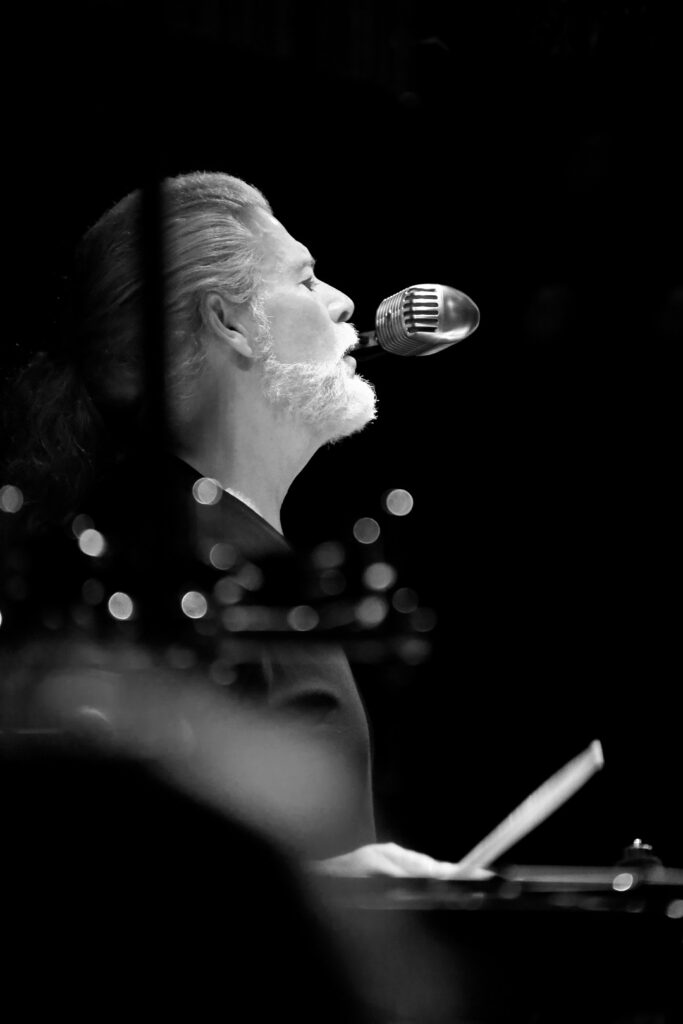
Thank you so much for your time. I hope, Duke, you’ll return to your Bohemian cafés…
Duke: Yeah, I’m going there now!
Thank you so much.