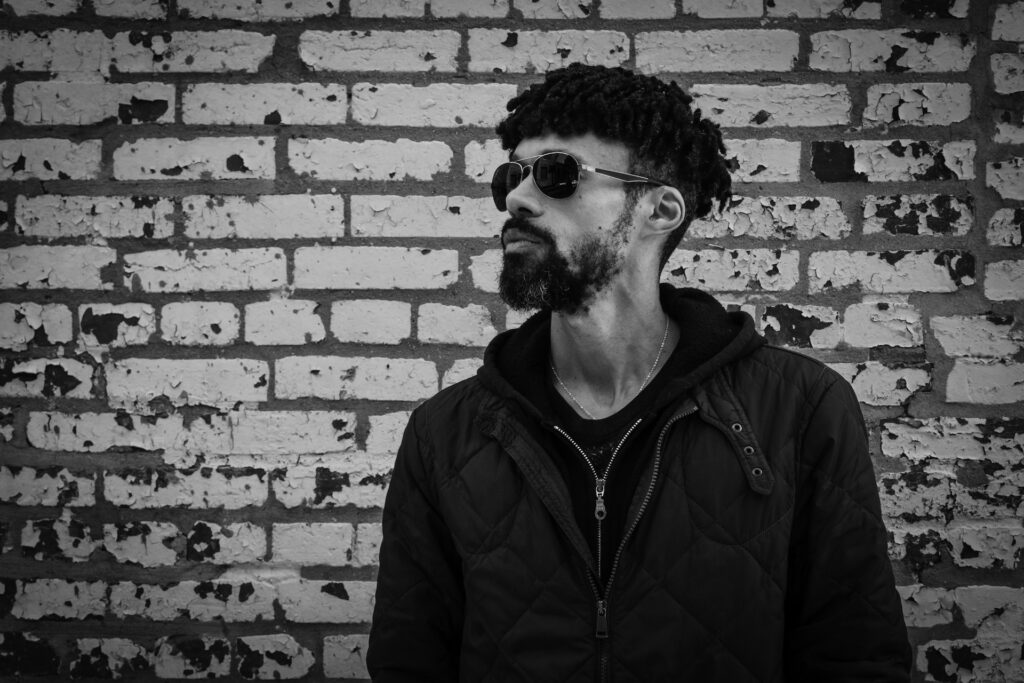
A remarkably prolific artist, Jeremy Moore has released material under a wealth of different monikers, from the swirling, psychedelic doom of Gorazde and the jazz-inclined Zabus to the darkly gothic Zero Swann and the harrowing Bell Barrow. With all of the above acts linked by a common disdain for commerciality, each separate band explores a facet of Jeremy’s interests and influences, and there’s a remarkable diversity to his output.
We were lucky enough to catch up with him via video link in the wake of the latest Zero Swann effort, The Ones Who Love, and he proved to be a gracious host, guiding us through the musical and lyrical journey that brought him to this latest release. Read on and meet the genial, thoughtful Jeremy Moore.
Hey, thank you so much for taking the time to speak to me.
It’s my pleasure man.
So, looking across your projects and I think that the earliest one I could find was Gorazde – back in 2010. Was that your first project?
It’s actually kinda funny. It goes back to 2005. I was doing some sort of demo stuff on my own back in 05 and I actually released; well, not released; but I created about seventy or eighty songs between 2005 and 2010. And then, the first iteration of Gorazde, I had about four or five different albums and I put those on CD (this was back when CDs were a thing); so, I had it on CD and I was always kind of happy with what I was doing but I never felt I was ready to release it or put it out for the general public. At that point, I was just doing it as a creative outlet.
The second iteration was getting a little more serious, I was familiarising myself with more of the production techniques and more like sound engineering and that kind of thing. So, I had about three or four additional albums that I had done at that point in time.
I finally got to This Carrion Underground, which was in 2010, and I thought I’m finally ready. I’d been toiling away in obscurity for long enough and I thought it was about time to get that stuff out there and see what folks think about it.
It’s really interesting that you started in 2005. We take it for granted, now, that it’s so easy to put stuff out there via the internet and Bandcamp but we forget that in 2005, the net was so slow. A lot of people were still on dial up and I was just about on some sort of broadband. So, you said you weren’t really ready to release stuff, but were you still sharing physical media at that point – maybe just with friends – or were you really keeping it for yourself?
You know, my actual process involves a lot of physical media. I still put my pre-masters on CD. That’s my flow. I like to mix a little bit of… I like to keep one finger on the pulse of technology, but I also have a healthy love and respect for the way things were done in the past. I just like physical media in general anyway, so I never really ventured into the – I guess the term is “in the box” where everything is digital from start to finish. For me, I like to have my hands on the equipment and my hands on the media. So, I carry that forward.
Like you said, in 2005, the stuff I was recording was on a Tascam 4-track. And that’s kind of how I taught myself. The first Gorazde demo was an album called The Splendid Lights. I recorded the entire thing with an Ibanez Jazz Core with a custom, really cheap custom, amp. So, the kind of things I would do was to blow into the hollowed-out Jazzcore – I’d blow into the guitar to make these sound effects that would vibrate and reverberate through the strings, and I would create this kind of background of weird, ghostly sounds. I played it to my brother, and he asked about the weird sounds, and I told him what I’d been doing, and he was like “I don’t know what the hell you’re talking about!”
So, it was little things like that, where I had to overcome technological restrictions and obstacles and stuff like that. Then, one thing led to another, and I started reading more about sound engineering and coming up with ideas and it sort of took off from there.
I absolutely love that. One of the things I always talk to artists about when I get the chance is how we are always trying to overcome our own limitations to get that sound in our heads. And now, you’ve got a lot of things at the push of a button, but there’s something magical about getting a drill and putting it against the strings or sticking paperclips on the frets – anything to create the sound and that’s where you get the happy accidents that you never intended. It’s so much more exciting than simply pressing a button, right?
100% You hit it right on the head. I’ve fallen in love with happy accidents. When I was a little more… I’ve been through a kind of cyclical thing. At the beginning, I was way more experimental, partly because I didn’t know what I was doing. I was just figuring things out and that was an unknowing thing, but it was kind of a benefit not knowing what I was doing because I didn’t feel like I had any external restrictions. There was no rigidity to the process because there wasn’t a process. And that was beautiful.
Then, when I started learning more about it, I started almost imposing these – at the time I thought they were necessary – restrictions on how to write songs, how to construct the melody, how to do this, how to do that. I feel like, in a way, that kind of restriction snuffs out that sort of happy accident and creativity that I feel like I’ve rediscovered in the past three-to-four years. I’ve really embraced that spontaneity – like you said, that happy accident kind of thing, and I think that, for me, has rekindled the thrill of music in general and finding things that pop out of the blue.
The internet is really cool in that it opens up doorways to reaching other people, but it’s also led to a kind of formalism, because a lot of people out here on YouTube are telling what you need to do. I guess for bands and musicians just starting out, where you haven’t had that experimental background, fighting with four-track recorders – I guess they don’t have the confidence to step outside that box of “this is how things must be done”. It just seems inherently damaging to me.
I agree. I was just talking with my wife about this earlier today. Not this specifically, but it had to do with the internet and social media and just, you know, I could talk for hours about the evils of social media. But I think it’s a double-edged sword.
On the one hand, technological advancement means being connected with people, being able to collaborate across the pond, etc. It’s great.
But you’re right, everyone has their own opinion now and everyone has ideas about how things are supposed to go, and I think that, when you’re starting out and you really don’t have a direction, you’re almost overly reliant on what somebody else thinks about the path you’re supposed to take. And, while 1 out of 100 people might actually be correct and they might be on to something, when you’re over reliant on somebody’s opinion, it starts a damaging cycle where your self-worth is mirrored by what other people think the direction is supposed to be and then you start creating for other people.
And I think that’s what – I think that some of the worst art out there is where people trying to create for the expectations of others. I mean, that can just be a self-fulfilling prophecy of doom when it comes to create something of legitimate artistic merit. That’s obviously my opinion, but I do think the best art comes from people who are authentic and speaking truly from their heart.
And, you know, the last thing I’ll say on that, I was talking to my son yesterday evening on the nature of creativity in general and I said that one of the things that’s important is that there’s nobody in this world who’s exactly like you. And so, whether or not…and he’s really not into my kind of music or anything, but he is a creative soul, and I told him that as long as whatever he comes up with comes from him heart and from him and it’s authentic and specific to him, then it’s inherently unique.
So, yeah, as long as your voice is what you’re communicating… in my opinion, anyone can be an artist as long as they’re speaking authentically and finding a medium that works for them.
It’s a really interesting question, isn’t it, because AI, I find, is the ultimate manifestation of focusing on the end result and not the journey. And, for me, art is about the journey you go on and, if people like what you do, that’s almost a bonus. The process is for you, but we now seem to be focusing on the end result that you have to get to – that’s the part concerns me most.
I agree. I have mixed feelings about AI. I think that AI… well first of all, AI, in its current iteration is only as good at what’s fed into it at this point. Until it becomes fully sentient, it’s always going to be reliant on the information that is compiled and fed into this vast internet matrix. But I think as long as we as humans maintain our foothold, our foundation, our grounding, and our humanity… like you said, not getting caught up in the end result. If you go into any artistic realm with the idea of “I want to make a million dollars,” or “I want a million followers,” or “I want this…” it’s almost like it’s fruit from the poisonous tree. You’re coming at it from the wrong perspective – if you put in shit, shit’s going to come out of it and I think that if you go into it with the idea of respecting the process, coming at it from an authentic standpoint and, also, if you want to use AI as something to enhance it and you respect how that component is contributing to the process…
You have to maintain control, you can’t let it dominate the process from start to finish, because I think that inherently poisons the artistic integrity of what you’re doing.
But one of the latest examples, people like Merzbow – he’s gotten a lot of criticism for using AI for his cover art for a lot of his latest releases. I think that it’s been unfair because a lot of folks look at AI and they say “I hate AI. AI is ruining the music world. It’s ruining X, Y, and Z.”
On the one hand I agree with that but, at the same time, I think it’s sort of applying a very blunt sticker or branding to something that’s a little more nuanced. You have to look at it from the perspective that it’s not inherently poisonous to the artistic world if it’s used the right way and has the correct intent behind it.
I think Merzbow, in this example, his intent in using it is as an enhancement. And also, the sheer number of albums he has coming out, this helps to ease the burden of finding a specific artists for every single album. And it’s also a way that can be used as a digital enhancement for what he’s been doing.
So, in my opinion, he’s been unfairly chastised for his use of AI. As long as you have control over what you’re doing and there’s a specific reason for using it, I think it’s totally OK to use it.
It’s one hell of a tightrope to be sure. To go back to your formative period, in 2010, you said you were ready to present your art to the world. So, how did you get from that initial impulse to forming Saccharine Underground and distributing your work?
A lot of it was to do with… It was always hard to break into the sort of scene. The original kind of music I was coming up with was more like doom, rock, blues. It was almost more like stoner rock, doom, blues, that kind of thing. But it always had a foothold in some of the early 80s / late 70s UK post-punk scene. And I was trying to find the right audience because the audience I was submitting my stuff to were kind of doom, but they never crossed into that other sort of moodier, Cure-esque style.
So, I never really got a very warm response. They’d say, “that sounds cool,” and that was really it. So, I was trying to find an audience that was more receptive to where I was coming from with my music. This isn’t about, you know, regurgitating Black Sabbath riffs and [laughs], I guess this has fallen out of favour, but a lot of the Bong Wizzard, or Wizard Bong – just taking those words and sticking them together, everyone copying Tony Iommi etc. That was never what it was about for me.
Then, after a while, I was coming up with so much stuff so quickly, I decided that, rather than having – I mean, I’m not trying to make money with this, so why not try to come up with my own label and just create all this music. Then I’d have control over what’s going on and, if I decide I want to collaborate with folk, as long as they understand we’ll not be making any money from it, it’s all for artistic purposes, you know – the joy of it – that would be the best way to go about it.
And it was at a time when I knew that a lot of folks who were listening to that kind of music, didn’t always have the money to buy art or music or physical media and, if I was in a position where I could provide music that people enjoy and they could get it for free or for a very, very cheap price, that was even a bonus. So, I figured I’d go down that road and see what I could do. And that was when…. I was actually living in Europe, in Spain, when I decided to start Saccharine Underground. I had been collaborating with some folks, working on some side projects even during that time period and it all came together and took off from there.
That’s really cool. So, again, thinking back to 2010, the internet was certainly a lot better… I can’t remember when Bandcamp came into being. At what point were you effectively able to distribute. Were you always digital and physical or were you posting a lot of stuff out in the early years.
I was physical leading up to This Carrion Underground. In fact, This Carrion Underground was a transition because I’d not actually uploaded… the first album that I actually uploaded to Bandcamp was the second Gorazde release, called Telepathic Songs. That was in 2011. So, I actually uploaded This Carrion Underground onto Bandcamp retrospectively in around 2013, but the album was actually done and submitted to a site called The Soda Shop, this guy Phil Goodman, I don’t know if he even does anything anymore, but that was around October 2010 when it was released, but that was really the transition point when I actually started embracing Bandcamp. It felt like physical media was dying away – although I never really left it – but it felt like it was dying away as a medium for distribution, and I thought Bandcamp was pretty cool.
So, it really started taking off from there, but Telepathic Songs was the first album I released that way.
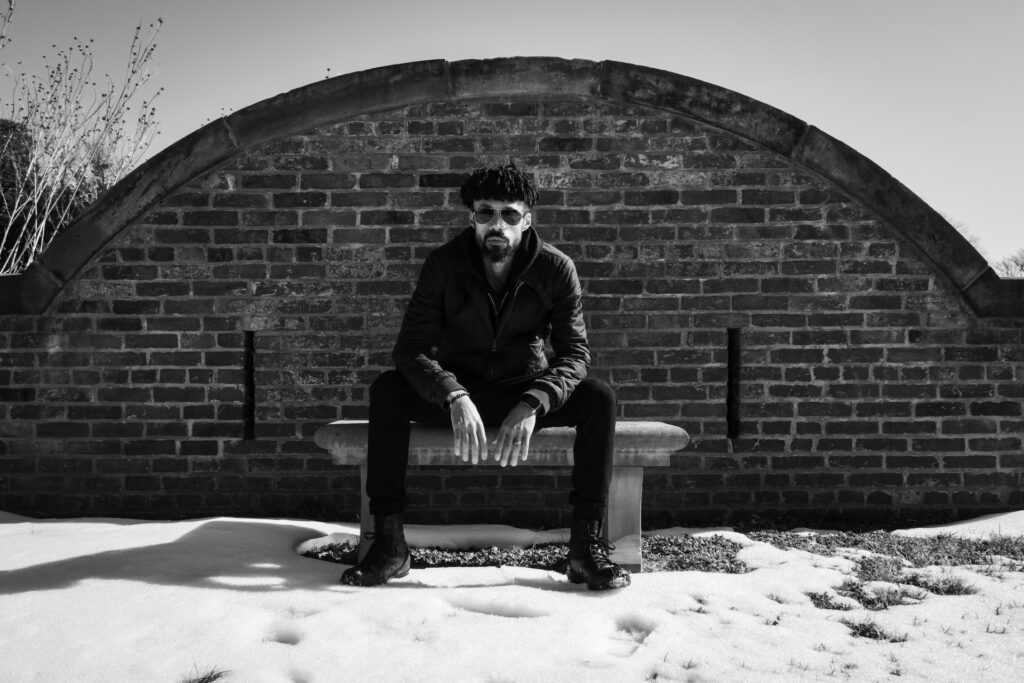
So, I haven’t had the chance to explore even a fraction of your catalogue to this point, but the two I’ve heard a good deal of is Bell Barrow and Zero Swann, with the former having that unearthly dissonance of Skullflower, Neurosis, maybe early Swans… so, tell me a little bit about your musical journey from the more Sabbath-inspired doom metal to more avant garde territory.
Yeah, that… I honestly think the avant garde side was always there. I actually… it’s funny, I was thinking about this recently and how the progression occurred and why it happened. I think early on I was creating, almost, for another audience and not necessarily for me. I was in this idea where I wanted to sound like this rather than just go with what was inherently at my core and embracing that.
So, I would say the earliest time when the light started to flicker a bit in making that transition from writing and recording for other people to actually trying to embrace what was spontaneously coming from within was when I was in Spain. That would have been… I had done This Carrion Underground, Telepathic Psalms, and The Fractured Season right before. And then I did The Catechism in 2016.
So, that was 2016 and I moved to Spain in 2018. That was after six or seven Gorazde albums. I released an album called Our Sleeping Skin in 2015 and I thought it had to change. I felt I was artificially crafting things that were not truly what I was feeling inside. I felt I had to break and recalibrate. So, I started recommitting to capturing authentic things that were coming from inside of me, writing about things that were really true to what I was actually feeling, not creating artificial characters.
And I didn’t actually reach the goal I’d laid out in front of being as authentic as I possibly could. I didn’t reach that until I got back from Spain in 2020. But the process began. So, I started experimenting with more weird things in the studio. And that was like… I wasn’t trying to be like anybody else except that which I was instinctively moving towards. So, semi-modular synthesisers and coming up with these weird ways of organising and sound engineering in the studio and stuff.
You know, at that point, I got into this rhythm of coming up with stuff that was a little off the wall, and I didn’t care if people liked it or not. And, when I stopped caring what people thought about it and really embraced just what was naturally coming from inside, that light really did switch.
So, when you ask about the progression from that to the Bell Barrow Side and Zero Swann, part of it was influenced by the death of my father in 2023. That was when I released the last Gorazde album, it coincided with his death, and I wanted to leave that chapter behind intentionally.
That was when I really said I was done with things that were not relevant to things that I had done and which weren’t personal to me. Metaphors are still going to be there, for sure. But, as far as things that matter to me personally, that was a time when all that artificial BS and any subpar influences or this existential weight of writing to please “the public”, that had to end. Because you’re not in it for popularity or money, you’re in it for artistic integrity and if it resonates with one person, that’s a success. Beyond that, you’re trying to do this for yourself to provide a personal outlet. And so, that is kind of (from a philosophical standpoint), when that change occurred.
And then from there, I entered a new realm of approach, the question was what I could do and how I could continue pushing myself musically and artistically, so things wouldn’t grow stagnant. I wanted to think about how I could continue pushing boundaries because it’s interesting to push boundaries and it keeps the creative flow going, at least for me it does.
And then, the idea for Bell Barrow came about because my dad actually was a jazz trumpet player
Wow!
And he would play these records for me growing up, not the elevator jazz but like [mimics Miles Davis at 45RPM], that was my initiation. My dad was like, “you have to listen to it an analyse. There are certain lines where there are things happening that you have to be able to drill into. There are layers that are involved.”
And I never really understood what he meant by that until, like, I got older, more mature and could really listen to these messages and understand what he was talking about.
And so, I was like, I want to take… that would be the ultimate push. I f I could go down the road where I could take Jazz as an artform and make it into something that was unique to me.
And one of the things, even with Gorazde back in 2005, improvisation (I didn’t mention this before), it’s always been. I don’t even have to tell Michel, my promoter, how much my music is improvised. Like Bell Barrow, I mention it in the liner notes, but I would say 85% of the music I do is improvised. The entire Zero Swann album, The Ones Who Love, every single part, guitar, drums, bass, the vocal line – all improvised. Obviously recorded in layers because it’s just me doing it.
So, the way I do it, just as a tangent, I’d have the drums – I’d have an idea for a song – I’d do the drums, record them on cassette, and feed it back to the mixer. And that was the structure of the song. Then, I would pick up my guitar, tune it – I loved that Sonic Youth, who did all those alternate tunings – so, I would do alternate tunings.
I don’t read music, it’s all by ear, I’d randomly tune it and make it sound cool, and then I’d take maybe two minutes to go through a random scale pattern. Then I’d have a feeling for how the notes would potentially emerge. Then, I hit record and just start. And that’s what I did for every song. And I would rely on just, you know, part of it I think is having recorded so many songs since 2005, your brain gets wired on the time signatures, the call and response patterns, and that kind of thing. And I’d just go and if something weird came out, I’d embrace it. I’d be like, “OK, that sounds fucking crazy, so I’ll continue with that, see where that goes…”
The songs just wrote themselves that way. Then, with the fretless bass, I’d take a minute to kind of note where the target notes were for the chaos. But knowing that thew song was no wave in the kind of direction it was going, I had a target note and that could be one lily pad that I could hop back to if I needed to. But, outside of that, it was like a freeform experiment, and I’d just go at it that way.
And so, I don’t ever go into that much detail with Michel about the writing process, but a lot of it is spontaneous. And then, after it’s laid down, if it’s Bell Barrow, it really is complete fucking chaos. The album, True Human Trough, I was just like, I’m going to go at it and whatever comes out… obviously I wanted it to be somewhat representative of a decent product, but at the same time, whatever came out, I was going to embrace it.
And then, with Zero Swann, there was a little more formality to it, a little more of a perimeter put around it. So, you know, it could sound crazy, but if I could contain it, fine; and then there were spaces where vocals and lyrics could fit and, even though I was doing a random tuning on it, my ears are kind of tuned to a certain frequency anyway, so that, even though you think it’s random, it probably isn’t – in your mind you’re always listening to things that resonate with you and take you back to what you normally do, so even though they’re random tunings, it’s gotta be something I can actually reference when I do my vocals. The baritone nature of my singing style is going to always, well not always, but it mostly has to be consistent with what is laid to tape.
So, that’s a very long-winded answer, but it’s essentially how those things came about, how Bell Barrow came about, and my basic recording style and my writing style now.
It’s really interesting and what you went through is a conversation that certainly every artist should have with themselves. I don’t think many do, but what you got there is that core idea that you have to please yourself first and foremost because ultimately, no matter how much you might try to please an audience, you can’t second guess what they may like and what they may hate.
You mentioned Sonic Youth, one of my favourite bands of all time, and each of their albums is so different – from Sister to New York Ghosts and Leaves via, my favourite album, Washing Machine. It’s all so different whereas, if they’d been trying to please a large audience, I guess there would have been a lot of Teenage Riot style songs, right?
Exactly right! I just have to put a plug in, I was just listening to a Kim Gordon interview, and she was talking about her new solo album, Play Me, but I had to put a plug in for… I used to skate a long time ago, like street ramp skating, and I remember it was like ’86, and I had the Bad Moon Rising tape. I liked it because of the cover. At that time, I wasn’t listening to Sonic Youth, but my cousins at that time had the tape, and I remember liking the cover with the scarecrow and the firecracker in the Jack-O-Lantern head. And I remember putting the tape in and not knowing what I was listening to!
And right now, I have a new project that I’m working on, and Bad Moon Rising is on repeat and I’m studying that album. Daydream Nation used to be my favourite album by them, but I think Bad Moon Rising might be my favourite album of theirs. Like listening to some of the songs, like Halloween and I love You All the Time and Brave Men Run in My Family. I love that style. It’s right on the verge of song structure, dissonance, and no-wave. To me, it’s a brilliant album. And I didn’t know what I was holding for thirty-some years. I didn’t know what I was holding back then. It’s just wild to know that they released that in 1985. It’s crazy. Huge respect and I’ve always loved Sonic Youth.
That’s really funny, but the best albums I find are the ones you grow into. I’ve had experiences with records, particularly when I was young – you’d save up for ages and buy and album and then, for whatever reason, it didn’t hit you, so you’d stick it on the side and forget about it. But because you paid for it and it’s something that represents a month of your money. And some of my favourite albums of all time are ones that, at the time, they just got chucked in a corner because they didn’t grab me immediately… it’s so funny. Things that you don’t realise are amazing and then one day it clicks. That’s the joy of physical media… with streaming, it passes you and it’s gone. Physical media, it hangs around.
It does, it does. And I still feel, in my heart, it’s coming back. It’s coming back now and I think… maybe it’s just wishful thinking, but I really do think we’re going to move away from… not completely, but there’s going to be a select portion of the population who are fully into physical media. You already see that, like there’s some company coming up with some new Walkman kind of thing that you can play cassette tapes on. I mean who would have thought cassette tapes would come back!
I know right, it’s wild!
Yeah, it’s like “are you kidding me?!” I still use the Tascam porta-studio, so I’ve been waiting for this to come back. But yeah, it’s the same studio I used in 2005. I had it in the closet. It’s like new old stock, because I took very good care of it and it’s been sitting in a closet, stored. And I’ve been using it for the past two or three recording sessions. It’s sitting… my studio’s literally right back there. And I’ve been using an 8-track porta-studio as well for recording. I love those machines; they’re the best machines ever.
One of the things I like about cassette because it’s the ultimate imperfect medium; even more than vinyl; because it warps and distorts. You know, you hear a song on an old cassette, and it’s got a totally unique vibe because you’ve sellotaped it back together and it’s garbled. It’s so cool.
I love it. It’s the textures man, textures are everything.
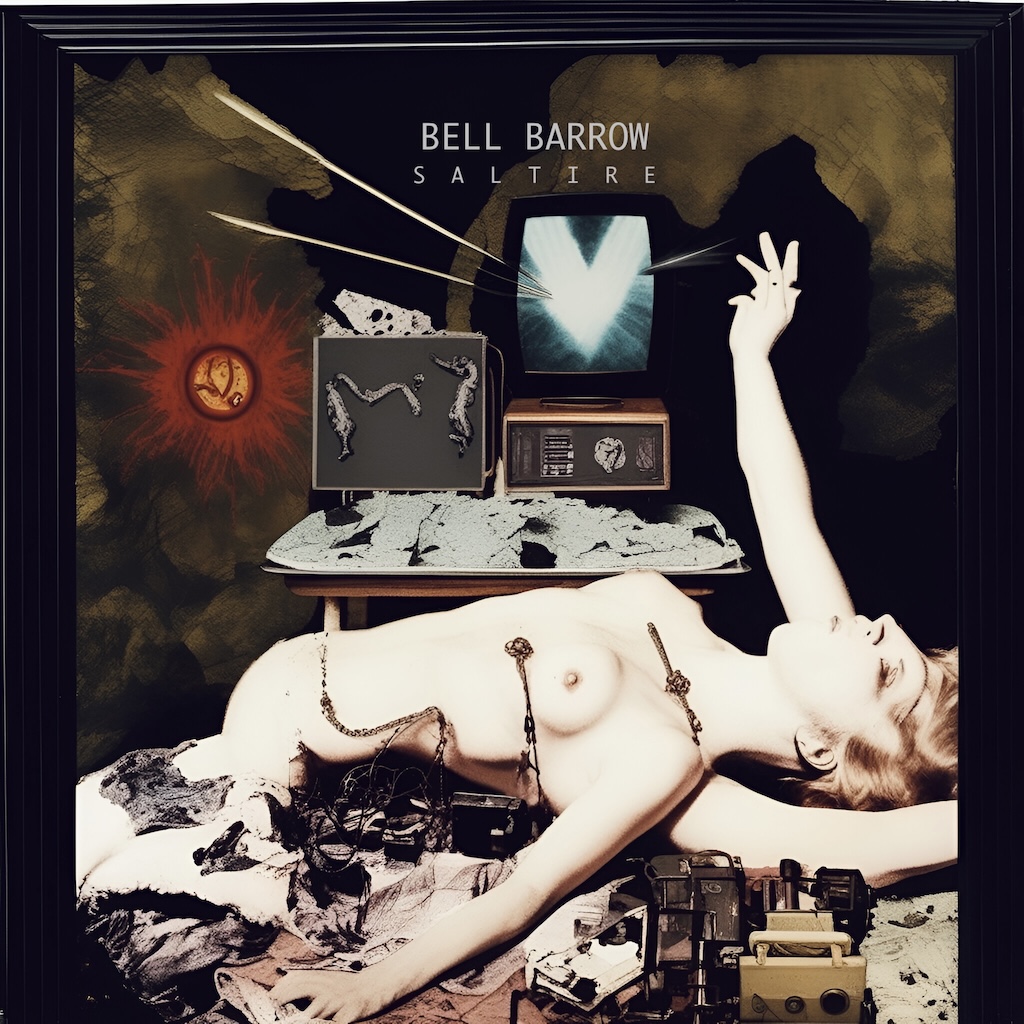
There’s a lot of depth in the concepts and the lyrics and I think, if I understood correctly, Core Core Pulp was about the impacts of social media, and I think we’ve touched on that already. Whereas Saltire is… from what I understood – cycles of abuse on a literal level, but then also on a generational level as well. What led you down that narrative path?
Yeah, I thought about some of the things that are unique to me personally and my family – not cycles of abuse, per se. Every family has things that are heavy burdens, let’s just put it that way. Addiction, addictive personality types, that kind of got me thinking about those kind of traits being passed on or consistent. You think about nature versus nurture and whether because your mother or father was an alcoholic or abusive, whether you are pre-destined to… or whether those traits are passed down. And I thought about some of the things that my dad dealt with on his side of the family and then I look at my own psychological profile – my idiosyncrasies. We all have addictive tendencies in one way or another. That’s what got me thinking about the idea.
Then I took it in a more supernatural direction, with generational curses and whether you see certain families that have these cycles and whether it is indeed a curse – something over which you have no control, or whether there is a way to stop that cycle. And a lot of ties with abuse in general, you… let’s say, hypothetically, you have an abusive parent and that’s all the child sees growing up, and then they’re abusive which is, to a degree, learned behaviour. But then you have that point about free will, if you believe in free will… so, at what point do you make the stop, put your foot down and say “I’m not going to be like my father, my mother, or person X. I’m going to chart a new direction for my life.”
And so, I guess in a way, it is in our control, if making that decision puts you in a new direction. But, often times, you see families that perpetrate the same abusive, negative qualities. And it’s not just with families. I think with people, if you put them in positions where they’re abused, they oftentimes – their learned behaviour is to mimic the abuse. It can come from different motivations. Sometimes, it’s like “well, it was done to me, so I’m going to take it out on the next person.” Or it’s behaviour they’ve grown accustomed to and think that’s how life should be. Or they’re trying to process the pain of their experience, and the only way is through self-destructive tendencies.
So, you can see, it opens up a wide arena for you to go down a lot of different pathways. When I was thinking about that idea, when you look at the perspective of generational curses and you’re talking about passing down from generation to generation, you have to look at the past, you have to look at the present, you have to look at where you’re going in the future. Then I was like, ok, what types of abuse – what are the common types of abuse. Sexual abuse, emotional abuse, physical abuse; all those things are part of the mix. So, each song was kind of touching on different aspects or variations on looking at different categories of abuse and also blending in the metaphor of signals being transmitted through time and, I know you’re probably “what the hell is he talking about at this point” [laughs].
So, as you can see, it can get quite complicated but there is an idea that I conceptualised with it. So, when you think about generational curses, you think about past present and future; where it comes from; if, indeed, this curse is something that does determine the outcome or whether it is something that can actually be broken. So, you’re looking it from the literal sense of cycles of abuse passed down from generation to generation. Then, there’s the supernatural side of it – were those abusive tendencies just something learned through environmental exposure or was this something supernatural that intervened at some point of time and whether it’s demonic possession or what. So, you look at those two competing avenues.
So, from that panoramic view, you look at the present and the future and you make a choice – are you going to break this cycle or give in and continue this negative feedback loop.
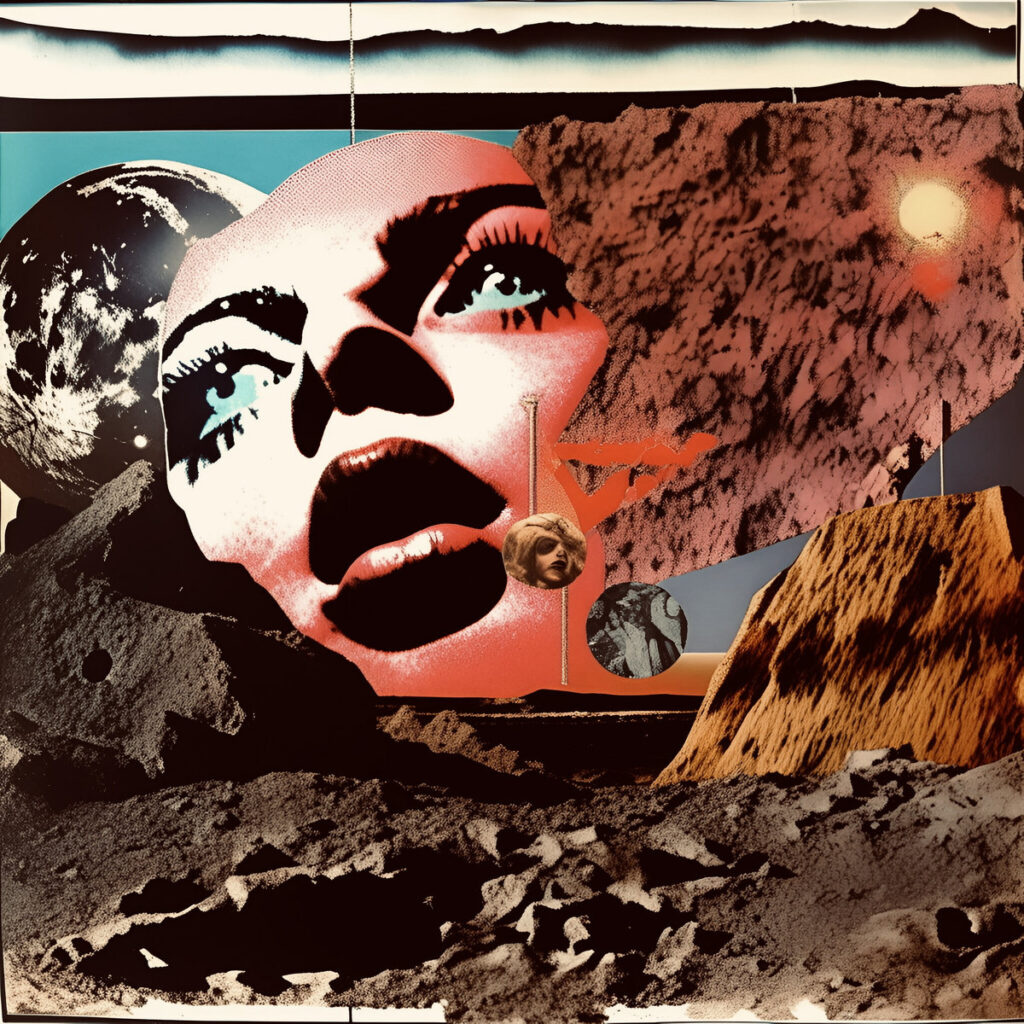
And then, you think about the artwork, and you think about the idea of getting these sorts of messages from beyond and these flashes of images. A lot of times, with the way it was produced and the kind of ear-piercing sounds. That was obviously intentional and it was about these rays of light, these transmissions breaking through consciousness, breaking through your perception of what reality actually is. And that’s how it came about. I leave it very open. There are no lyrics, obviously. The track titles give you a rough idea of where it’s going, but they’re vague as well. And that’s intentional too, to get you sort of unique movie in your mind. It gives the listener a lot of ammunition to create their own journey.
The music, as well, remind me of that early Swans kind of thing – repeat and augment. So, you have a central motif that becomes more and more dissonant as it progresses, and it really lends itself to these types of narratives. But it’s also interesting that you mention free will and we take the decision to stop. Because on the one hand, OK, we’ve been abused and we’ve made a decision but on the other hand, that decision is de facto forced upon us by what has happened. It’s not taken in a vacuum; it’s made in opposition to what you’ve experienced. So, what you face is always going to determine some sort of outcome, even if that outcome is positive.
Exactly.
And what you said right there is a perfect example – there are no lyrics that would enable you to communicate that. You take what I describe but, at the same time you listen to the music, you look at the track titles, and you think about what the album means as a whole and then that’s, again, ammunition for thought and ammunition for your own adventure. And that was really the point of it.
So, that’s Bell Barrow, which is very much a journey into the unknown and you bring yourself with you to that. But then Zero Swann has a lot of lyrics and much more guidance from you. As a writer, do you approach it differently… is there something when you’re writing where you set yourself that goal: “I’m writing in the mode of Zero Swann”; or does it become apparent as you are producing a piece of music where it belongs?
Yeah, that’s a really good question because I actually recorded The Ones Who Love and the new Zabus album, Avoidance Moon pretty much at the same time. I actually recorded The Ones Who Love right before Avoidance Moon and, if you listen to the two albums, there are some similarities between them because, when you’re the only person doing it, it’s inevitable there’ll be some overlap. But Zero Swann, as with Zabus, I always intend for those two bands to be more structured because, I even though I love freeform dissonance, I’m also (believe it or not) a huge fan of melody as well. [Laughs] Most people would be, like, “yeah, I don’t think so, none of your shit sounds melodic at all!” [Laughs] But trust me, I am!
And structure to a certain degree. So, those two bands, I definitely wanted them to be a little more structured. But, with Zero Swann there’s a lot more freeform. Like, with Bifactor and The Ones Who Love… the latter is a little more toned done in terms of being extreme and in your face. But the writing style and the execution is similar when it comes to just freeform, no-wave dissonance in there. The Ones Who Love in particular, in contrast to Benefactor, does embrace… there is an undercurrent of melody, albeit dark, depressing, and morose. There is melody as an undercurrent.
And, as far as deciding what goes where, it all comes down to the vibe. Because I always come up with song titles and artwork before I do any music. So, that kind of guides where the album goes. I’ll come up with the artwork, whether it’s just a sketch, graphic design, or painting. So, I’ll have an idea, I’ll come up with the artwork, and then… sometimes track titles just come to me out of the blue. Like, with The Ones Who Love, I thought it’d be kind of interesting to take the idea of how people are often haunted by the idea of a dead family member and that was kind of where it started. And then, I took that idea and sort of twisted it a little bit to see if it could be about obsession and fixation over lost love or lost loved ones.
So, I took the idea of dead relatives and then again, it is that kind of generational curse theme to some degree. And then lost love, unrequited love, and then, sort of the darker side of passion. So, that’s where that came from. And that’s not really Zabus territory. Zero Swann is a little more twisted, atavistic twin (not my term, somebody else called it that, but I like that description). So, there’s a darker, more sinister vibe with Zero Swann, so it became the next album.
And so, I started coming up with that theme, the track titles. Then I started going with the music and, when I come up with the artwork, I’ll just stare at it. I’ll stare at it for like days and just kind of really focus my mental energy on the image. And I find that when I do that, it’s almost like a psychological imprint that you press on to that artwork. It’s like the intent behind it starts to manifest itself. And, after I spend time just focusing on the artwork and the track titles, I’ll start coming up with music and then look at the track title and it’s like “this sounds like the name of that song”. It just has that vibe.
And then, from there, after the music’s done, I come up with the lyrics, and it goes that way.
So, the short answer to your question is I go with the vibe, the artwork, those things start to manifest. I know that Zero Swann is going to be a more sinister version of Zabus and the point of that is going to be channelling a little bit of the darker vibe. Zabus will be a little more melodic, a little more gothic romanticism. And then, when I come up with stuff that fits in that category, that’s when it goes in that direction.
That’s really interesting that the artwork drives some of the musical direction. I’ve always been fascinated by how art and music interact. When it comes to designing the artwork, soes that come with a loose concept, or is the artwork more abstract even than that.
I would say it starts relatively abstract. It’ll go through probably seven or eight different layers. I’ll start with something, give it time to percolate, look at it and be like, “nah, I don’t like that” or I’ll need to tweak it. So, I’ll tweak it a little bit, let it sit, and it’s something inside, it’s instinctive, like “that’s it!”
And so, usually, I’d say 75 – 80% of the time, that’ll be the thing I go with. But then, as the music starts to be created, sometimes I take a U-turn, or the artwork is tweaked one final time and that’s how it works. But oftentimes the artwork lays the foundation and everything else is born from that. And the track titles too.
One final question – you mentioned melody and we both laughed, but underneath the dissonance and the noise, there is melody and it’s just that you have to work that little bit harder to find and appreciate it.
You do. It requires… a think, with the whole instant gratification thing, a lot of people are not willing to invest the time to get to the heart of it, but I think if you just sit outside, go out to the city and just listen, there’s an infinite number of textures and sounds. You could probably just do a field recording and make an album – like an ambient noise album. You can find melody and texture in anything out there if you really focus your mind. It all depends on perspective and how you approach it.
It’s funny you should say that, because in the news recently about some Co-Op that had freezers emitting an ambient drone!
Yeah! Yeah! That’s funny! I’ve actually gone to grocery stores and usually it’s like a broken freezer or something like that and I’m like, “that could be an album” There are people who would spend $350 on a noise machine and all they need to do is go to the fish store!
Life is very strange! Dude, thank you so much. It’s been so interesting and so cool, and I really appreciate your time.
Learn more about Jeremy Moore and Saccharine Underground via the label Bandcamp Page.